SEO rank tracking
Set up and run rank tracking using Ahrefs MCP: pick the right keywords to track, segment them by purpose, set baselines, and define alert thresholds.
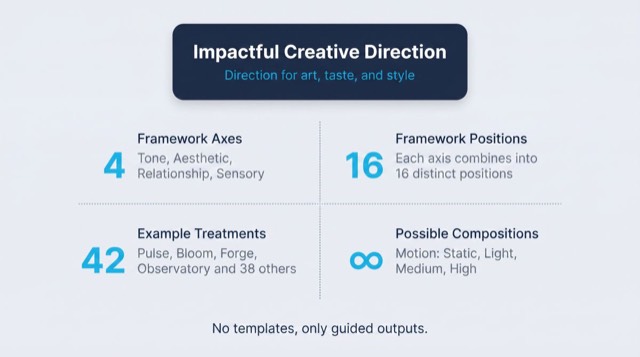
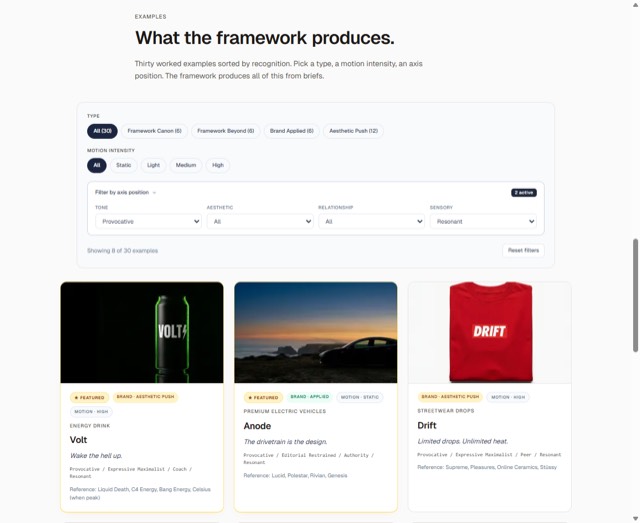
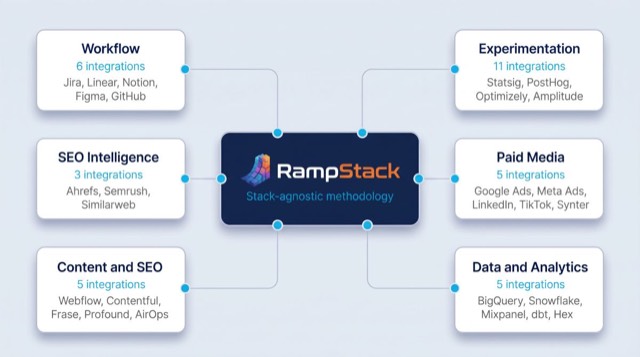
From the rampstackco/claude-skills README — shows the whole collection, not only this skill. · view on GitHub
How to use it
Claude Code
- Run the line below. It pulls the whole folder into
~/.claude/skills/seo-rank-tracking. - Describe your job in plain words. Claude Code follows the skill from there.
npx degit rampstackco/claude-skills/skills/seo-rank-tracking#main ~/.claude/skills/seo-rank-trackingFor one project only, change the path to .claude/skills/seo-rank-tracking.
Claude (web or desktop app)
- On this page open ⋯ → Download .md.
- Save it as SKILL.md in a folder, zip the folder, then Customize → Skills → + → Create skill → Upload a skill.
- Pick the file and Save. Claude shows the name and description and runs a security scan.
- Check the skill is switched on.
- Start a new chat and describe your job in plain words. The AI follows the skill from there.
ChatGPT or another app
- ChatGPT: make a Project and paste it into Instructions.
- Neither? Paste it at the top of a new chat — it works for that chat.
Not working?
- Check which app you pasted it into — the steps above name the right one.
- Some skills need the paid tier of Claude or ChatGPT.
Paste into Claude, ChatGPT or Cursor.
Source of SEO rank tracking
Show the full text257 lines
| name | description | category | catalog_summary | display_order |
|---|---|---|---|---|
| seo-rank-tracking | Set up and run rank tracking using Ahrefs MCP: pick the right keywords to track, segment them by purpose, set baselines, and define alert thresholds. Use this skill when starting a new tracking project, baselining for a campaign, choosing what to monitor, or building a rank reporting cadence. Triggers on rank tracking, keyword tracking, monitor rankings, track positions, what should we track, ranking dashboard, baseline rankings, alert thresholds. Also triggers when a stakeholder wants weekly or monthly ranking visibility. | seo-audit-suite | Setup, baseline, segmentation, alerting, dashboarding | 7 |
SEO Rank Tracking
Set up and run an ongoing rank tracking program using Ahrefs MCP data. Stack-agnostic. Produces a tracked keyword set, segmentation, baseline, alert thresholds, and a review cadence.
When to use
- Starting rank tracking for a new property or section
- Baselining before a campaign, content launch, or major site change
- Deciding what keywords are worth tracking
- Setting up a ranking dashboard for stakeholders
- Establishing alert thresholds for ranking drops
- Reviewing whether the current tracked set is still meaningful
When NOT to use
- Keyword discovery (use
seo-keyword) - Competitor keyword analysis (use
seo-keyword-gap-audit) - Diagnosing a ranking change that already happened (use
seo-traffic-diagnosis) - Single-page audits (use
seo-onpage)
Required inputs
- Target property
- Target market and language
- Business priorities (which segments matter)
- Existing ranked keywords (Ahrefs Site Explorer)
- Stakeholder reporting cadence (weekly, monthly, quarterly)
- Confirmation of Ahrefs MCP and Rank Tracker access, write access included: workflow step 5 creates Rank Tracker projects
The framework: tracking taxonomy
A good tracked keyword set has structure. Random keyword lists produce noisy dashboards. Segmented keyword sets produce signal.
Group every tracked keyword into one of four buckets.
Bucket 1: Brand keywords
Queries containing the brand name (and major variants and misspellings).
Why track:
- Detect brand visibility issues
- Catch competitors bidding on the brand
- Spot reputation problems early
Volume in this bucket: typically 10-30 keywords for most brands.
Healthy signal: position 1 for all variants. Anything else is investigate-worthy.
Bucket 2: Money keywords
Queries that drive (or should drive) revenue: high-intent transactional and evaluation-stage queries directly tied to the business model.
Why track:
- These are the keywords that pay the bills
- Movement here directly affects revenue
- Stakeholders care most about these
Volume in this bucket: 30-100 keywords for most properties. More for ecommerce.
Healthy signal: top 3-5 positions. Watch for position drift in either direction.
Bucket 3: Opportunity keywords
Queries the property is currently ranking on page 2-3 (positions 11-30) with potential to break into top 10.
Why track:
- These are the active growth bets
- Movement reflects whether content investment is working
- Quick wins typically come from this bucket
Volume in this bucket: 50-200 keywords typically.
Healthy signal: trending toward page 1 over a 90-day window.
Bucket 4: Competitor benchmark keywords
A representative sample of head and torso queries shared with the competitor set, used to track relative position over time.
Why track:
- Measure share of voice
- Spot competitor gains in real time
- Provide industry context for movement
Volume in this bucket: 50-150 keywords.
Healthy signal: relative position improving or holding within a defined competitive band.
Selection criteria
Brand bucket
- Brand name (exact)
- Brand name + product or service
- Brand name common misspellings
- Brand name + "review", "vs", "alternative"
- Brand-owned product names if relevant
Money bucket
- Top 20 ranked keywords by traffic value (Ahrefs Site Explorer)
- Top transactional queries from Search Console with non-trivial impressions
- Conversion-driving queries identified in analytics
- Strategic head terms from
seo-keyword-gap-auditoutput
Quality over volume. 50 well-chosen money keywords beats 500 noisy ones.
Opportunity bucket
- All keywords currently ranking positions 11-30 with monthly volume above a relevance-appropriate threshold
- Queries with rising impression volume in Search Console
- Output from the keyword gap audit's quick wins list
Refresh this bucket quarterly. Opportunity is a moving target.
Competitor benchmark bucket
- Keywords where 3+ competitors rank in top 20
- Mix of head, torso, and informational queries
- Sized to represent the broader category
This bucket is for relative comparison, not absolute targeting.
Segmentation beyond buckets
Tag every tracked keyword on additional dimensions for filtering:
| Tag | Purpose |
|---|---|
| Topic or pillar | Group by editorial theme |
| Funnel stage | TOFU, MOFU, BOFU |
| Content type expected | Article, product page, calculator, etc. |
| Page mapped | Which URL is targeting this query |
| Country and language | For multi-market sites |
| Device | Desktop, mobile |
| SERP feature presence | Featured snippet, AI overview, video, etc. |
Tagging up front pays off when filtering reports later.
Baselines
Capture the starting state on day one.
For each keyword, record:
- Current position
- Current SERP composition (top 10 domains, dominant content type, SERP features present)
- Current click-through rate at that position (from Search Console if available)
- Date of baseline
Baselines are the reference for measuring future movement. Without one, every dashboard is just current state.
Alert thresholds
Not every position change deserves attention. Set thresholds that filter noise.
Default thresholds
| Bucket | Alert if |
|---|---|
| Brand | Position drops below 1 for any tracked variant |
| Money | Position drops by 5+ places, or out of top 10 |
| Opportunity | Position rises into top 10 (positive alert), or drops past 30 |
| Competitor benchmark | Aggregate share-of-voice changes by 10%+ |
Adjust thresholds based on volatility of the niche. High-competition spaces need looser thresholds to reduce false alarms.
Alert routing
- Brand alerts: notify SEO lead and brand manager immediately
- Money alerts: notify SEO lead within a daily digest
- Opportunity alerts: weekly summary
- Competitor alerts: monthly summary
Workflow
- Define scope. Target property, market, language, stakeholders.
- Pull starting data. Existing ranked keywords, Search Console queries, competitor overlap.
- Build the tracked set. Size each of the 4 buckets to its own volume band. Those bands sum to roughly 140 at every minimum and 480 at every maximum, so a small property landing near 140 is correctly scoped, not under-scoped. Most properties land between 200 and 500.
- Segment with tags. Topic, funnel stage, page mapped, etc.
- Configure tracking. Set up Ahrefs Rank Tracker projects with tags and locations.
- Capture baseline. Day-one positions and SERP composition.
- Define alert thresholds. By bucket. Wire to notification system.
- Build the dashboard. See
references/dashboard-template.md. - Set the cadence. Weekly review of money + brand. Monthly review of all. Quarterly rebuild of opportunity bucket.
- Iterate. Drop dead keywords. Add new ones. Recalibrate thresholds based on noise.
Failure patterns
- Tracking too many keywords. A 5,000-keyword tracker is unreadable. Pick fewer, watch closer.
- Tracking too few. A 30-keyword tracker misses the picture. The floor is one populated bucket band per bucket, which is 140 keywords; most properties need 200 to 500.
- No segmentation. Untagged tracked keywords produce dashboards that cannot be filtered.
- No baseline. Without day-one snapshots, "did the campaign work" becomes unanswerable.
- Alert fatigue. Loose thresholds produce too many alerts. Stakeholders stop reading. Tighten.
- Set and forget. Tracked keyword sets need quarterly review. Opportunity moves. Money keywords shift.
- Conflating position with traffic. A position-1 keyword with no clicks is worse than a position-5 keyword with steady traffic. Layer in CTR and clicks data.
- Single-device tracking on a mobile-dominant business. Track the device that matches the audience.
- Tracking aggregate position only. Aggregate position averages can hide important movement in specific buckets. Always show by bucket.
- Reporting absolute position without context. "We are position 4" means nothing. "Up from position 11 over 60 days" means something.
Output format
A rank tracking setup document with:
- Tracking charter. Property, scope, stakeholders, cadence.
- Tracked keyword set. All keywords with bucket and tag assignments.
- Baseline snapshot. Position, SERP composition, CTR per keyword, or state the gap per the data-availability rule.
- Alert configuration. Thresholds by bucket, routing.
- Dashboard layout. What charts, what filters, what is visible.
- Review cadence. Weekly, monthly, quarterly responsibilities.
- Methodology notes. Country and device settings, refresh frequency, data caveats.
Plus a recurring rank report at the chosen cadence (typically weekly or monthly).
If required data is unavailable
This skill's output depends on data, measurements, or tool results it cannot generate on its own. When a required input, tool, or data source is unavailable or unverifiable, the sanctioned output is the deliverable with the gap stated: what was needed, what was actually obtained or verified, and which parts of the output are affected. Fabricating, estimating, or interpolating a required number to complete the deliverable is never sanctioned. A stated gap is a complete answer.
Reference files
references/dashboard-template.md- Template for the rank tracking dashboard layout, including the recurring report structure for weekly and monthly cadences.
| 1 | |
| 2 | name seo-rank-tracking |
| 3 | description "Set up and run rank tracking using Ahrefs MCP: pick the right keywords to track, segment them by purpose, set baselines, and define alert thresholds. Use this skill when starting a new tracking project, baselining for a campaign, choosing what to monitor, or building a rank reporting cadence. Triggers on rank tracking, keyword tracking, monitor rankings, track positions, what should we track, ranking dashboard, baseline rankings, alert thresholds. Also triggers when a stakeholder wants weekly or monthly ranking visibility." |
| 4 | category seo-audit-suite |
| 5 | catalog_summary "Setup, baseline, segmentation, alerting, dashboarding" |
| 6 | display_order 7 |
| 7 | |
| 8 | |
| 9 | # SEO Rank Tracking |
| 10 | |
| 11 | Set up and run an ongoing rank tracking program using Ahrefs MCP data. Stack-agnostic. Produces a tracked keyword set, segmentation, baseline, alert thresholds, and a review cadence. |
| 12 | |
| 13 | |
| 14 | |
| 15 | ## When to use |
| 16 | |
| 17 | Starting rank tracking for a new property or section |
| 18 | Baselining before a campaign, content launch, or major site change |
| 19 | Deciding what keywords are worth tracking |
| 20 | Setting up a ranking dashboard for stakeholders |
| 21 | Establishing alert thresholds for ranking drops |
| 22 | Reviewing whether the current tracked set is still meaningful |
| 23 | |
| 24 | ## When NOT to use |
| 25 | |
| 26 | Keyword discovery (use `seo-keyword`) |
| 27 | Competitor keyword analysis (use `seo-keyword-gap-audit`) |
| 28 | Diagnosing a ranking change that already happened (use `seo-traffic-diagnosis`) |
| 29 | Single-page audits (use `seo-onpage`) |
| 30 | |
| 31 | |
| 32 | |
| 33 | ## Required inputs |
| 34 | |
| 35 | Target property |
| 36 | Target market and language |
| 37 | Business priorities (which segments matter) |
| 38 | Existing ranked keywords (Ahrefs Site Explorer) |
| 39 | Stakeholder reporting cadence (weekly, monthly, quarterly) |
| 40 | Confirmation of Ahrefs MCP and Rank Tracker access, write access included: workflow step 5 creates Rank Tracker projects |
| 41 | |
| 42 | |
| 43 | |
| 44 | ## The framework: tracking taxonomy |
| 45 | |
| 46 | A good tracked keyword set has structure. Random keyword lists produce noisy dashboards. Segmented keyword sets produce signal. |
| 47 | |
| 48 | Group every tracked keyword into one of four buckets. |
| 49 | |
| 50 | ### Bucket 1: Brand keywords |
| 51 | |
| 52 | Queries containing the brand name (and major variants and misspellings). |
| 53 | |
| 54 | Why track: |
| 55 | |
| 56 | Detect brand visibility issues |
| 57 | Catch competitors bidding on the brand |
| 58 | Spot reputation problems early |
| 59 | |
| 60 | Volume in this bucket: typically 10-30 keywords for most brands. |
| 61 | |
| 62 | Healthy signal: position 1 for all variants. Anything else is investigate-worthy. |
| 63 | |
| 64 | ### Bucket 2: Money keywords |
| 65 | |
| 66 | Queries that drive (or should drive) revenue: high-intent transactional and evaluation-stage queries directly tied to the business model. |
| 67 | |
| 68 | Why track: |
| 69 | |
| 70 | These are the keywords that pay the bills |
| 71 | Movement here directly affects revenue |
| 72 | Stakeholders care most about these |
| 73 | |
| 74 | Volume in this bucket: 30-100 keywords for most properties. More for ecommerce. |
| 75 | |
| 76 | Healthy signal: top 3-5 positions. Watch for position drift in either direction. |
| 77 | |
| 78 | ### Bucket 3: Opportunity keywords |
| 79 | |
| 80 | Queries the property is currently ranking on page 2-3 (positions 11-30) with potential to break into top 10. |
| 81 | |
| 82 | Why track: |
| 83 | |
| 84 | These are the active growth bets |
| 85 | Movement reflects whether content investment is working |
| 86 | Quick wins typically come from this bucket |
| 87 | |
| 88 | Volume in this bucket: 50-200 keywords typically. |
| 89 | |
| 90 | Healthy signal: trending toward page 1 over a 90-day window. |
| 91 | |
| 92 | ### Bucket 4: Competitor benchmark keywords |
| 93 | |
| 94 | A representative sample of head and torso queries shared with the competitor set, used to track relative position over time. |
| 95 | |
| 96 | Why track: |
| 97 | |
| 98 | Measure share of voice |
| 99 | Spot competitor gains in real time |
| 100 | Provide industry context for movement |
| 101 | |
| 102 | Volume in this bucket: 50-150 keywords. |
| 103 | |
| 104 | Healthy signal: relative position improving or holding within a defined competitive band. |
| 105 | |
| 106 | |
| 107 | |
| 108 | ## Selection criteria |
| 109 | |
| 110 | ### Brand bucket |
| 111 | |
| 112 | Brand name (exact) |
| 113 | Brand name + product or service |
| 114 | Brand name common misspellings |
| 115 | Brand name + "review", "vs", "alternative" |
| 116 | Brand-owned product names if relevant |
| 117 | |
| 118 | ### Money bucket |
| 119 | |
| 120 | Top 20 ranked keywords by traffic value (Ahrefs Site Explorer) |
| 121 | Top transactional queries from Search Console with non-trivial impressions |
| 122 | Conversion-driving queries identified in analytics |
| 123 | Strategic head terms from `seo-keyword-gap-audit` output |
| 124 | |
| 125 | Quality over volume. 50 well-chosen money keywords beats 500 noisy ones. |
| 126 | |
| 127 | ### Opportunity bucket |
| 128 | |
| 129 | All keywords currently ranking positions 11-30 with monthly volume above a relevance-appropriate threshold |
| 130 | Queries with rising impression volume in Search Console |
| 131 | Output from the keyword gap audit's quick wins list |
| 132 | |
| 133 | Refresh this bucket quarterly. Opportunity is a moving target. |
| 134 | |
| 135 | ### Competitor benchmark bucket |
| 136 | |
| 137 | Keywords where 3+ competitors rank in top 20 |
| 138 | Mix of head, torso, and informational queries |
| 139 | Sized to represent the broader category |
| 140 | |
| 141 | This bucket is for relative comparison, not absolute targeting. |
| 142 | |
| 143 | |
| 144 | |
| 145 | ## Segmentation beyond buckets |
| 146 | |
| 147 | Tag every tracked keyword on additional dimensions for filtering: |
| 148 | |
| 149 | | Tag | Purpose | |
| 150 | | --- | --- | |
| 151 | | Topic or pillar | Group by editorial theme | |
| 152 | | Funnel stage | TOFU, MOFU, BOFU | |
| 153 | | Content type expected | Article, product page, calculator, etc. | |
| 154 | | Page mapped | Which URL is targeting this query | |
| 155 | | Country and language | For multi-market sites | |
| 156 | | Device | Desktop, mobile | |
| 157 | | SERP feature presence | Featured snippet, AI overview, video, etc. | |
| 158 | |
| 159 | Tagging up front pays off when filtering reports later. |
| 160 | |
| 161 | |
| 162 | |
| 163 | ## Baselines |
| 164 | |
| 165 | Capture the starting state on day one. |
| 166 | |
| 167 | For each keyword, record: |
| 168 | |
| 169 | Current position |
| 170 | Current SERP composition (top 10 domains, dominant content type, SERP features present) |
| 171 | Current click-through rate at that position (from Search Console if available) |
| 172 | Date of baseline |
| 173 | |
| 174 | Baselines are the reference for measuring future movement. Without one, every dashboard is just current state. |
| 175 | |
| 176 | |
| 177 | |
| 178 | ## Alert thresholds |
| 179 | |
| 180 | Not every position change deserves attention. Set thresholds that filter noise. |
| 181 | |
| 182 | ### Default thresholds |
| 183 | |
| 184 | | Bucket | Alert if | |
| 185 | | --- | --- | |
| 186 | | Brand | Position drops below 1 for any tracked variant | |
| 187 | | Money | Position drops by 5+ places, or out of top 10 | |
| 188 | | Opportunity | Position rises into top 10 (positive alert), or drops past 30 | |
| 189 | | Competitor benchmark | Aggregate share-of-voice changes by 10%+ | |
| 190 | |
| 191 | Adjust thresholds based on volatility of the niche. High-competition spaces need looser thresholds to reduce false alarms. |
| 192 | |
| 193 | ### Alert routing |
| 194 | |
| 195 | Brand alerts: notify SEO lead and brand manager immediately |
| 196 | Money alerts: notify SEO lead within a daily digest |
| 197 | Opportunity alerts: weekly summary |
| 198 | Competitor alerts: monthly summary |
| 199 | |
| 200 | |
| 201 | |
| 202 | ## Workflow |
| 203 | |
| 204 | **Define scope.** Target property, market, language, stakeholders. |
| 205 | **Pull starting data.** Existing ranked keywords, Search Console queries, competitor overlap. |
| 206 | **Build the tracked set.** Size each of the 4 buckets to its own volume band. Those bands sum to roughly 140 at every minimum and 480 at every maximum, so a small property landing near 140 is correctly scoped, not under-scoped. Most properties land between 200 and 500. |
| 207 | **Segment with tags.** Topic, funnel stage, page mapped, etc. |
| 208 | **Configure tracking.** Set up Ahrefs Rank Tracker projects with tags and locations. |
| 209 | **Capture baseline.** Day-one positions and SERP composition. |
| 210 | **Define alert thresholds.** By bucket. Wire to notification system. |
| 211 | **Build the dashboard.** See [`references/dashboard-template.md`]. |
| 212 | **Set the cadence.** Weekly review of money + brand. Monthly review of all. Quarterly rebuild of opportunity bucket. |
| 213 | **Iterate.** Drop dead keywords. Add new ones. Recalibrate thresholds based on noise. |
| 214 | |
| 215 | |
| 216 | |
| 217 | ## Failure patterns |
| 218 | |
| 219 | **Tracking too many keywords.** A 5,000-keyword tracker is unreadable. Pick fewer, watch closer. |
| 220 | **Tracking too few.** A 30-keyword tracker misses the picture. The floor is one populated bucket band per bucket, which is 140 keywords; most properties need 200 to 500. |
| 221 | **No segmentation.** Untagged tracked keywords produce dashboards that cannot be filtered. |
| 222 | **No baseline.** Without day-one snapshots, "did the campaign work" becomes unanswerable. |
| 223 | **Alert fatigue.** Loose thresholds produce too many alerts. Stakeholders stop reading. Tighten. |
| 224 | **Set and forget.** Tracked keyword sets need quarterly review. Opportunity moves. Money keywords shift. |
| 225 | **Conflating position with traffic.** A position-1 keyword with no clicks is worse than a position-5 keyword with steady traffic. Layer in CTR and clicks data. |
| 226 | **Single-device tracking on a mobile-dominant business.** Track the device that matches the audience. |
| 227 | **Tracking aggregate position only.** Aggregate position averages can hide important movement in specific buckets. Always show by bucket. |
| 228 | **Reporting absolute position without context.** "We are position 4" means nothing. "Up from position 11 over 60 days" means something. |
| 229 | |
| 230 | |
| 231 | |
| 232 | ## Output format |
| 233 | |
| 234 | A rank tracking setup document with: |
| 235 | |
| 236 | **Tracking charter.** Property, scope, stakeholders, cadence. |
| 237 | **Tracked keyword set.** All keywords with bucket and tag assignments. |
| 238 | **Baseline snapshot.** Position, SERP composition, CTR per keyword, or state the gap per the data-availability rule. |
| 239 | **Alert configuration.** Thresholds by bucket, routing. |
| 240 | **Dashboard layout.** What charts, what filters, what is visible. |
| 241 | **Review cadence.** Weekly, monthly, quarterly responsibilities. |
| 242 | **Methodology notes.** Country and device settings, refresh frequency, data caveats. |
| 243 | |
| 244 | Plus a recurring rank report at the chosen cadence (typically weekly or monthly). |
| 245 | |
| 246 | |
| 247 | |
| 248 | ## If required data is unavailable |
| 249 | |
| 250 | This skill's output depends on data, measurements, or tool results it cannot generate on its own. When a required input, tool, or data source is unavailable or unverifiable, the sanctioned output is the deliverable with the gap stated: what was needed, what was actually obtained or verified, and which parts of the output are affected. Fabricating, estimating, or interpolating a required number to complete the deliverable is never sanctioned. A stated gap is a complete answer. |
| 251 | |
| 252 | |
| 253 | |
| 254 | ## Reference files |
| 255 | |
| 256 | [`references/dashboard-template.md`] - Template for the rank tracking dashboard layout, including the recurring report structure for weekly and monthly cadences. |
| 257 |
Discussion
Browse more free Claude skills or everything in Marketing.