Optimize content for search engines with keyword analysis
SEO Content Optimizer
Optimize content for search engines with keyword analysis, readability scoring, meta descriptions, and competitor comparison. Use this when users want to improve SEO, optimize blog posts, or analyze content for search performance.
---
name: seo-optimizer
description: Optimize content for search engines with keyword analysis, readability scoring, meta descriptions, and competitor comparison. Use this when users want to improve SEO, optimize blog posts, or analyze content for search performance.
---

# SEO Content Optimizer

Comprehensive SEO analysis and optimization for content creators and marketers.

To optimize content for SEO, provide a detailed analysis covering keywords, readability, technical SEO, and actionable recommendations.

## Instructions

### 1. Analyze Target Keywords

Examine keyword usage and placement:
- Identify primary keyword(s) from user input or content
- Check keyword placement (title, H1, first 100 words, subheadings)
Overview
Comprehensive SEO analysis and optimization for content creators and marketers.
Manual install (npx, ZIP)
npx skills add OneWave-AI/claude-skills --skill seo-optimizer -g -a claude-codenpx degit OneWave-AI/claude-skills/seo-optimizer#main ~/.claude/skills/seo-optimizerConnects with Agent Alley MCP · agentalley.io/mcp
Files included
SKILL.md6.6 KB
Read SKILL.md here
Show the full text233 lines
SEO Content Optimizer
Comprehensive SEO analysis and optimization for content creators and marketers.
To optimize content for SEO, provide a detailed analysis covering keywords, readability, technical SEO, and actionable recommendations.
Instructions
1. Analyze Target Keywords
Examine keyword usage and placement:
- Identify primary keyword(s) from user input or content
- Check keyword placement (title, H1, first 100 words, subheadings)
- Calculate keyword density (aim for 1-2%)
- Identify LSI keywords and semantic variations present
- Flag keyword stuffing issues
2. Evaluate Content Structure
Assess the organization and hierarchy:
- Check heading hierarchy (single H1, then multiple H2, then H3)
- Verify keyword usage in headings
- Evaluate heading descriptiveness
- Check paragraph length (aim for <150 words)
- Assess overall scanability
3. Readability Analysis
Calculate readability metrics:
- Flesch Reading Ease score (aim for 60-70)
- Grade level estimation
- Average sentence length (aim for <20 words)
- Passive voice percentage (minimize)
- Transition word usage
- Paragraph structure
4. Technical SEO Elements
Generate optimized meta elements:
- Meta Title: 50-60 characters with primary keyword
- Meta Description: 150-160 characters, compelling with keyword
- URL Slug: Short, keyword-rich, hyphen-separated
- Image Alt Text: Descriptive with keywords where natural
- Internal Linking: Opportunities to link to related content
- External Links: Quality of outbound links
5. Content Quality Assessment
Evaluate comprehensiveness:
- Word count (competitive topics need 1500+ words)
- Content depth and detail level
- Topic coverage completeness
- Unique value proposition
- E-A-T signals (expertise, authority, trust)
- Content freshness (dates, current examples)
6. Provide Actionable Recommendations
Prioritize improvements by impact:
Critical (Fix Immediately):
- Missing or poor meta description
- No keyword in title or H1
- Broken internal links
- Keyword density too high/low
High Priority:
- Poor readability score
- Weak heading structure
- Missing alt text on images
- Content too thin
Medium Priority:
- Could add related keywords
- Opportunity for featured snippet
- Could improve internal linking
Provide specific, actionable fixes with examples.
Output Format
# SEO Analysis Report

## Overall Score: X/100

### Target Keywords
- Primary: [keyword] (density: X.X%)
- Secondary: [keyword 1], [keyword 2]
- LSI Keywords Found: [variations]

## Quick Wins (Implement First)
1. [Specific action with exact change needed]
2. [Specific action with exact change needed]

## Keyword Analysis

[Pass] Keyword in title
[Fail] Keyword missing in first 100 words - add to opening paragraph
[Pass] Keyword in 2/5 H2 headings
[Warn] Density: 0.8% (low - aim for 1-2%)

## Readability Metrics

- **Flesch Reading Ease**: XX/100 (Grade level: XX)
- **Average Sentence Length**: XX words
- **Passive Voice**: X%
- **Transition Words**: X%
- **Assessment**: [Good/Needs improvement]

## Meta Information

**Current Meta Title** (X chars): [current title]
**Suggested Meta Title** (XX chars):
`[Optimized title with keyword - 50-60 chars]`

**Current Meta Description**: [current or none]
**Suggested Meta Description** (XXX chars):
`[Compelling 150-160 char description with keyword and CTA]`

**URL Slug**:
Current: `/current-url-slug`
Suggested: `/keyword-rich-slug`

## Content Structure

- **Word Count**: XXXX words ([sufficient/too short] for this topic)
- **Heading Hierarchy**: [assessment]
- **Paragraph Length**: Average XX words [good/too long]
- **Sections**: [list main sections]

## Critical Issues

### 1. [Issue Name]
**Problem**: [Description]
**Impact**: [SEO impact]
**Fix**: [Specific instruction]

**Example**:
Current: [show current problematic text] Improved: [show corrected version]
## High Priority Recommendations

### 1. [Recommendation]
[Specific actionable instruction]

## Content Gaps

Missing subtopics to add:
- **[Subtopic 1]**: [Why it's important] (search volume: XXX)
- **[Subtopic 2]**: [Why it's important]

## Internal Linking Opportunities

- Link to: [page URL] using anchor text: "[keyword phrase]"
- Link from: [this content] to [related page]

## Featured Snippet Opportunity

[If applicable, show how to format content for featured snippet]

Example:
```markdown
## What is [topic]?

[Clear, concise 40-60 word answer]

- Key point 1
- Key point 2
- Key point 3
Competitor Insights
[If analysis was done]
- Top ranking content averages XXXX words
- Common topics covered: [list]
- Content advantage: [unique angle]
Implementation Checklist
- Update meta title and description
- Add keyword to first paragraph
- Fix heading structure
- Add missing alt text (X images)
- Add internal links (X opportunities)
- Expand [thin section] with XXX words
- Add FAQ section for featured snippet
Estimated Impact
Time to Implement: X hours Expected Improvement: [Moderate/Significant] ranking boost Priority: [High/Medium/Low]
## Best Practices

- **Prioritize user experience** over keyword stuffing
- **Write for humans first**, optimize for search engines second
- **Provide specific examples**, not vague advice
- **Consider search intent** behind keywords (informational, commercial, transactional)
- **Recommend content additions**, not just optimization
- **Check for E-A-T signals** (author bio, credentials, sources)
- **Suggest schema markup** where relevant (FAQ, How-To, Review)
- **Look for featured snippet opportunities** (definition boxes, lists, tables)

## Example Workflow

**User request**: "Optimize this blog post for 'best project management tools'"

**Analysis**:
1. Check keyword placement - found in title but not H1 (fix needed)
2. Calculate density - 0.5% (too low, needs 8-10 more mentions)
3. Analyze readability - Flesch score 55 (good), but sentences too long
4. Generate meta tags - create compelling meta description
5. Identify gaps - missing "pricing comparison" and "team size recommendations"
6. Find internal links - link to "project management tips" article
7. Suggest featured snippet - format comparison table
8. Provide prioritized action list

---

**Remember**: SEO is about creating valuable, well-optimized content that serves user intent better than competitors.
| 1 | |
| 2 | name seo-optimizer |
| 3 | description Optimize content for search engines with keyword analysis, readability scoring, meta descriptions, and competitor comparison. Use this when users want to improve SEO, optimize blog posts, or analyze content for search performance. |
| 4 | |
| 5 | |
| 6 | # SEO Content Optimizer |
| 7 | |
| 8 | Comprehensive SEO analysis and optimization for content creators and marketers. |
| 9 | |
| 10 | To optimize content for SEO, provide a detailed analysis covering keywords, readability, technical SEO, and actionable recommendations. |
| 11 | |
| 12 | ## Instructions |
| 13 | |
| 14 | ### 1. Analyze Target Keywords |
| 15 | |
| 16 | Examine keyword usage and placement: |
| 17 | Identify primary keyword(s) from user input or content |
| 18 | Check keyword placement (title, H1, first 100 words, subheadings) |
| 19 | Calculate keyword density (aim for 1-2%) |
| 20 | Identify LSI keywords and semantic variations present |
| 21 | Flag keyword stuffing issues |
| 22 | |
| 23 | ### 2. Evaluate Content Structure |
| 24 | |
| 25 | Assess the organization and hierarchy: |
| 26 | Check heading hierarchy (single H1, then multiple H2, then H3) |
| 27 | Verify keyword usage in headings |
| 28 | Evaluate heading descriptiveness |
| 29 | Check paragraph length (aim for <150 words) |
| 30 | Assess overall scanability |
| 31 | |
| 32 | ### 3. Readability Analysis |
| 33 | |
| 34 | Calculate readability metrics: |
| 35 | Flesch Reading Ease score (aim for 60-70) |
| 36 | Grade level estimation |
| 37 | Average sentence length (aim for <20 words) |
| 38 | Passive voice percentage (minimize) |
| 39 | Transition word usage |
| 40 | Paragraph structure |
| 41 | |
| 42 | ### 4. Technical SEO Elements |
| 43 | |
| 44 | Generate optimized meta elements: |
| 45 | **Meta Title**: 50-60 characters with primary keyword |
| 46 | **Meta Description**: 150-160 characters, compelling with keyword |
| 47 | **URL Slug**: Short, keyword-rich, hyphen-separated |
| 48 | **Image Alt Text**: Descriptive with keywords where natural |
| 49 | **Internal Linking**: Opportunities to link to related content |
| 50 | **External Links**: Quality of outbound links |
| 51 | |
| 52 | ### 5. Content Quality Assessment |
| 53 | |
| 54 | Evaluate comprehensiveness: |
| 55 | Word count (competitive topics need 1500+ words) |
| 56 | Content depth and detail level |
| 57 | Topic coverage completeness |
| 58 | Unique value proposition |
| 59 | E-A-T signals (expertise, authority, trust) |
| 60 | Content freshness (dates, current examples) |
| 61 | |
| 62 | ### 6. Provide Actionable Recommendations |
| 63 | |
| 64 | Prioritize improvements by impact: |
| 65 | |
| 66 | **Critical (Fix Immediately)**: |
| 67 | Missing or poor meta description |
| 68 | No keyword in title or H1 |
| 69 | Broken internal links |
| 70 | Keyword density too high/low |
| 71 | |
| 72 | **High Priority**: |
| 73 | Poor readability score |
| 74 | Weak heading structure |
| 75 | Missing alt text on images |
| 76 | Content too thin |
| 77 | |
| 78 | **Medium Priority**: |
| 79 | Could add related keywords |
| 80 | Opportunity for featured snippet |
| 81 | Could improve internal linking |
| 82 | |
| 83 | Provide specific, actionable fixes with examples. |
| 84 | |
| 85 | ## Output Format |
| 86 | |
| 87 | |
| 88 | # SEO Analysis Report |
| 89 | |
| 90 | ## Overall Score: X/100 |
| 91 | |
| 92 | ### Target Keywords |
| 93 | - Primary: [keyword] (density: X.X%) |
| 94 | - Secondary: [keyword 1], [keyword 2] |
| 95 | - LSI Keywords Found: [variations] |
| 96 | |
| 97 | ## Quick Wins (Implement First) |
| 98 | 1. [Specific action with exact change needed] |
| 99 | 2. [Specific action with exact change needed] |
| 100 | |
| 101 | ## Keyword Analysis |
| 102 | |
| 103 | [Pass] Keyword in title |
| 104 | [Fail] Keyword missing in first 100 words - add to opening paragraph |
| 105 | [Pass] Keyword in 2/5 H2 headings |
| 106 | [Warn] Density: 0.8% (low - aim for 1-2%) |
| 107 | |
| 108 | ## Readability Metrics |
| 109 | |
| 110 | - **Flesch Reading Ease**: XX/100 (Grade level: XX) |
| 111 | - **Average Sentence Length**: XX words |
| 112 | - **Passive Voice**: X% |
| 113 | - **Transition Words**: X% |
| 114 | - **Assessment**: [Good/Needs improvement] |
| 115 | |
| 116 | ## Meta Information |
| 117 | |
| 118 | **Current Meta Title** (X chars): [current title] |
| 119 | **Suggested Meta Title** (XX chars): |
| 120 | `[Optimized title with keyword - 50-60 chars]` |
| 121 | |
| 122 | **Current Meta Description**: [current or none] |
| 123 | **Suggested Meta Description** (XXX chars): |
| 124 | `[Compelling 150-160 char description with keyword and CTA]` |
| 125 | |
| 126 | **URL Slug**: |
| 127 | Current: `/current-url-slug` |
| 128 | Suggested: `/keyword-rich-slug` |
| 129 | |
| 130 | ## Content Structure |
| 131 | |
| 132 | - **Word Count**: XXXX words ([sufficient/too short] for this topic) |
| 133 | - **Heading Hierarchy**: [assessment] |
| 134 | - **Paragraph Length**: Average XX words [good/too long] |
| 135 | - **Sections**: [list main sections] |
| 136 | |
| 137 | ## Critical Issues |
| 138 | |
| 139 | ### 1. [Issue Name] |
| 140 | **Problem**: [Description] |
| 141 | **Impact**: [SEO impact] |
| 142 | **Fix**: [Specific instruction] |
| 143 | |
| 144 | **Example**: |
| 145 | |
| 146 | Current: [show current problematic text] |
| 147 | Improved: [show corrected version] |
| 148 | |
| 149 | |
| 150 | ## High Priority Recommendations |
| 151 | |
| 152 | ### 1. [Recommendation] |
| 153 | [Specific actionable instruction] |
| 154 | |
| 155 | ## Content Gaps |
| 156 | |
| 157 | Missing subtopics to add: |
| 158 | - **[Subtopic 1]**: [Why it's important] (search volume: XXX) |
| 159 | - **[Subtopic 2]**: [Why it's important] |
| 160 | |
| 161 | ## Internal Linking Opportunities |
| 162 | |
| 163 | - Link to: [page URL] using anchor text: "[keyword phrase]" |
| 164 | - Link from: [this content] to [related page] |
| 165 | |
| 166 | ## Featured Snippet Opportunity |
| 167 | |
| 168 | [If applicable, show how to format content for featured snippet] |
| 169 | |
| 170 | Example: |
| 171 | |
| 172 | ## What is [topic]? |
| 173 | |
| 174 | [Clear, concise 40-60 word answer] |
| 175 | |
| 176 | Key point 1 |
| 177 | Key point 2 |
| 178 | Key point 3 |
| 179 | |
| 180 | |
| 181 | ## Competitor Insights |
| 182 | |
| 183 | [If analysis was done] |
| 184 | - Top ranking content averages XXXX words |
| 185 | - Common topics covered: [list] |
| 186 | - Content advantage: [unique angle] |
| 187 | |
| 188 | ## Implementation Checklist |
| 189 | |
| 190 | - [ ] Update meta title and description |
| 191 | - [ ] Add keyword to first paragraph |
| 192 | - [ ] Fix heading structure |
| 193 | - [ ] Add missing alt text (X images) |
| 194 | - [ ] Add internal links (X opportunities) |
| 195 | - [ ] Expand [thin section] with XXX words |
| 196 | - [ ] Add FAQ section for featured snippet |
| 197 | |
| 198 | ## Estimated Impact |
| 199 | |
| 200 | **Time to Implement**: X hours |
| 201 | **Expected Improvement**: [Moderate/Significant] ranking boost |
| 202 | **Priority**: [High/Medium/Low] |
| 203 | |
| 204 | |
| 205 | ## Best Practices |
| 206 | |
| 207 | **Prioritize user experience** over keyword stuffing |
| 208 | **Write for humans first**, optimize for search engines second |
| 209 | **Provide specific examples**, not vague advice |
| 210 | **Consider search intent** behind keywords (informational, commercial, transactional) |
| 211 | **Recommend content additions**, not just optimization |
| 212 | **Check for E-A-T signals** (author bio, credentials, sources) |
| 213 | **Suggest schema markup** where relevant (FAQ, How-To, Review) |
| 214 | **Look for featured snippet opportunities** (definition boxes, lists, tables) |
| 215 | |
| 216 | ## Example Workflow |
| 217 | |
| 218 | **User request**: "Optimize this blog post for 'best project management tools'" |
| 219 | |
| 220 | **Analysis**: |
| 221 | Check keyword placement - found in title but not H1 (fix needed) |
| 222 | Calculate density - 0.5% (too low, needs 8-10 more mentions) |
| 223 | Analyze readability - Flesch score 55 (good), but sentences too long |
| 224 | Generate meta tags - create compelling meta description |
| 225 | Identify gaps - missing "pricing comparison" and "team size recommendations" |
| 226 | Find internal links - link to "project management tips" article |
| 227 | Suggest featured snippet - format comparison table |
| 228 | Provide prioritized action list |
| 229 | |
| 230 | |
| 231 | |
| 232 | **Remember**: SEO is about creating valuable, well-optimized content that serves user intent better than competitors. |
| 233 |
Details
- License
- MIT
- Stars on the repo
- ★ 306
- Checked
- Source
- OneWave-AI/claude-skills ↗
- Creator
- OneWave-AI · 16 listings
Similar skills
See all → SkillThe Lighthouse Agentic Browsing fractionAgentic Browsing Readiness
 AgriciDaniel/claude-seo · by AgriciDanielAudit and fix agent readiness: the Lighthouse Agentic Browsing fraction, accessibility tree for agents, robots.txt and Content-Signal for AI agents, WAF treatment of agent traffic, llms.txt, Markdown delivery, ai-catalog.json, /.well-known discovery files, and WebMCP tools. Exclude AI citability and brand signals (seo-geo) and commerce protocol depth (seo-ecommerce).★ 17.4k GitHub stars
 SkillReferring domains, anchor text distributionBacklink Profile AnalysisAgriciDaniel/claude-seo · by AgriciDanielBacklink profile analysis: referring domains, anchor text distribution, toxic link detection, competitor gap analysis. Works with free APIs (Moz, Bing Webmaster, Common Crawl) and DataForSEO extension. Use when user says backlinks, link profile, referring domains, anchor text, toxic links, link gap, link building, disavow, or backlink audit.★ 17.4k GitHub stars
 SkillConnect a CMS to notfair SEO tools/setup-cms
 nowork-studio/notfair-plugin · by nowork-studioConnect a CMS to notfair SEO tools. Guides users through configuring WordPress, Strapi, Contentful, or Ghost — tests the connection, and writes credentials to .env.local. Once set up, seo-analysis automatically cross- references CMS content against Google Search Console data. Use whenever the user says "connect my CMS", "set up WordPress", "configure Strapi", "add Contentful", "connect Ghost", or "CMS setup". Also trigger if the user asks why no CMS data appears in a seo-analysis report.★ 3.9k GitHub stars
 SkillBacklink profile for any domainBacklink check
 Ryze-AI-Adgent/open-seo-mcp-skills · by Ryze-AI-AdgentBacklink profile for any domain — referring domains, authority, anchors, new/lost links, and a side-by-side vs a competitor. Use when asked "check my backlinks", "backlink profile of X", "who links to them", or "link gap vs competitor".★ 3.1k GitHub stars
 SkillOptimize Core Web Vitals for better page experienceCore Web Vitals optimization
 addyosmani/web-quality-skills · by addyosmaniOptimize Core Web Vitals (LCP, INP, CLS) for better page experience using field and lab evidence. Use when asked to "improve Core Web Vitals", "fix LCP", "reduce CLS", "optimize INP", "page experience optimization", or "fix layout shifts".★ 2.8k GitHub stars
 SkillRun an SEO page observation-action-review loopRun the SEO page loop
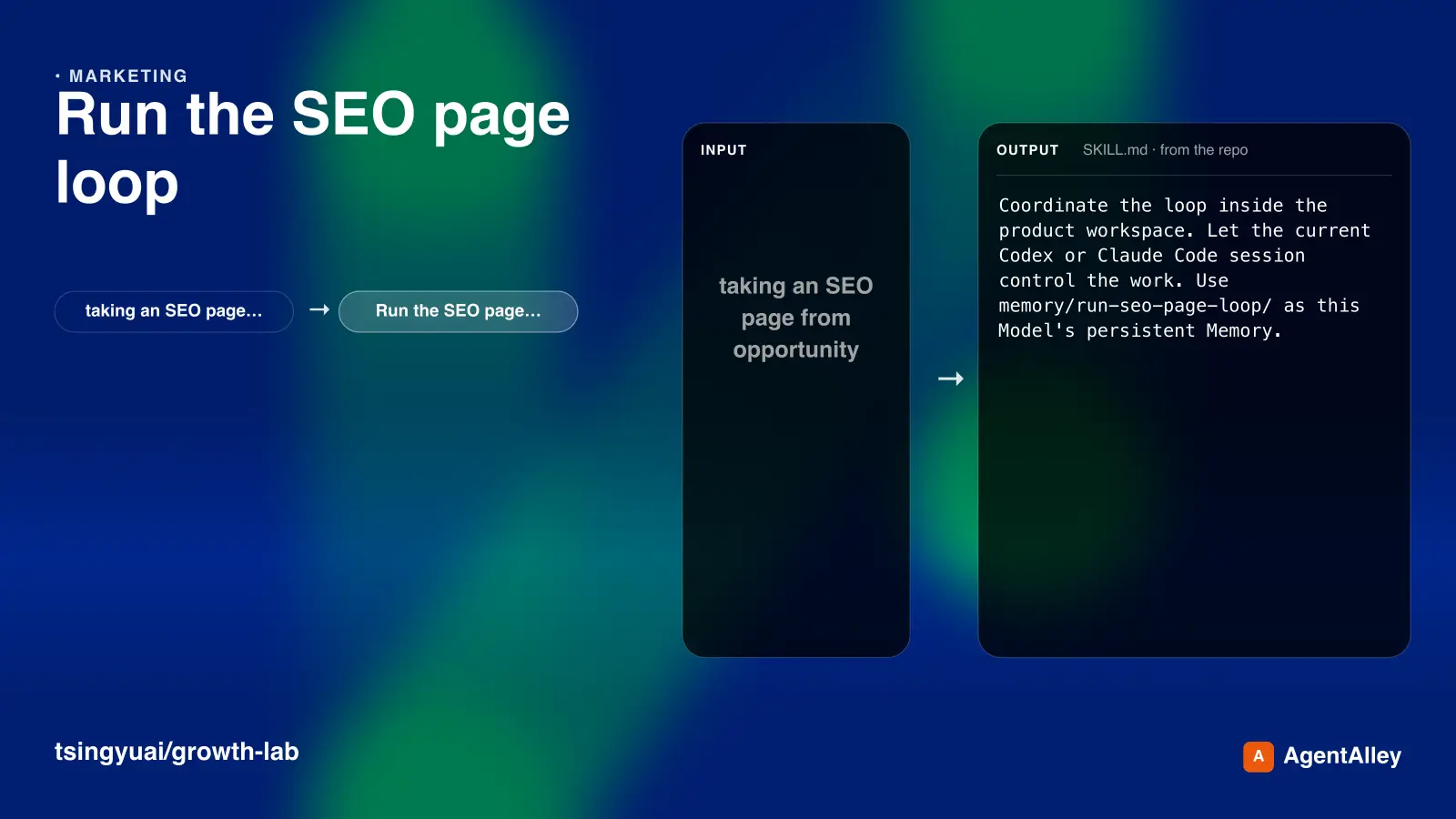
 tsingyuai/growth-lab · by tsingyuaiRun an SEO page observation-action-review loop with persistent Memory by coordinating demand research, page creation, adversarial review, image generation, IndexNow submission, and performance review. Use when taking an SEO page from opportunity discovery through publication, measurement, iteration, or continuing a previous SEO loop from Memory.★ 2k GitHub stars
More from OneWave-AI
 SkillFinding security vulnerabilities , correctness bugsCode review pro
 OneWave-AI/claude-skills · by OneWave-AIPerforms a deep code review of files, modules, a diff, or a branch - finding security vulnerabilities (mapped to OWASP Top 10:2025), correctness bugs, performance problems, and maintainability issues - and returns severity-ranked findings with evidence and concrete fixes. Use when the user asks to review, audit, or sanity-check code, asks "is this safe", "what's wrong with this", "find bugs", or wants a security or performance pass before shipping. For posting line comments on a GitHub pull request, use git-pr-reviewer.★ 306 GitHub stars
 SkillMapping mismatched column names to one schemaCSV/Excel MergerOneWave-AI/claude-skills · by OneWave-AIMerges, appends, joins, and deduplicates multiple CSV, TSV, and Excel files (including multi-sheet workbooks) with pandas - mapping mismatched column names to one schema, normalizing keys, resolving conflicting values, tracking which file each row came from, and verifying the row math. Use when the user wants to combine spreadsheets or exports, stack monthly files, consolidate contact or lead lists, VLOOKUP-style join two sheets on an ID or email, or dedupe records across sources, even if they only say "put these together" or "clean up these lists into one".★ 306 GitHub stars
 SkillDesigns relational and document database schemasDatabase schema designerOneWave-AI/claude-skills · by OneWave-AIDesigns relational and document database schemas from requirements or an existing app - tables and collections, keys, relationships, constraints, indexes driven by real query patterns, ERDs, and reversible migration scripts - with PostgreSQL (including Supabase) as the default and MySQL, SQLite, and MongoDB supported. Use when the user wants to model data for a new app or feature, review or fix an existing schema, choose keys or indexes, plan multi-tenancy, normalize or denormalize, or write CREATE TABLE statements or migrations, even if they just describe their app and ask "how should I store this". For moving data between database providers, use database-migrator.★ 306 GitHub stars
 SkillBuild and run a labelled eval set for a System One model Evaluating a typed-decision configOneWave-AI/claude-skills · by OneWave-AIBuild and run a labelled eval set for a System One model (Jev, Von, or any typed-decision config), then sweep criteria wordings and thresholds against it. Use when a Jev/Von classification is wrong or unreliable, when choosing between the hosted API and a local open model, when tuning noul thresholds, or before shipping any typed-decision feature. Produces an accuracy-by-wording matrix and a calibrated threshold.★ 306 GitHub stars
 SkillExtract and analyze data from invoices, receiptsFinancial Document ParserOneWave-AI/claude-skills · by OneWave-AIExtract and analyze data from invoices, receipts, bank statements, and financial documents. Categorize expenses, track recurring charges, and generate expense reports. Use when user provides financial PDFs or images.★ 306 GitHub stars
 SkillWrites conversion-focused landing page copyLanding page copywriterOneWave-AI/claude-skills · by OneWave-AIWrites conversion-focused landing page copy - headlines, subheads, value propositions, feature and benefit blocks, social proof, FAQs, and CTA button text - using PAS, AIDA, or StoryBrand. Use when the user wants words for a landing page, sales page, product or pricing page, waitlist page, homepage hero, or ad-to-page flow, including rewriting weak copy, generating headline or CTA variants for A/B tests, or turning a product description into page sections. Use landing-page-optimizer instead for auditing an existing page's performance, and a frontend skill for building the page itself.★ 306 GitHub stars