Keyword Research
Run keyword research, classify by search intent, cluster into topical groups, and prioritize for content production.
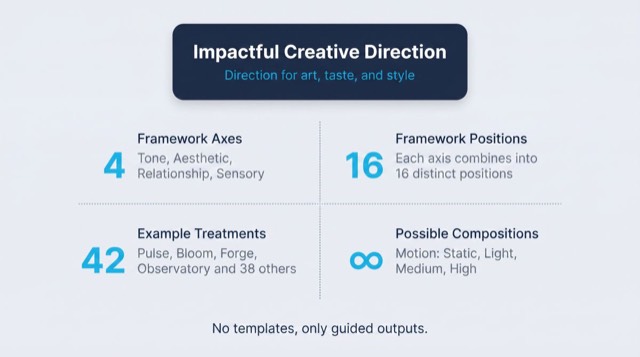
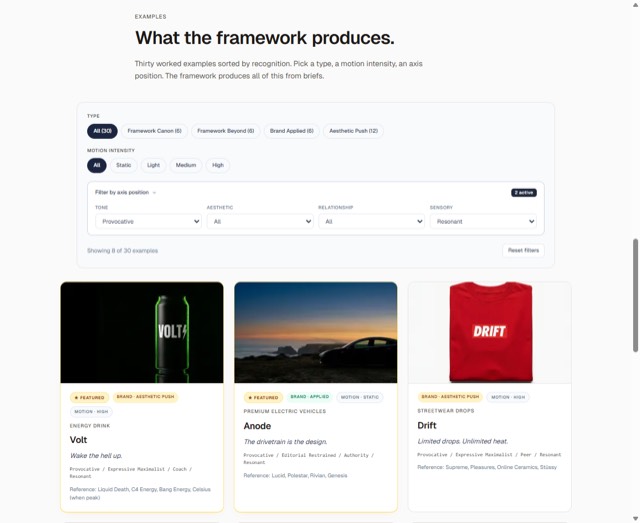
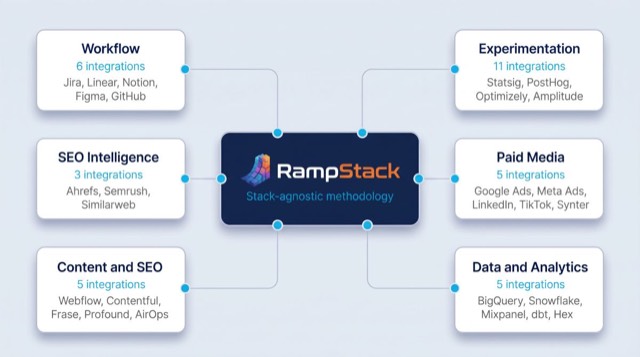
From the rampstackco/claude-skills README — shows the whole collection, not only this skill. · view on GitHub
How to use it
Claude Code
- Run the line below. It pulls the whole folder into
~/.claude/skills/seo-keyword. - Describe your job in plain words. Claude Code follows the skill from there.
npx degit rampstackco/claude-skills/skills/seo-keyword#main ~/.claude/skills/seo-keywordFor one project only, change the path to .claude/skills/seo-keyword.
Claude (web or desktop app)
- On this page open ⋯ → Download .md.
- Save it as SKILL.md in a folder, zip the folder, then Customize → Skills → + → Create skill → Upload a skill.
- Pick the file and Save. Claude shows the name and description and runs a security scan.
- Check the skill is switched on.
- Start a new chat and describe your job in plain words. The AI follows the skill from there.
ChatGPT or another app
- ChatGPT: make a Project and paste it into Instructions.
- Neither? Paste it at the top of a new chat — it works for that chat.
Not working?
- Check which app you pasted it into — the steps above name the right one.
- Some skills need the paid tier of Claude or ChatGPT.
Paste into Claude, ChatGPT or Cursor.
Source of Keyword Research
Show the full text170 lines
| name | description | category | catalog_summary | display_order |
|---|---|---|---|---|
| seo-keyword | Run keyword research, classify by search intent, cluster into topical groups, and prioritize for content production. Use this skill whenever the user asks to do keyword research, find target keywords, identify ranking opportunities, classify search intent, build a topical map, or plan a content strategy around what people search for. Triggers on keyword research, keyword strategy, search intent, keyword clustering, topic clusters, keyword difficulty, search volume, ranking opportunity, content gap, what should I write about, target keyword, primary keyword, secondary keyword, long-tail. Also triggers when planning a content calendar or new site without keywords yet defined. | seo-foundation | Discovery, intent classification, clustering, prioritization | 3 |
Keyword Research
Find the queries worth ranking for, classify them by intent, cluster them into topics, and prioritize what to produce. Stack-agnostic. Tool-agnostic (works with any keyword tool).
When to use
- Starting a new site or content section
- Planning a content calendar
- Looking for ranking opportunities on an existing site
- Understanding search intent before writing
- Building topic clusters for internal linking
- Identifying content gaps vs competitors
When NOT to use
- Optimizing a single page where the target query is already known (use
seo-onpage) - Comparing your site to a competitor across many dimensions (use
seo-competitor) - Auditing existing content for performance (use
seo-content-audit)
Required inputs
- The site or topic area
- The target audience and what they need
- A keyword tool (Ahrefs, Semrush, Moz, Google Keyword Planner, or similar) OR access to search console for an existing site
- Optional: 3 to 5 known competitors to seed the research
If no tool is available, the skill still works using SERP inspection and search console data alone, but the volume estimates will be rough.
The framework: 4 stages
Stage 1: Discover
Cast a wide net. Sources:
- Seed terms from the brief or the user's vocabulary
- Competitor keywords (any keyword tool will export these)
- Search console queries for an existing site (find the page-1 and page-2 queries)
- Related searches and "People also ask" in actual SERPs
- Customer language (support tickets, sales calls, reviews)
- Forum and community language (Reddit, niche forums, Stack Overflow)
Goal: 200 to 500 candidate keywords for a typical content sprint. More if planning a year of content.
Stage 2: Classify by intent
Every keyword maps to one of four intents. Get this right or the rest is noise.
| Intent | Signal | Page type that wins |
|---|---|---|
| Informational | "how to," "what is," "why," "best way to" | Article, guide, tutorial |
| Navigational | brand or product name + modifier | Brand homepage, product page |
| Commercial | "best," "review," "vs," "comparison," "alternatives" | Listicle, comparison, review |
| Transactional | "buy," "price," "deal," "near me," "for sale" | Product page, category page |
A keyword tool's volume tells you the demand. The SERP tells you the intent. When in doubt, look at what's actually ranking. If page 1 is articles, the query is informational. If page 1 is product pages, it's transactional.
Hybrid intents exist. "Best running shoes" is commercial-investigational. "Best running shoes under $100" is the same intent narrowed by a budget filter. Treat hybrids as their dominant intent and note the modifier.
Stage 3: Cluster
Group keywords that should target the same page (or topic cluster).
Two clustering approaches:
Approach A: SERP overlap. If two keywords share at least 3 of the top 10 results, they target the same page. This is mechanical and reliable.
Approach B: Topical relevance. Group keywords by the underlying topic, not just word overlap. "How to start a podcast" and "podcast equipment for beginners" are the same topic, different facets.
Use both. A typical cluster has:
- 1 primary keyword (highest volume, broadest intent)
- 5 to 15 secondary keywords (variations and long-tails)
- 1 page that targets them all
Stage 4: Prioritize
For each cluster, score on three dimensions:
Opportunity (1 to 5):
- Volume (raw search demand)
- Click potential (some queries answer themselves in the SERP, lowering CTR)
- Conversion potential (does this query attract buyers or browsers?)
Difficulty (1 to 5):
- Domain authority of top results
- Backlink count of top results
- Content depth and freshness of top results
- Whether the SERP has features (featured snippets, AI overview, video carousel) that compete with organic
Strategic fit (1 to 5):
- Does it serve our audience?
- Does it support our positioning?
- Does it link to commercial pages naturally?
Priority score = Opportunity + Strategic fit - Difficulty.
Rank the clusters. Top 20 percent get produced first.
Workflow
- Define the scope. What site, what topic area, what audience.
- Run discovery. Pull seeds, competitor exports, search console data, SERP inspections. Aim for 200 to 500 candidates.
- Deduplicate and clean. Remove obvious junk, brand misspellings, irrelevant terms.
- Classify by intent. Mark each keyword.
- Cluster. Group into topical clusters. Aim for 20 to 50 clusters.
- Score each cluster on opportunity, difficulty, and strategic fit.
- Prioritize. Rank by composite score. Identify the top 10 to 20 clusters to produce first.
- Output. Use the template in
references/keyword-research-template.md.
Failure patterns
- Chasing volume without intent. A 10,000-volume informational keyword does not drive purchases. Match query to commercial outcome.
- Targeting impossibly competitive keywords. New sites cannot rank for "credit cards." Find the underserved long-tail variant.
- Ignoring search console. Existing sites already rank for queries they did not target. These are the easiest wins.
- Treating clusters as one-keyword-per-page. A page can target 10 to 30 related keywords. One-keyword-per-page leads to thin, cannibalized content.
- Ignoring SERP features. A query with a featured snippet, AI overview, and a video carousel above the organic results may not be worth pursuing.
- Static keyword research. Search demand shifts. Refresh the research at least annually for evergreen sites, quarterly for fast-moving topics.
Output format
Default output: a spreadsheet (CSV or sheet) with one row per keyword and one row per cluster, plus a markdown summary with the top 10 to 20 clusters detailed.
Recommended columns for the keyword sheet:
| Column | Source |
|---|---|
| Keyword | Discovery |
| Volume | Tool |
| Difficulty | Tool |
| Intent | Manual classification |
| SERP features | Manual or tool |
| Cluster | Stage 3 |
| Cluster role (primary/secondary) | Stage 3 |
| Opportunity score | Stage 4 |
| Strategic fit | Stage 4 |
| Priority | Composite |
| Notes | Free text |
If required data is unavailable
This skill's output depends on data, measurements, or tool results it cannot generate on its own. When a required input, tool, or data source is unavailable or unverifiable, the sanctioned output is the deliverable with the gap stated: what was needed, what was actually obtained or verified, and which parts of the output are affected. Fabricating, estimating, or interpolating a required number to complete the deliverable is never sanctioned. A stated gap is a complete answer.
Reference files
references/keyword-research-template.md- Spreadsheet column definitions and a markdown summary template.references/intent-classification-guide.md- Detailed examples of each of the four intent categories.
| 1 | |
| 2 | name seo-keyword |
| 3 | description "Run keyword research, classify by search intent, cluster into topical groups, and prioritize for content production. Use this skill whenever the user asks to do keyword research, find target keywords, identify ranking opportunities, classify search intent, build a topical map, or plan a content strategy around what people search for. Triggers on keyword research, keyword strategy, search intent, keyword clustering, topic clusters, keyword difficulty, search volume, ranking opportunity, content gap, what should I write about, target keyword, primary keyword, secondary keyword, long-tail. Also triggers when planning a content calendar or new site without keywords yet defined." |
| 4 | category seo-foundation |
| 5 | catalog_summary "Discovery, intent classification, clustering, prioritization" |
| 6 | display_order 3 |
| 7 | |
| 8 | |
| 9 | # Keyword Research |
| 10 | |
| 11 | Find the queries worth ranking for, classify them by intent, cluster them into topics, and prioritize what to produce. Stack-agnostic. Tool-agnostic (works with any keyword tool). |
| 12 | |
| 13 | |
| 14 | |
| 15 | ## When to use |
| 16 | |
| 17 | Starting a new site or content section |
| 18 | Planning a content calendar |
| 19 | Looking for ranking opportunities on an existing site |
| 20 | Understanding search intent before writing |
| 21 | Building topic clusters for internal linking |
| 22 | Identifying content gaps vs competitors |
| 23 | |
| 24 | ## When NOT to use |
| 25 | |
| 26 | Optimizing a single page where the target query is already known (use `seo-onpage`) |
| 27 | Comparing your site to a competitor across many dimensions (use `seo-competitor`) |
| 28 | Auditing existing content for performance (use `seo-content-audit`) |
| 29 | |
| 30 | |
| 31 | |
| 32 | ## Required inputs |
| 33 | |
| 34 | The site or topic area |
| 35 | The target audience and what they need |
| 36 | A keyword tool (Ahrefs, Semrush, Moz, Google Keyword Planner, or similar) OR access to search console for an existing site |
| 37 | Optional: 3 to 5 known competitors to seed the research |
| 38 | |
| 39 | If no tool is available, the skill still works using SERP inspection and search console data alone, but the volume estimates will be rough. |
| 40 | |
| 41 | |
| 42 | |
| 43 | ## The framework: 4 stages |
| 44 | |
| 45 | ### Stage 1: Discover |
| 46 | |
| 47 | Cast a wide net. Sources: |
| 48 | |
| 49 | **Seed terms** from the brief or the user's vocabulary |
| 50 | **Competitor keywords** (any keyword tool will export these) |
| 51 | **Search console queries** for an existing site (find the page-1 and page-2 queries) |
| 52 | **Related searches and "People also ask"** in actual SERPs |
| 53 | **Customer language** (support tickets, sales calls, reviews) |
| 54 | **Forum and community language** (Reddit, niche forums, Stack Overflow) |
| 55 | |
| 56 | Goal: 200 to 500 candidate keywords for a typical content sprint. More if planning a year of content. |
| 57 | |
| 58 | ### Stage 2: Classify by intent |
| 59 | |
| 60 | Every keyword maps to one of four intents. Get this right or the rest is noise. |
| 61 | |
| 62 | | Intent | Signal | Page type that wins | |
| 63 | |---|---|---| |
| 64 | | **Informational** | "how to," "what is," "why," "best way to" | Article, guide, tutorial | |
| 65 | | **Navigational** | brand or product name + modifier | Brand homepage, product page | |
| 66 | | **Commercial** | "best," "review," "vs," "comparison," "alternatives" | Listicle, comparison, review | |
| 67 | | **Transactional** | "buy," "price," "deal," "near me," "for sale" | Product page, category page | |
| 68 | |
| 69 | A keyword tool's volume tells you the demand. The SERP tells you the intent. When in doubt, look at what's actually ranking. If page 1 is articles, the query is informational. If page 1 is product pages, it's transactional. |
| 70 | |
| 71 | **Hybrid intents exist.** "Best running shoes" is commercial-investigational. "Best running shoes under $100" is the same intent narrowed by a budget filter. Treat hybrids as their dominant intent and note the modifier. |
| 72 | |
| 73 | ### Stage 3: Cluster |
| 74 | |
| 75 | Group keywords that should target the same page (or topic cluster). |
| 76 | |
| 77 | Two clustering approaches: |
| 78 | |
| 79 | **Approach A: SERP overlap.** If two keywords share at least 3 of the top 10 results, they target the same page. This is mechanical and reliable. |
| 80 | |
| 81 | **Approach B: Topical relevance.** Group keywords by the underlying topic, not just word overlap. "How to start a podcast" and "podcast equipment for beginners" are the same topic, different facets. |
| 82 | |
| 83 | Use both. A typical cluster has: |
| 84 | 1 primary keyword (highest volume, broadest intent) |
| 85 | 5 to 15 secondary keywords (variations and long-tails) |
| 86 | 1 page that targets them all |
| 87 | |
| 88 | ### Stage 4: Prioritize |
| 89 | |
| 90 | For each cluster, score on three dimensions: |
| 91 | |
| 92 | **Opportunity** (1 to 5): |
| 93 | Volume (raw search demand) |
| 94 | Click potential (some queries answer themselves in the SERP, lowering CTR) |
| 95 | Conversion potential (does this query attract buyers or browsers?) |
| 96 | |
| 97 | **Difficulty** (1 to 5): |
| 98 | Domain authority of top results |
| 99 | Backlink count of top results |
| 100 | Content depth and freshness of top results |
| 101 | Whether the SERP has features (featured snippets, AI overview, video carousel) that compete with organic |
| 102 | |
| 103 | **Strategic fit** (1 to 5): |
| 104 | Does it serve our audience? |
| 105 | Does it support our positioning? |
| 106 | Does it link to commercial pages naturally? |
| 107 | |
| 108 | **Priority score = Opportunity + Strategic fit - Difficulty.** |
| 109 | |
| 110 | Rank the clusters. Top 20 percent get produced first. |
| 111 | |
| 112 | |
| 113 | |
| 114 | ## Workflow |
| 115 | |
| 116 | **Define the scope.** What site, what topic area, what audience. |
| 117 | **Run discovery.** Pull seeds, competitor exports, search console data, SERP inspections. Aim for 200 to 500 candidates. |
| 118 | **Deduplicate and clean.** Remove obvious junk, brand misspellings, irrelevant terms. |
| 119 | **Classify by intent.** Mark each keyword. |
| 120 | **Cluster.** Group into topical clusters. Aim for 20 to 50 clusters. |
| 121 | **Score each cluster** on opportunity, difficulty, and strategic fit. |
| 122 | **Prioritize.** Rank by composite score. Identify the top 10 to 20 clusters to produce first. |
| 123 | **Output.** Use the template in [`references/keyword-research-template.md`]. |
| 124 | |
| 125 | |
| 126 | |
| 127 | ## Failure patterns |
| 128 | |
| 129 | **Chasing volume without intent.** A 10,000-volume informational keyword does not drive purchases. Match query to commercial outcome. |
| 130 | **Targeting impossibly competitive keywords.** New sites cannot rank for "credit cards." Find the underserved long-tail variant. |
| 131 | **Ignoring search console.** Existing sites already rank for queries they did not target. These are the easiest wins. |
| 132 | **Treating clusters as one-keyword-per-page.** A page can target 10 to 30 related keywords. One-keyword-per-page leads to thin, cannibalized content. |
| 133 | **Ignoring SERP features.** A query with a featured snippet, AI overview, and a video carousel above the organic results may not be worth pursuing. |
| 134 | **Static keyword research.** Search demand shifts. Refresh the research at least annually for evergreen sites, quarterly for fast-moving topics. |
| 135 | |
| 136 | |
| 137 | |
| 138 | ## Output format |
| 139 | |
| 140 | Default output: a spreadsheet (CSV or sheet) with one row per keyword and one row per cluster, plus a markdown summary with the top 10 to 20 clusters detailed. |
| 141 | |
| 142 | Recommended columns for the keyword sheet: |
| 143 | |
| 144 | | Column | Source | |
| 145 | |---|---| |
| 146 | | Keyword | Discovery | |
| 147 | | Volume | Tool | |
| 148 | | Difficulty | Tool | |
| 149 | | Intent | Manual classification | |
| 150 | | SERP features | Manual or tool | |
| 151 | | Cluster | Stage 3 | |
| 152 | | Cluster role (primary/secondary) | Stage 3 | |
| 153 | | Opportunity score | Stage 4 | |
| 154 | | Strategic fit | Stage 4 | |
| 155 | | Priority | Composite | |
| 156 | | Notes | Free text | |
| 157 | |
| 158 | |
| 159 | |
| 160 | ## If required data is unavailable |
| 161 | |
| 162 | This skill's output depends on data, measurements, or tool results it cannot generate on its own. When a required input, tool, or data source is unavailable or unverifiable, the sanctioned output is the deliverable with the gap stated: what was needed, what was actually obtained or verified, and which parts of the output are affected. Fabricating, estimating, or interpolating a required number to complete the deliverable is never sanctioned. A stated gap is a complete answer. |
| 163 | |
| 164 | |
| 165 | |
| 166 | ## Reference files |
| 167 | |
| 168 | [`references/keyword-research-template.md`] - Spreadsheet column definitions and a markdown summary template. |
| 169 | [`references/intent-classification-guide.md`] - Detailed examples of each of the four intent categories. |
| 170 |
Discussion
Browse more free Claude skills or everything in Marketing.