SEO Competitor Analysis
Run a competitive SEO analysis comparing the user's site to chosen competitors across SERP overlap, content depth, backlink profiles, technical posture, and brand presence.
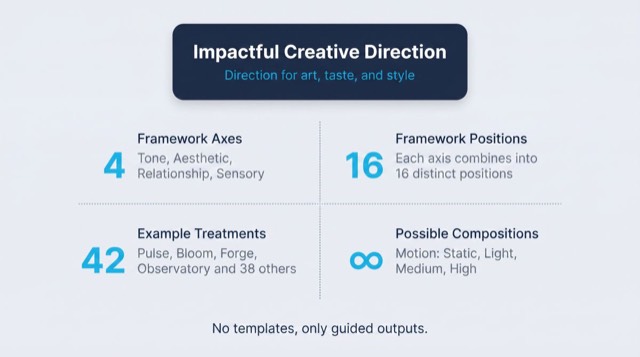
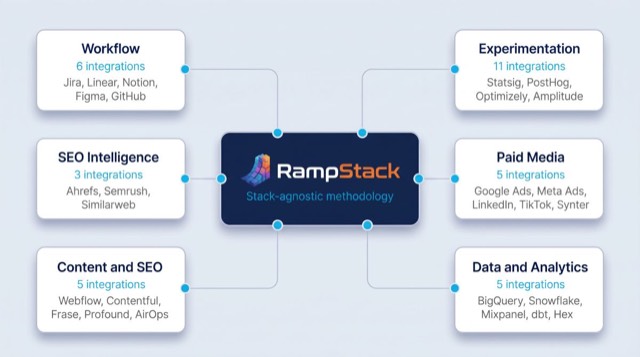
From the rampstackco/claude-skills README — shows the whole collection, not only this skill. · view on GitHub
How to use it
Claude Code
- Run the line below. It pulls the whole folder into
~/.claude/skills/seo-competitor, including the files SKILL.md points to. - Describe your job in plain words. Claude Code follows the skill from there.
npx degit rampstackco/claude-skills/skills/seo-competitor#main ~/.claude/skills/seo-competitorFor one project only, change the path to .claude/skills/seo-competitor. This skill also uses llms.txt, competitive-analysis.md — copying SKILL.md alone won't be enough. See the folder on GitHub.
Claude (web or desktop app)
- On this page open ⋯ → Download .md.
- Save it as SKILL.md in a folder, zip the folder, then Customize → Skills → + → Create skill → Upload a skill.
- Pick the file and Save. Claude shows the name and description and runs a security scan.
- Check the skill is switched on.
- Start a new chat and describe your job in plain words. The AI follows the skill from there.
ChatGPT or another app
- ChatGPT: make a Project and paste it into Instructions.
- Neither? Paste it at the top of a new chat — it works for that chat.
Not working?
- Check which app you pasted it into — the steps above name the right one.
- Some skills need the paid tier of Claude or ChatGPT.
Paste into Claude, ChatGPT or Cursor.
Source of SEO Competitor Analysis
Show the full text144 lines
| name | description | category | catalog_summary | display_order |
|---|---|---|---|---|
| seo-competitor | Run a competitive SEO analysis comparing the user's site to chosen competitors across SERP overlap, content depth, backlink profiles, technical posture, and brand presence. Use this skill whenever the user wants to analyze competitors, find content gaps, identify backlink opportunities, understand why competitors outrank them, or benchmark against the rest of their category. Triggers on competitor analysis, competitive analysis, SERP analysis, content gap, backlink gap, why is X ranking, who is winning the SERP, beat my competitor, benchmark, market positioning. Also triggers when planning a content strategy and the question 'what are competitors doing' is implicit. | seo-foundation | SERP overlap, content gaps, backlink gaps, technical comparison | 4 |
SEO Competitor Analysis
Compare a site to its competitors and find the gaps worth closing. Stack-agnostic. Tool-friendly but tool-optional.
When to use
- Identifying which competitors to study
- Finding content gaps (topics they cover, you do not)
- Finding backlink gaps (sites linking to them, not you)
- Understanding why a specific competitor outranks the user
- Benchmarking authority, technical posture, and content depth
When NOT to use
- Single-page optimization (use
seo-onpage) - Initial keyword research with no competitors yet identified (use
seo-keywordfirst to find them) - Auditing one's own existing content (use
seo-content-audit)
Required inputs
- The user's site
- 3 to 5 named competitors (or the topic area, if competitors are not yet identified)
- Access to a keyword tool, a backlink tool, and any crawler
If competitors are unknown, start by listing the top 10 ranking domains for the user's top 10 priority keywords. Pick the 3 to 5 that appear most often.
Where competitor traffic estimation is the input you need (relative scale, channel mix, audience overlap), Similarweb MCP is the strongest source. Pair with Ahrefs (for backlink and keyword overlap) and Semrush (for SERP feature presence and SEO-PR overlap). Each platform gives a different cut of the same competitive landscape; using them together produces sharper signal than any one alone.
The framework: 5 angles
Competitor analysis covers five angles. Run all five for a full picture, or pick two or three for a focused investigation.
1. SERP overlap
Where do you and the competitor compete head-to-head?
- For each priority keyword, who ranks in the top 10?
- For each top-10 ranking, what page type wins (article, product, comparison, video)?
- Are there SERP features (featured snippet, AI overview, video, image pack) one party holds and the other does not?
- Which queries do competitors rank for that the user does not? (the content gap)
2. Content depth
What does their winning content look like?
- Word count and structure of their top-ranking pages
- Information types they include (data tables, original research, video, calculators, downloadable assets)
- Update frequency on key pages (last modified date, change history)
- Internal linking patterns (do their winning pages link to commercial pages?)
- Topical breadth (how many related topics do they cover?)
3. Backlink profile
Where does their authority come from?
- Total referring domains
- Domain rating (or equivalent authority metric)
- Top 50 referring pages by traffic value
- Backlink types (editorial, directory, partner, paid, spam)
- Link velocity (gaining or losing referring domains over time)
- Pages on their site attracting the most links (these are their "linkable assets")
4. Technical posture
How clean is their technical foundation?
- Core Web Vitals (LCP, INP, CLS)
- Mobile usability
- Schema implementation (which types, on which page types)
- Site architecture and internal linking density
- Crawl efficiency (are they wasting crawl budget?)
- HTTPS, security headers
- llms.txt and AI search readiness
5. Brand and entity strength
How well-known are they outside organic search?
- Branded search volume (how many people search their name?)
- Entity recognition in knowledge graph (do they have a Wikipedia page, knowledge panel, structured data feeding entity status?)
- Mention frequency in their topic area (PR coverage, podcast appearances, citations)
- Social signals (followers, engagement, share rates)
- Reviews and reputation
Workflow
- Confirm the competitors. Either named, or derive from SERP overlap on top 10 priority keywords.
- Pick the angles. Run all 5 for a full audit, or 2 to 3 for a focused dive.
- Pull the data. Keyword tool exports, backlink tool exports, manual SERP inspection, technical crawl.
- Score each angle. Where does the user lead? Where do they trail?
- Identify gaps. Specific content gaps, specific backlink gaps, specific technical gaps.
- Prioritize. Which gaps are highest leverage to close? (Big traffic potential, achievable effort, strategic fit.)
- Write the report. Use the template in
references/competitive-audit-template.md.
Failure patterns
- Picking the wrong competitors. A site that outranks you on one keyword but operates a different business is not a competitor. Pick by SERP overlap and audience overlap, not by who you think you compete with.
- Treating "more content" as the takeaway. They are not winning because they have 500 articles. They are winning because of specific content + links + UX. Find the actual lever.
- Copying their pages verbatim. Diminishing returns. Beat them by being more useful, not by paraphrasing them.
- Ignoring brand strength. A weaker site with a stronger brand wins on branded queries you cannot touch with content alone.
- Static analysis. Re-run the analysis at least annually. Competitor strategies shift.
Output format
Default output is a markdown report at competitive-analysis.md plus accompanying spreadsheets for the keyword and backlink data.
Structure:
- Executive summary (3 to 5 critical findings)
- Competitor profiles (one per competitor, brief)
- SERP overlap analysis
- Content gap analysis
- Backlink gap analysis
- Technical comparison
- Brand and entity comparison
- Prioritized gap-closing roadmap
If required data is unavailable
This skill's output depends on data, measurements, or tool results it cannot generate on its own. When a required input, tool, or data source is unavailable or unverifiable, the sanctioned output is the deliverable with the gap stated: what was needed, what was actually obtained or verified, and which parts of the output are affected. Fabricating, estimating, or interpolating a required number to complete the deliverable is never sanctioned. A stated gap is a complete answer.
Reference files
references/competitive-audit-template.md- Fillable competitive audit template.references/content-gap-method.md- Detailed methodology for finding content gaps with example.
| 1 | |
| 2 | name seo-competitor |
| 3 | description "Run a competitive SEO analysis comparing the user's site to chosen competitors across SERP overlap, content depth, backlink profiles, technical posture, and brand presence. Use this skill whenever the user wants to analyze competitors, find content gaps, identify backlink opportunities, understand why competitors outrank them, or benchmark against the rest of their category. Triggers on competitor analysis, competitive analysis, SERP analysis, content gap, backlink gap, why is X ranking, who is winning the SERP, beat my competitor, benchmark, market positioning. Also triggers when planning a content strategy and the question 'what are competitors doing' is implicit." |
| 4 | category seo-foundation |
| 5 | catalog_summary "SERP overlap, content gaps, backlink gaps, technical comparison" |
| 6 | display_order 4 |
| 7 | |
| 8 | |
| 9 | # SEO Competitor Analysis |
| 10 | |
| 11 | Compare a site to its competitors and find the gaps worth closing. Stack-agnostic. Tool-friendly but tool-optional. |
| 12 | |
| 13 | |
| 14 | |
| 15 | ## When to use |
| 16 | |
| 17 | Identifying which competitors to study |
| 18 | Finding content gaps (topics they cover, you do not) |
| 19 | Finding backlink gaps (sites linking to them, not you) |
| 20 | Understanding why a specific competitor outranks the user |
| 21 | Benchmarking authority, technical posture, and content depth |
| 22 | |
| 23 | ## When NOT to use |
| 24 | |
| 25 | Single-page optimization (use `seo-onpage`) |
| 26 | Initial keyword research with no competitors yet identified (use `seo-keyword` first to find them) |
| 27 | Auditing one's own existing content (use `seo-content-audit`) |
| 28 | |
| 29 | |
| 30 | |
| 31 | ## Required inputs |
| 32 | |
| 33 | The user's site |
| 34 | 3 to 5 named competitors (or the topic area, if competitors are not yet identified) |
| 35 | Access to a keyword tool, a backlink tool, and any crawler |
| 36 | |
| 37 | If competitors are unknown, start by listing the top 10 ranking domains for the user's top 10 priority keywords. Pick the 3 to 5 that appear most often. |
| 38 | |
| 39 | Where competitor traffic estimation is the input you need (relative scale, channel mix, audience overlap), Similarweb MCP is the strongest source. Pair with Ahrefs (for backlink and keyword overlap) and Semrush (for SERP feature presence and SEO-PR overlap). Each platform gives a different cut of the same competitive landscape; using them together produces sharper signal than any one alone. |
| 40 | |
| 41 | |
| 42 | |
| 43 | ## The framework: 5 angles |
| 44 | |
| 45 | Competitor analysis covers five angles. Run all five for a full picture, or pick two or three for a focused investigation. |
| 46 | |
| 47 | ### 1. SERP overlap |
| 48 | Where do you and the competitor compete head-to-head? |
| 49 | |
| 50 | For each priority keyword, who ranks in the top 10? |
| 51 | For each top-10 ranking, what page type wins (article, product, comparison, video)? |
| 52 | Are there SERP features (featured snippet, AI overview, video, image pack) one party holds and the other does not? |
| 53 | Which queries do competitors rank for that the user does not? (the content gap) |
| 54 | |
| 55 | ### 2. Content depth |
| 56 | What does their winning content look like? |
| 57 | |
| 58 | Word count and structure of their top-ranking pages |
| 59 | Information types they include (data tables, original research, video, calculators, downloadable assets) |
| 60 | Update frequency on key pages (last modified date, change history) |
| 61 | Internal linking patterns (do their winning pages link to commercial pages?) |
| 62 | Topical breadth (how many related topics do they cover?) |
| 63 | |
| 64 | ### 3. Backlink profile |
| 65 | Where does their authority come from? |
| 66 | |
| 67 | Total referring domains |
| 68 | Domain rating (or equivalent authority metric) |
| 69 | Top 50 referring pages by traffic value |
| 70 | Backlink types (editorial, directory, partner, paid, spam) |
| 71 | Link velocity (gaining or losing referring domains over time) |
| 72 | Pages on their site attracting the most links (these are their "linkable assets") |
| 73 | |
| 74 | ### 4. Technical posture |
| 75 | How clean is their technical foundation? |
| 76 | |
| 77 | Core Web Vitals (LCP, INP, CLS) |
| 78 | Mobile usability |
| 79 | Schema implementation (which types, on which page types) |
| 80 | Site architecture and internal linking density |
| 81 | Crawl efficiency (are they wasting crawl budget?) |
| 82 | HTTPS, security headers |
| 83 | llms.txt and AI search readiness |
| 84 | |
| 85 | ### 5. Brand and entity strength |
| 86 | How well-known are they outside organic search? |
| 87 | |
| 88 | Branded search volume (how many people search their name?) |
| 89 | Entity recognition in knowledge graph (do they have a Wikipedia page, knowledge panel, structured data feeding entity status?) |
| 90 | Mention frequency in their topic area (PR coverage, podcast appearances, citations) |
| 91 | Social signals (followers, engagement, share rates) |
| 92 | Reviews and reputation |
| 93 | |
| 94 | |
| 95 | |
| 96 | ## Workflow |
| 97 | |
| 98 | **Confirm the competitors.** Either named, or derive from SERP overlap on top 10 priority keywords. |
| 99 | **Pick the angles.** Run all 5 for a full audit, or 2 to 3 for a focused dive. |
| 100 | **Pull the data.** Keyword tool exports, backlink tool exports, manual SERP inspection, technical crawl. |
| 101 | **Score each angle.** Where does the user lead? Where do they trail? |
| 102 | **Identify gaps.** Specific content gaps, specific backlink gaps, specific technical gaps. |
| 103 | **Prioritize.** Which gaps are highest leverage to close? (Big traffic potential, achievable effort, strategic fit.) |
| 104 | **Write the report.** Use the template in [`references/competitive-audit-template.md`]. |
| 105 | |
| 106 | |
| 107 | |
| 108 | ## Failure patterns |
| 109 | |
| 110 | **Picking the wrong competitors.** A site that outranks you on one keyword but operates a different business is not a competitor. Pick by SERP overlap and audience overlap, not by who you think you compete with. |
| 111 | **Treating "more content" as the takeaway.** They are not winning because they have 500 articles. They are winning because of specific content + links + UX. Find the actual lever. |
| 112 | **Copying their pages verbatim.** Diminishing returns. Beat them by being more useful, not by paraphrasing them. |
| 113 | **Ignoring brand strength.** A weaker site with a stronger brand wins on branded queries you cannot touch with content alone. |
| 114 | **Static analysis.** Re-run the analysis at least annually. Competitor strategies shift. |
| 115 | |
| 116 | |
| 117 | |
| 118 | ## Output format |
| 119 | |
| 120 | Default output is a markdown report at `competitive-analysis.md` plus accompanying spreadsheets for the keyword and backlink data. |
| 121 | |
| 122 | Structure: |
| 123 | Executive summary (3 to 5 critical findings) |
| 124 | Competitor profiles (one per competitor, brief) |
| 125 | SERP overlap analysis |
| 126 | Content gap analysis |
| 127 | Backlink gap analysis |
| 128 | Technical comparison |
| 129 | Brand and entity comparison |
| 130 | Prioritized gap-closing roadmap |
| 131 | |
| 132 | |
| 133 | |
| 134 | ## If required data is unavailable |
| 135 | |
| 136 | This skill's output depends on data, measurements, or tool results it cannot generate on its own. When a required input, tool, or data source is unavailable or unverifiable, the sanctioned output is the deliverable with the gap stated: what was needed, what was actually obtained or verified, and which parts of the output are affected. Fabricating, estimating, or interpolating a required number to complete the deliverable is never sanctioned. A stated gap is a complete answer. |
| 137 | |
| 138 | |
| 139 | |
| 140 | ## Reference files |
| 141 | |
| 142 | [`references/competitive-audit-template.md`] - Fillable competitive audit template. |
| 143 | [`references/content-gap-method.md`] - Detailed methodology for finding content gaps with example. |
| 144 |
Discussion
Browse more free Claude skills or everything in Marketing.