
Replicate a video skill
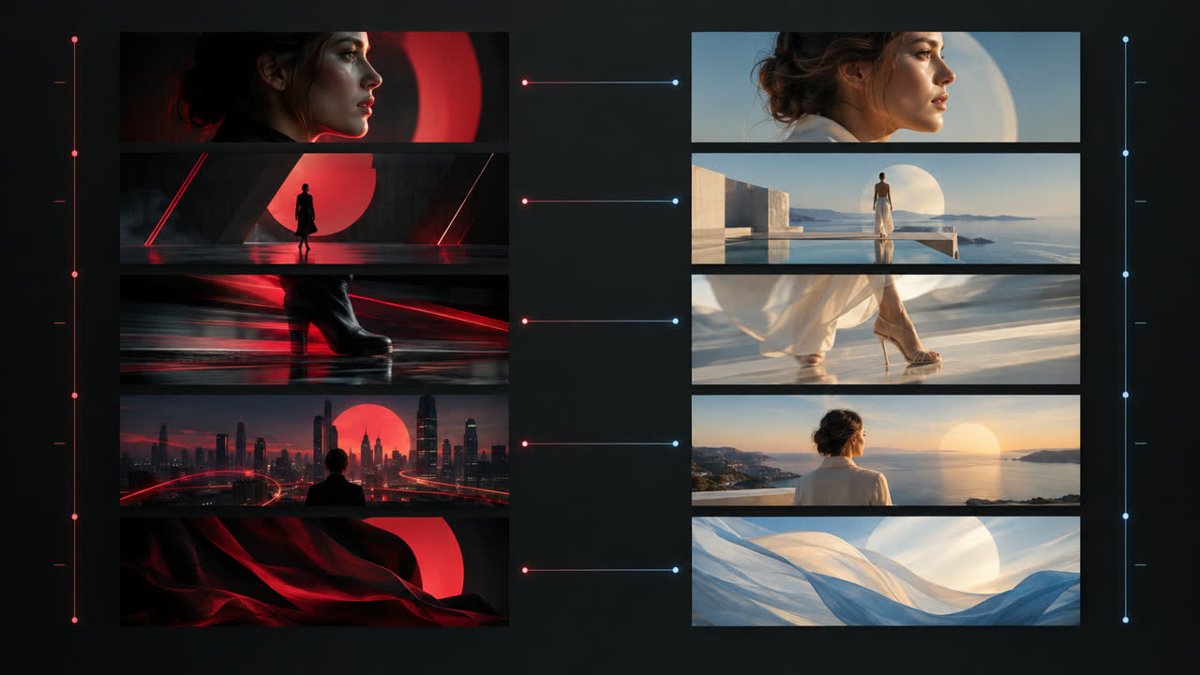
Illustration · not a resultFrom the openfilm/openfilm README — shows the whole collection, not only this skill.source ↗
Remake a reference video in OpenFilm, as close as the person wants it, from frame for frame to its structure, rhythm, look and motion carrying their own content.
by openfilm·MIT license·★ 975 Stars on the repo·GitHub ↗
npx degit openfilm/openfilm/packages/openfilm/skills/replicate#main ~/.claude/skills/replicateChecked ·commit main
Files of Replicate a video
Show the full text41 lines
Replicate a video
Remake a video the person admires, as close as they want it: the same film frame for frame, or its form (the parts, the rhythm, the look, the way things move) carrying their own content. When their words do not say which, ask. Either way it is made again in OpenFilm, so every part of it can be changed.
What has to be true
- The same moments. Where the reference cuts, a word appears, something moves or a sound hits, the film does too,
scaled when the lengths differ; for an exact copy, each frame matches the reference's frame at the same time. Compare
the two at the same times with
npx openfilm look, and report honestly, in numbers, how close it is. - Made again. The reference stays in
references/and is never a clip of the film: what the film shows is made anew, and the reference's own music, footage or voice go in only when the person asks for them. - Their version is theirs: when they want their own content, every part carries their topic, product, words and material, and a part they have nothing for takes a job that fits their film. A template with new words in it is not done.
- It holds up next to the reference, as well made at every moment. Watch the whole film as a viewer would, and keep refining until it does.
What you have
references/ sits beside the film but not in it: assets/ holds only what the film uses. Anything you can make
pictures, motion and sound with: the web platform and any library on it, renderers whose output becomes a clip, the
person's footage and photos, any font whose license allows it, images, video, music and voice from npx openfilm get,
your own built-in tools, and services the person has keys for. OpenFilm's own rules still hold: the picture at t
depends on t alone, a page has no sound, and what you render elsewhere enters as a clip under assets/ with the script
that made it. Ask before downloading anything large onto the person's computer.
With the person
What they ask for comes before anything here. The reference (a file, or a link you can download), how close they want it, what their version is about and the material they have (footage, product shots, a logo, their voice), and where it will be posted. Ask without holding up the work. When done, tell them in a few lines what was kept, what changed and why, how close it is, and, if they will post it, which parts belong to someone else (footage, music, voice, faces, a logo, words, typefaces).
| 1 | |
| 2 | name replicate |
| 3 | description Remake a reference video in OpenFilm, as close as the person wants it, from frame for frame to its structure, rhythm, look and motion carrying their own content. Use when the person gives a video, as a file or a link, and asks for an exact copy of it, one like it, its style or pacing, or a remake for their product or topic (复刻, 照着做, 做个同款, 一模一样, 仿这个视频). |
| 4 | |
| 5 | |
| 6 | # Replicate a video |
| 7 | |
| 8 | Remake a video the person admires, as close as they want it: the same film frame for frame, or its form (the parts, |
| 9 | the rhythm, the look, the way things move) carrying their own content. When their words do not say which, ask. Either |
| 10 | way it is made again in OpenFilm, so every part of it can be changed. |
| 11 | |
| 12 | ## What has to be true |
| 13 | |
| 14 | **The same moments.** Where the reference cuts, a word appears, something moves or a sound hits, the film does too, |
| 15 | scaled when the lengths differ; for an exact copy, each frame matches the reference's frame at the same time. Compare |
| 16 | the two at the same times with `npx openfilm look`, and report honestly, in numbers, how close it is. |
| 17 | **Made again.** The reference stays in `references/` and is never a clip of the film: what the film shows is made |
| 18 | anew, and the reference's own music, footage or voice go in only when the person asks for them. |
| 19 | **Their version is theirs**: when they want their own content, every part carries their topic, product, words and |
| 20 | material, and a part they have nothing for takes a job that fits their film. A template with new words in it is not |
| 21 | done. |
| 22 | **It holds up next to the reference**, as well made at every moment. Watch the whole film as a viewer would, and keep |
| 23 | refining until it does. |
| 24 | |
| 25 | ## What you have |
| 26 | |
| 27 | `references/` sits beside the film but not in it: `assets/` holds only what the film uses. Anything you can make |
| 28 | pictures, motion and sound with: the web platform and any library on it, renderers whose output becomes a clip, the |
| 29 | person's footage and photos, any font whose license allows it, images, video, music and voice from `npx openfilm get`, |
| 30 | your own built-in tools, and services the person has keys for. OpenFilm's own rules still hold: the picture at t |
| 31 | depends on t alone, a page has no sound, and what you render elsewhere enters as a clip under `assets/` with the script |
| 32 | that made it. Ask before downloading anything large onto the person's computer. |
| 33 | |
| 34 | ## With the person |
| 35 | |
| 36 | What they ask for comes before anything here. The reference (a file, or a link you can download), how close they want |
| 37 | it, what their version is about and the material they have (footage, product shots, a logo, their voice), and where it |
| 38 | will be posted. Ask without holding up the work. When done, tell them in a few lines what was kept, what changed and |
| 39 | why, how close it is, and, if they will post it, which parts belong to someone else (footage, music, voice, faces, a |
| 40 | logo, words, typefaces). |
| 41 |
Discussion
Browse more free Claude skills.