Profile / Avatar - Nano Banana Pro Unexpected Event Photo Prompt
A detailed prompt for nano-banana-pro (referred to as 'banana pro' in the tweet) that transforms a static portrait into a realistic snapshot of an unexpected event occurring.
by AI司马2046·CC-BY-4.0 license·via YouMind (CC BY 4.0)·Source ↗
Use now
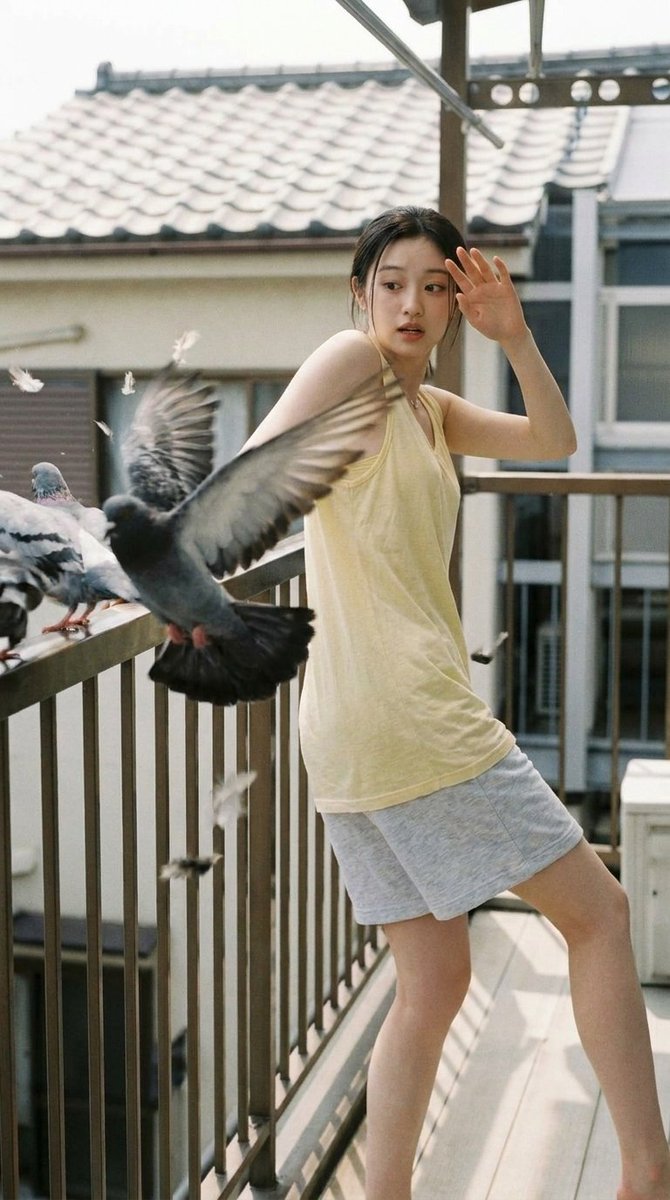
The sample the author posted with this prompt on its sourceview original
| 1 | [Unexpected Event Requirement] |
| 2 | {argument name="event" default="Fill in a sudden event here, e.g., 'a bird suddenly flies past the camera', 'a tiger appears from behind the subject', etc. If left blank, the model will design a reasonable sudden event based on the original scene."} |
| 3 | Maintain the identity, appearance, hairstyle, clothing, environment, scene structure, and overall visual style consistent with the original image. |
| 4 | Reconstruct the ordinary static photo into a **realistic snapshot capturing the '0.1 second after a sudden event occurs'**. |
| 5 | 1 | The unexpected event must actually happen |
| 6 | Strictly execute the event defined in [Unexpected Event Requirement]. |
| 7 | The event must exist realistically in the final image; it cannot be implied solely through facial expressions or body language. |
| 8 | The position, size, direction of movement, and perspective relationships of the event must comply with real photography logic and have natural spatial relationships with the original environment. |
| 9 | If the event involves motion, clearly express the direction and sense of speed. |
| 10 | The event can be located in: |
| 11 | Foreground of the lens |
| 12 | Near the subject |
| 13 | To the side of the subject |
| 14 | Behind the subject |
| 15 | Background area |
| 16 | Crossing between the subject and the lens |
| 17 | Choose the most visually impactful position freely based on the nature of the event. |
| 18 | |
| 19 | 2 | The subject must react instinctively to the event |
| 20 | The subject is not posing but making a real, unprepared instinctive reaction at the moment the event occurs. |
| 21 | Automatically design movements compliant with human biomechanics based on the event's position, speed, danger level, and direction of movement, such as: |
| 22 | Sudden lateral evasion, leaning back, leaning forward, turning around, crouching low, jumping away, losing balance, emergency stop, striding to dodge, reaching out to block, arms protecting the body, grabbing nearby objects to maintain balance, etc. |
| 23 | Do not limit actions to just "dodging backward." |
| 24 | Redesign the direction of the subject's body reaction based on the position and trajectory of the sudden event. |
| 25 | |
| 26 | 3 | Actions must have a complete kinetic chain |
| 27 | The subject's movement must form a complete dynamic transfer from feet → legs → hips → torso → shoulders → arms → head. |
| 28 | Clearly show: |
| 29 | Shift in center of gravity |
| 30 | Difference between supporting leg and moving leg |
| 31 | Counter-rotation of hips and shoulders |
| 32 | Head quickly turning toward the event |
| 33 | Arms performing protective, blocking, grabbing, or balancing actions |
| 34 | Natural inertial movement of clothes, hair, and body |
| 35 | Avoid static poses like standing straight with feet together and hands casually placed, like a model. |
| 36 | |
| 37 | 4 | Facial expressions must causally relate to the event |
| 38 | The expression must be the immediate reaction after seeing the sudden event. |
| 39 | Automatically match emotions based on the event: |
| 40 | Surprise, shock, alertness, fear, confusion, helpless laughter, astonishment, instinctive dodging, sudden realization of danger, being startled, etc. |
| 41 | Do not deliberately make exaggerated comedic expressions. |
| 42 | The focus is to capture the moment of "What just came?!" |
| 43 | |
| 44 | 5 | Clear spatial relationship between event and subject |
| 45 | Enhance the spatial depth of foreground, midground, and background. |
| 46 | If the event passes by the subject, let it enter the foreground to create obvious occlusion, motion trails, and visual impact. |
| 47 | If the event appears from behind the subject, ensure the subject's head, shoulders, or body are turning towards it. |
| 48 | If the event enters rapidly from the side, shift the subject's center of gravity in the opposite direction for an immediate dodge. |
| 49 | If the event is large in volume, adjust the scale between the subject and the event according to perspective relationships. |
| 50 | The reason for the subject's movement must be directly visible from the image. |
| 51 | |
| 52 | 6 | Event takes priority over subject action |
| 53 | The final image is not: |
| 54 | "A person performing a dodge action." |
| 55 | But rather: |
| 56 | "A real event is happening, and the camera captures the subject's immediate reaction to it." |
| 57 | The event itself must become the secondary visual center of the frame. |
| 58 | There must be clear causal, directional, and spatial relationships between the subject's actions and the event. |
| 59 | |
| 60 | 7 | Photographic effects |
| 61 | Realistic photography, high shutter speed, instant snapshot. |
| 62 | Preserve natural inertial movement but avoid severe motion blur. |
| 63 | The image should possess: |
| 64 | Strong sense of immediacy + spatial depth + dynamic direction + foreground/background relationship + unpredictability. |
| 65 | Both the subject and the event must comply with real-world lighting, shadows, perspective, scale, occlusion, and laws of motion. |
| 66 | The final effect should look like a photographer happened to press the shutter to capture a previously unpredictable moment. |
| 67 | No static posing, no studio feel, no theatrical feel, no deliberately manufactured disasters. |
| 68 | Core goal: Viewers should first see "what happened," and only then notice "how the subject dodged." |
Discussion
Alternatives
 Scenario game assetsUse when creating game art through Scenario MCP: sprites, sprite sheets, icons, props, loot, tilesets and autotile terrain transitions, seamless tiles, isometric buildings, top-down maps, pixel art, UI buttons and panels, parallax background layers or depth planes for side-scrollers, and character or concept art; or when assets need transparent backgrounds, background removal, style-consistent variation batches, upscaling, pixel-grid cleanup, or PNG export for Unity, Godot, or Unreal.
 AI-Toolkit LoRA Trainer (WAN 2.2 & Z-Image)Train custom LoRAs with ostris AI-Toolkit. Covers WAN 2.2/2.1 (people, styles, video motion) and Z-Image (Turbo & Base, low-VRAM image LoRAs). Use when the user wants to train a WAN or Z-Image LoRA; covers local + RunPod setup, dataset prep, key params, and using the result in a ComfyUI workflow.ANIMA 1.0 (Anima Base Ultra) Text-to-Image WorkflowsAnime/illustration text-to-image (ANIMA 1.0, ~2B Cosmos DiT). Use for anime, manga, illustrated characters; accepts Danbooru tags + natural language; runs/trains on <6GB VRAM; includes anime inpainting via Anima-LLLite ControlNetAuthoring & Publishing ComfyUI Custom NodesAuthoring & publishing ComfyUI custom nodes to the Comfy Registry, covering node structure, pyproject.toml spec, comfy-cli publishing, and CI
Browse more free AI prompts or everything in Content creator.