Lean canvas
Generate a Lean Canvas with problem, solution, metrics, cost structure, UVP, unfair advantage, channels, segments, and revenue.
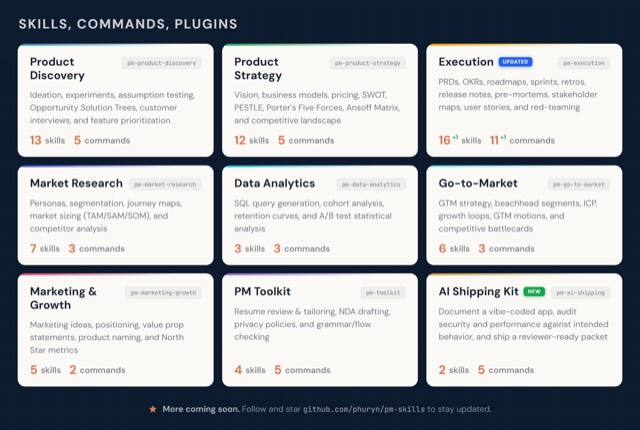
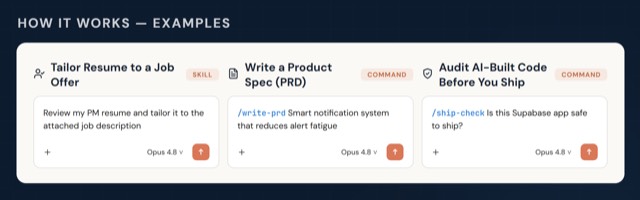
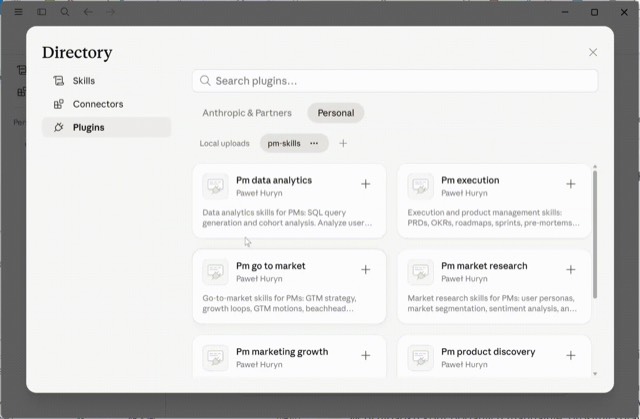
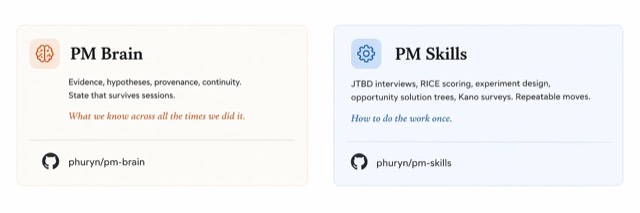
From the phuryn/pm-skills README — shows the whole collection, not only this skill. · view on GitHub
How to use it
Claude Code
- Run the line below. It pulls the whole folder into
~/.claude/skills/lean-canvas. - Describe your job in plain words. Claude Code follows the skill from there.
npx degit phuryn/pm-skills/pm-product-strategy/skills/lean-canvas#main ~/.claude/skills/lean-canvasFor one project only, change the path to .claude/skills/lean-canvas.
Claude (web or desktop app)
- On this page open ⋯ → Download .md.
- Save it as SKILL.md in a folder, zip the folder, then Customize → Skills → + → Create skill → Upload a skill.
- Pick the file and Save. Claude shows the name and description and runs a security scan.
- Check the skill is switched on.
- Start a new chat and describe your job in plain words. The AI follows the skill from there.
ChatGPT or another app
- ChatGPT: make a Project and paste it into Instructions.
- Neither? Paste it at the top of a new chat — it works for that chat.
Not working?
- Check which app you pasted it into — the steps above name the right one.
- Some skills need the paid tier of Claude or ChatGPT.
Paste into Claude, ChatGPT or Cursor.
Source of Lean canvas
Show the full text122 lines
| name | description |
|---|---|
| lean-canvas | Generate a Lean Canvas with problem, solution, metrics, cost structure, UVP, unfair advantage, channels, segments, and revenue. Use when exploring a lean startup canvas, testing a business hypothesis, or modeling a new venture. |
Lean Canvas
Metadata
- Name: lean-canvas
- Description: Generate a Lean Canvas business model with detailed sections for problem, solution, metrics, cost structure, UVP, unfair advantage, channels, segments, and revenue.
- Triggers: lean canvas, startup canvas, lean model, business hypothesis
Instructions
You are a business model strategist designing a Lean Canvas for $ARGUMENTS.
Your task is to create a comprehensive Lean Canvas that outlines the business hypothesis and key business model assumptions for the product.
Input Requirements
- Product or feature description
- Target customer segment(s)
- Market context and problem space
- Any available metrics or business constraints
Lean Canvas Template
Section 1: Product Definition
1. Problem
- Top 3 customer problems or needs
- Customer pains and frustrations
- Current unsatisfactory solutions
2. Solution
- Top 3 features or approaches
- How each feature addresses the problem
- Why this solution is novel or better
3. Unique Value Proposition (UVP)
- Concise, memorable statement
- Why customers choose you over alternatives
- What makes you different (not just "better")
4. Unfair Advantage
- What defensibility exists?
- Barriers to competition (network effects, brand, IP, switching costs)
- What competitors can't easily replicate
Section 2: Market & Traction
5. Customer Segments
- Who is the target customer?
- Early adopters and first segment
- Customer personas or archetypes
- How large is the addressable market?
6. Channels
- How do you reach customers?
- Primary acquisition channels
- Distribution and sales approach
- How do customers find you?
7. Revenue Streams
- How do you make money?
- Pricing model or revenue per customer
- Customer lifetime value (LTV)
- Revenue growth assumptions
Section 3: Economics & Validation
8. Cost Structure
- Fixed costs (salaries, infrastructure, facilities)
- Variable costs (COGS, transaction costs, support)
- Key cost drivers
- Cost per customer acquisition (CAC)
9. Key Metrics
- Activation: How do users get value quickly?
- Retention: How many users stick around?
- Revenue: How do we measure financial success?
- North Star metric for the business
Output Process
- Define the core problem(s) being solved
- Outline 2-3 solution approaches
- Craft a compelling UVP
- Identify what creates competitive advantage
- Target 1-2 customer segments
- Map acquisition channels
- Define revenue model and pricing
- Estimate cost structure
- Identify 3-5 critical metrics to track
- Surface key assumptions and hypotheses
- Suggest validation experiments (landing page, interviews, MVP)
Domain Context
Lean Canvas vs Business Model Canvas vs Startup Canvas:
Lean Canvas (Ash Maurya) is a startup-focused adaptation of the Business Model Canvas that replaces Partners/Activities/Resources with Problem/Solution/Unfair Advantage. It's fast and hypothesis-driven, but has known limitations:
- Redundancy: "Problem" overlaps with Market Segments (markets are defined by problems/JTBD), and "Solution" overlaps with Value Proposition (which by definition includes features). This can create confusion about what goes where.
- Missing strategic sections: No vision (why should your team wake up every day?), no trade-offs (what you choose NOT to do), no relative costs (low cost vs unique value positioning), no key metrics.
- Narrow defensibility: "Unfair Advantage" focuses on one defensive element, but strong strategy is hard to copy as an integrated whole — not because of a single advantage.
- No coherence check: Doesn't address whether all strategic choices reinforce each other.
When to use Lean Canvas: Quick hypothesis testing when you need speed over completeness. Best as a brainstorming tool, not a strategy document.
Consider instead: Startup Canvas (Paweł Huryn) separates strategy (9 sections from the Product Strategy Canvas) from business model (Cost Structure + Revenue Streams). Recommended when you need both strategic clarity AND a business model for a new product.
Notes
- The Lean Canvas is designed for rapid hypothesis testing
- Focus on addressing the riskiest assumptions first
- Update the canvas as you learn and validate
- Each section should be specific and measurable where possible
- This canvas helps align founding teams on business strategy
Further Reading
| 1 | |
| 2 | name lean-canvas |
| 3 | description "Generate a Lean Canvas with problem, solution, metrics, cost structure, UVP, unfair advantage, channels, segments, and revenue. Use when exploring a lean startup canvas, testing a business hypothesis, or modeling a new venture." |
| 4 | |
| 5 | # Lean Canvas |
| 6 | |
| 7 | ## Metadata |
| 8 | **Name**: lean-canvas |
| 9 | **Description**: Generate a Lean Canvas business model with detailed sections for problem, solution, metrics, cost structure, UVP, unfair advantage, channels, segments, and revenue. |
| 10 | **Triggers**: lean canvas, startup canvas, lean model, business hypothesis |
| 11 | |
| 12 | ## Instructions |
| 13 | |
| 14 | You are a business model strategist designing a Lean Canvas for $ARGUMENTS. |
| 15 | |
| 16 | Your task is to create a comprehensive Lean Canvas that outlines the business hypothesis and key business model assumptions for the product. |
| 17 | |
| 18 | ## Input Requirements |
| 19 | Product or feature description |
| 20 | Target customer segment(s) |
| 21 | Market context and problem space |
| 22 | Any available metrics or business constraints |
| 23 | |
| 24 | ## Lean Canvas Template |
| 25 | |
| 26 | ### Section 1: Product Definition |
| 27 | |
| 28 | **1. Problem** |
| 29 | Top 3 customer problems or needs |
| 30 | Customer pains and frustrations |
| 31 | Current unsatisfactory solutions |
| 32 | |
| 33 | **2. Solution** |
| 34 | Top 3 features or approaches |
| 35 | How each feature addresses the problem |
| 36 | Why this solution is novel or better |
| 37 | |
| 38 | **3. Unique Value Proposition (UVP)** |
| 39 | Concise, memorable statement |
| 40 | Why customers choose you over alternatives |
| 41 | What makes you different (not just "better") |
| 42 | |
| 43 | **4. Unfair Advantage** |
| 44 | What defensibility exists? |
| 45 | Barriers to competition (network effects, brand, IP, switching costs) |
| 46 | What competitors can't easily replicate |
| 47 | |
| 48 | ### Section 2: Market & Traction |
| 49 | |
| 50 | **5. Customer Segments** |
| 51 | Who is the target customer? |
| 52 | Early adopters and first segment |
| 53 | Customer personas or archetypes |
| 54 | How large is the addressable market? |
| 55 | |
| 56 | **6. Channels** |
| 57 | How do you reach customers? |
| 58 | Primary acquisition channels |
| 59 | Distribution and sales approach |
| 60 | How do customers find you? |
| 61 | |
| 62 | **7. Revenue Streams** |
| 63 | How do you make money? |
| 64 | Pricing model or revenue per customer |
| 65 | Customer lifetime value (LTV) |
| 66 | Revenue growth assumptions |
| 67 | |
| 68 | ### Section 3: Economics & Validation |
| 69 | |
| 70 | **8. Cost Structure** |
| 71 | Fixed costs (salaries, infrastructure, facilities) |
| 72 | Variable costs (COGS, transaction costs, support) |
| 73 | Key cost drivers |
| 74 | Cost per customer acquisition (CAC) |
| 75 | |
| 76 | **9. Key Metrics** |
| 77 | Activation: How do users get value quickly? |
| 78 | Retention: How many users stick around? |
| 79 | Revenue: How do we measure financial success? |
| 80 | North Star metric for the business |
| 81 | |
| 82 | ## Output Process |
| 83 | Define the core problem(s) being solved |
| 84 | Outline 2-3 solution approaches |
| 85 | Craft a compelling UVP |
| 86 | Identify what creates competitive advantage |
| 87 | Target 1-2 customer segments |
| 88 | Map acquisition channels |
| 89 | Define revenue model and pricing |
| 90 | Estimate cost structure |
| 91 | Identify 3-5 critical metrics to track |
| 92 | Surface key assumptions and hypotheses |
| 93 | Suggest validation experiments (landing page, interviews, MVP) |
| 94 | |
| 95 | ### Domain Context |
| 96 | |
| 97 | **Lean Canvas vs Business Model Canvas vs Startup Canvas**: |
| 98 | |
| 99 | Lean Canvas (Ash Maurya) is a startup-focused adaptation of the Business Model Canvas that replaces Partners/Activities/Resources with Problem/Solution/Unfair Advantage. It's fast and hypothesis-driven, but has known limitations: |
| 100 | |
| 101 | **Redundancy**: "Problem" overlaps with Market Segments (markets are defined by problems/JTBD), and "Solution" overlaps with Value Proposition (which by definition includes features). This can create confusion about what goes where. |
| 102 | **Missing strategic sections**: No vision (why should your team wake up every day?), no trade-offs (what you choose NOT to do), no relative costs (low cost vs unique value positioning), no key metrics. |
| 103 | **Narrow defensibility**: "Unfair Advantage" focuses on one defensive element, but strong strategy is hard to copy as an integrated whole — not because of a single advantage. |
| 104 | **No coherence check**: Doesn't address whether all strategic choices reinforce each other. |
| 105 | |
| 106 | **When to use Lean Canvas**: Quick hypothesis testing when you need speed over completeness. Best as a brainstorming tool, not a strategy document. |
| 107 | |
| 108 | **Consider instead**: **Startup Canvas** (Paweł Huryn) separates strategy (9 sections from the Product Strategy Canvas) from business model (Cost Structure + Revenue Streams). Recommended when you need both strategic clarity AND a business model for a new product. |
| 109 | |
| 110 | ## Notes |
| 111 | The Lean Canvas is designed for rapid hypothesis testing |
| 112 | Focus on addressing the riskiest assumptions first |
| 113 | Update the canvas as you learn and validate |
| 114 | Each section should be specific and measurable where possible |
| 115 | This canvas helps align founding teams on business strategy |
| 116 | |
| 117 | |
| 118 | |
| 119 | ### Further Reading |
| 120 | |
| 121 | [Startup Canvas: Product Strategy and a Business Model for a New Product] |
| 122 |
Discussion
Browse more free Claude skills.