CRO optimization
Run conversion rate optimization through hypothesis-driven testing including audit, hypothesis generation, test design, statistical analysis, and rollout decisions.
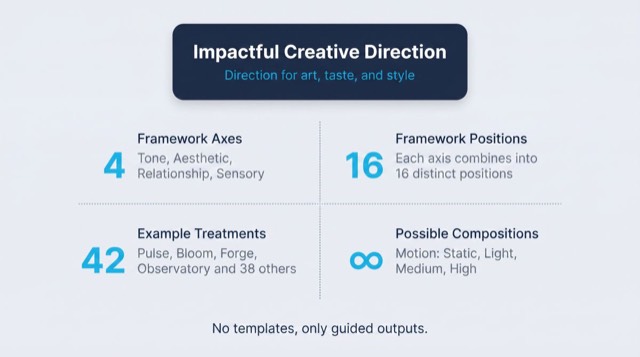
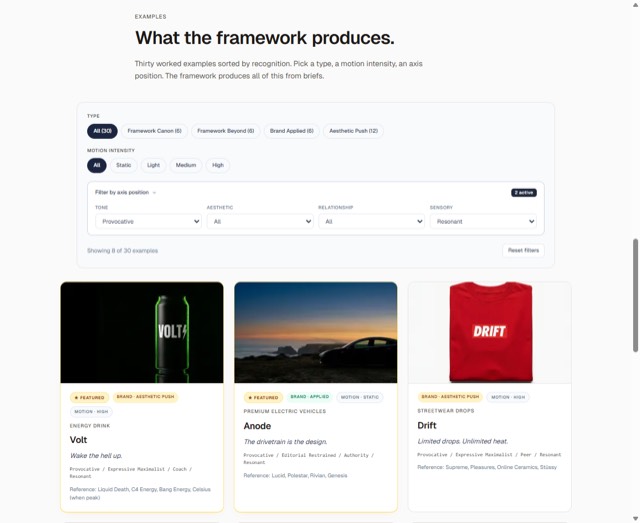
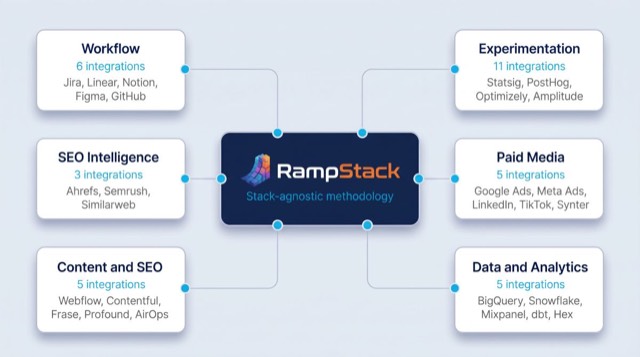
From the rampstackco/claude-skills README — shows the whole collection, not only this skill. · view on GitHub
How to use it
Claude Code
- Run the line below. It pulls the whole folder into
~/.claude/skills/cro-optimization. - Describe your job in plain words. Claude Code follows the skill from there.
npx degit rampstackco/claude-skills/skills/cro-optimization#main ~/.claude/skills/cro-optimizationFor one project only, change the path to .claude/skills/cro-optimization.
Claude (web or desktop app)
- On this page open ⋯ → Download .md.
- Save it as SKILL.md in a folder, zip the folder, then Customize → Skills → + → Create skill → Upload a skill.
- Pick the file and Save. Claude shows the name and description and runs a security scan.
- Check the skill is switched on.
- Start a new chat and describe your job in plain words. The AI follows the skill from there.
ChatGPT or another app
- ChatGPT: make a Project and paste it into Instructions.
- Neither? Paste it at the top of a new chat — it works for that chat.
Not working?
- Check which app you pasted it into — the steps above name the right one.
- Some skills need the paid tier of Claude or ChatGPT.
Paste into Claude, ChatGPT or Cursor.
Source of CRO optimization
Show the full text278 lines
| name | description | category | catalog_summary | display_order |
|---|---|---|---|---|
| cro-optimization | Run conversion rate optimization through hypothesis-driven testing including audit, hypothesis generation, test design, statistical analysis, and rollout decisions. Use this skill whenever the user wants to optimize conversion, run A/B tests, audit a funnel, generate test hypotheses, design experiments, or analyze test results. Triggers on conversion optimization, CRO, A/B test, split test, multivariate test, hypothesis, conversion funnel, funnel audit, experiment design, statistical significance, lift, optimization. Also triggers when the user has a conversion problem and isn't sure where to start, or when test results are ambiguous and need interpretation. | growth | Hypothesis-driven testing, conversion optimization | 2 |
CRO Optimization
Run conversion rate optimization as a structured discipline: audit → hypothesize → test → decide. Stack-agnostic. Tool-agnostic.
This skill is for running tests against existing pages and flows. For writing landing page copy from scratch, use landing-page-copy. For setting up the analytics that make CRO possible, use analytics-strategy.
When to use
- Converting traffic at lower rate than expected
- Specific funnel step has high drop-off
- Pages with high traffic that could move the needle if optimized
- A/B testing infrastructure exists (or can be set up)
- Statistical significance and sample size questions
When NOT to use
- Without sufficient traffic to test (under ~5,000 monthly conversions per variant)
- Pre-launch (no users to test on yet)
- Strategy or messaging-level questions that need qualitative research first
- Brand-defining choices (CRO can't optimize a fundamentally wrong brand)
Required inputs
- The page or flow under optimization
- Current conversion rate and traffic volume
- Access to analytics (event tracking, funnel data)
- An A/B testing tool (or willingness to set one up)
- Time and budget for testing (typically 2 to 8 weeks per test)
The framework: 4 phases
1. Audit
Diagnose before treating.
Quantitative audit:
- Funnel data. Where are users dropping off? The biggest drop is the biggest opportunity.
- Segmentation. Does the funnel perform differently by source, device, geography, audience type?
- Performance data. Are slow pages dragging conversions?
- Search Console / on-site search. What are users looking for that they can't find?
Qualitative audit:
- Session replay. Watch 20+ sessions of users on the target flow. Note friction, confusion, hesitation.
- Heatmaps. Where do users click? Where do they scroll? Where do they not?
- User interviews / surveys. Why did users not convert? Survey people who started but abandoned.
- Form analytics. Which fields cause abandonment? Which cause errors?
- Customer support tickets. What conversion-related questions come in?
Heuristic audit:
- Apply CRO heuristics to the flow:
- Is the value proposition clear in 5 seconds?
- Is there a single primary CTA per page?
- Is the form length appropriate to the offer?
- Is the trust/social proof present?
- Are objections handled?
- Is the page accessible? (Accessibility issues hurt conversion silently.)
The audit produces a list of suspected friction points. Each becomes a hypothesis candidate.
2. Hypothesis
A testable statement.
Hypothesis structure:
Because [observation from audit], we believe that [change] will produce [predicted outcome] for [user segment], because [reason].
Example:
Because session replays show users abandoning at the shipping step (audit), we believe that adding visible shipping cost to the product page (change) will increase add-to-cart conversion by 5 percent (outcome) for desktop users (segment), because users are surprised by shipping cost and abandon (reason).
Hypothesis quality criteria:
- Specific change (not "improve the design")
- Measurable outcome (with a target)
- Grounded in evidence (audit, research, prior tests)
- Tied to a known mechanism (why would this work?)
Hypothesis prioritization (ICE or PIE):
- Impact: How much could this move the metric?
- Confidence: How likely is the hypothesis to be right?
- Ease: How easy to test? (Time, complexity, risk)
Score each 1 to 10. Highest combined scores test first.
3. Test design
A test that produces an unambiguous answer.
Sample size and duration:
Use a sample size calculator (most A/B tools have one) before launching. Inputs:
- Baseline conversion rate
- Minimum detectable effect (the smallest lift you'd care about)
- Statistical power (typically 80%)
- Significance level (typically 95%)
This produces required sample size per variant. Run the test until that sample is reached, OR for a minimum duration that captures full business cycle (typically 2 weeks minimum, to cover weekends and weekly patterns).
Common test setup mistakes:
- Stopping the test the moment significance is hit (peeking)
- Running tests for too short to capture a full business cycle
- Running multiple overlapping tests on the same flow
- Testing during atypical periods (Black Friday, holidays, major campaigns)
- Excluding mobile when 50%+ of traffic is mobile (or vice versa)
- Testing on too small a slice of traffic (low statistical power)
- Not segmenting analysis (overall lift can hide negative impact on a segment)
Test parameters to define before launch:
- Primary metric (one)
- Guardrail metrics (do not go down)
- Sample size
- Duration (minimum and maximum)
- Decision criteria (when to ship, when to kill, when to extend)
- Segments to analyze in addition to overall
4. Decide
After the test concludes.
Decision framework:
| Outcome | Decision |
|---|---|
| Variant clearly wins (>95% significance, exceeds minimum effect) | Ship variant. Document. Continue testing. |
| Variant clearly loses | Kill. Capture the lesson. Iterate hypothesis. |
| Inconclusive (neither significant) | Larger test, different angle, or move on. Don't ship "tied" variants. |
| Small lift, lots of variance | Probably not worth shipping. Even if "winner," may not replicate. |
| Wins overall, loses for important segment | Investigate segment. Consider segment-specific solution. |
Anti-patterns:
- "It looks like it's winning, ship it" before reaching significance
- Shipping a variant because the team wants to (HiPPO - highest paid person's opinion)
- Killing tests too early because they look bad
- Re-running tests until they "win" (false positive risk)
- Not capturing the learning when a test loses
Statistical foundations
Significance and confidence
A 95% significance level means: if there were truly no difference between variants, there's only a 5% chance you'd see results this extreme by chance.
That's not the same as "95% chance the variant wins."
Most CRO tools report Bayesian probabilities ("95% chance of being best"). Read the methodology your tool uses.
Sample size
Conversion testing needs more sample than people intuit. Quick reference:
| Baseline rate | Minimum detectable effect | Sample per variant |
|---|---|---|
| 2% | 10% relative lift | ~75,000 |
| 2% | 20% relative lift | ~19,000 |
| 5% | 10% relative lift | ~30,000 |
| 5% | 20% relative lift | ~7,500 |
| 10% | 10% relative lift | ~14,000 |
| 10% | 20% relative lift | ~3,500 |
(Approximate. Use a calculator.)
If your monthly conversions per variant don't reach these numbers, A/B testing won't produce reliable results. Iterate via design and qualitative research instead.
Multiple testing
The more variants and metrics tested simultaneously, the more false positives. Adjust significance thresholds for multiple comparisons (Bonferroni or similar).
Workflow
- Audit. Quantitative + qualitative + heuristic.
- Generate hypotheses. From audit findings. Apply hypothesis structure.
- Prioritize. ICE or PIE. Top 3 to 5 to test next.
- Design the test. Sample size, duration, primary and guardrail metrics, decision criteria.
- Implement. Build variants. QA carefully (broken variants invalidate tests).
- Run. Don't peek. Don't stop early.
- Analyze. Overall and by segment. Note interesting patterns regardless of significance.
- Decide. Ship, kill, or extend.
- Document. Hypothesis, design, results, decision, lesson.
- Compound. Apply lessons to next round of hypotheses.
Failure patterns
- Testing without audit. Random changes, random results.
- Vague hypotheses. "Make it better" is not a hypothesis.
- Peeking and early stopping. Bias toward false positives.
- Underpowered tests. Not enough sample for a real conclusion.
- HiPPO override. Highest paid person's opinion overrides the data.
- Testing during atypical periods. Holidays distort results.
- Single metric obsession. Conversion ups but average order value craters. Net loss.
- No guardrail metrics. Testing for one outcome, missing damage to others.
- Documentation gap. Wins captured, losses forgotten. Same hypothesis re-tested 3 times.
- Treating each test in isolation. Compounding learning across tests is where CRO programs really win.
Output format
Default output: a markdown test plan at cro-test-[hypothesis-slug].md per test. After the test runs, append the results section.
Structure:
# Test: [Hypothesis short name]

## Hypothesis
Because [observation], we believe that [change] will produce [outcome] for [segment], because [reason].

## Audit evidence
[What evidence supports this hypothesis]

## Test design
- Primary metric:
- Guardrail metrics:
- Sample size required:
- Duration: minimum X, maximum Y
- Variant traffic split:
- Segments to analyze:

## Decision criteria
- Ship if: [conditions]
- Kill if: [conditions]
- Extend if: [conditions]

## Results (filled after test)
- Sample reached:
- Duration actual:
- Primary metric: [variant vs control + significance]
- Guardrail metrics: [results]
- Segment analysis: [findings]

## Decision
[Ship / Kill / Extend / Iterate] - [Why]

## Lesson
[What this teaches us, regardless of outcome]
If required data is unavailable
This skill's output depends on data, measurements, or tool results it cannot generate on its own. When a required input, tool, or data source is unavailable or unverifiable, the sanctioned output is the deliverable with the gap stated: what was needed, what was actually obtained or verified, and which parts of the output are affected. Fabricating, estimating, or interpolating a required number to complete the deliverable is never sanctioned. A stated gap is a complete answer.
Reference files
references/hypothesis-library.md- Common high-impact hypothesis patterns by funnel stage.
| 1 | |
| 2 | name cro-optimization |
| 3 | description "Run conversion rate optimization through hypothesis-driven testing including audit, hypothesis generation, test design, statistical analysis, and rollout decisions. Use this skill whenever the user wants to optimize conversion, run A/B tests, audit a funnel, generate test hypotheses, design experiments, or analyze test results. Triggers on conversion optimization, CRO, A/B test, split test, multivariate test, hypothesis, conversion funnel, funnel audit, experiment design, statistical significance, lift, optimization. Also triggers when the user has a conversion problem and isn't sure where to start, or when test results are ambiguous and need interpretation." |
| 4 | category growth |
| 5 | catalog_summary "Hypothesis-driven testing, conversion optimization" |
| 6 | display_order 2 |
| 7 | |
| 8 | |
| 9 | # CRO Optimization |
| 10 | |
| 11 | Run conversion rate optimization as a structured discipline: audit → hypothesize → test → decide. Stack-agnostic. Tool-agnostic. |
| 12 | |
| 13 | This skill is for running tests against existing pages and flows. For writing landing page copy from scratch, use `landing-page-copy`. For setting up the analytics that make CRO possible, use `analytics-strategy`. |
| 14 | |
| 15 | |
| 16 | |
| 17 | ## When to use |
| 18 | |
| 19 | Converting traffic at lower rate than expected |
| 20 | Specific funnel step has high drop-off |
| 21 | Pages with high traffic that could move the needle if optimized |
| 22 | A/B testing infrastructure exists (or can be set up) |
| 23 | Statistical significance and sample size questions |
| 24 | |
| 25 | ## When NOT to use |
| 26 | |
| 27 | Without sufficient traffic to test (under ~5,000 monthly conversions per variant) |
| 28 | Pre-launch (no users to test on yet) |
| 29 | Strategy or messaging-level questions that need qualitative research first |
| 30 | Brand-defining choices (CRO can't optimize a fundamentally wrong brand) |
| 31 | |
| 32 | |
| 33 | |
| 34 | ## Required inputs |
| 35 | |
| 36 | The page or flow under optimization |
| 37 | Current conversion rate and traffic volume |
| 38 | Access to analytics (event tracking, funnel data) |
| 39 | An A/B testing tool (or willingness to set one up) |
| 40 | Time and budget for testing (typically 2 to 8 weeks per test) |
| 41 | |
| 42 | |
| 43 | |
| 44 | ## The framework: 4 phases |
| 45 | |
| 46 | ### 1. Audit |
| 47 | |
| 48 | Diagnose before treating. |
| 49 | |
| 50 | **Quantitative audit:** |
| 51 | |
| 52 | **Funnel data.** Where are users dropping off? The biggest drop is the biggest opportunity. |
| 53 | **Segmentation.** Does the funnel perform differently by source, device, geography, audience type? |
| 54 | **Performance data.** Are slow pages dragging conversions? |
| 55 | **Search Console / on-site search.** What are users looking for that they can't find? |
| 56 | |
| 57 | **Qualitative audit:** |
| 58 | |
| 59 | **Session replay.** Watch 20+ sessions of users on the target flow. Note friction, confusion, hesitation. |
| 60 | **Heatmaps.** Where do users click? Where do they scroll? Where do they not? |
| 61 | **User interviews / surveys.** Why did users not convert? Survey people who started but abandoned. |
| 62 | **Form analytics.** Which fields cause abandonment? Which cause errors? |
| 63 | **Customer support tickets.** What conversion-related questions come in? |
| 64 | |
| 65 | **Heuristic audit:** |
| 66 | |
| 67 | Apply CRO heuristics to the flow: |
| 68 | Is the value proposition clear in 5 seconds? |
| 69 | Is there a single primary CTA per page? |
| 70 | Is the form length appropriate to the offer? |
| 71 | Is the trust/social proof present? |
| 72 | Are objections handled? |
| 73 | Is the page accessible? (Accessibility issues hurt conversion silently.) |
| 74 | |
| 75 | The audit produces a list of suspected friction points. Each becomes a hypothesis candidate. |
| 76 | |
| 77 | ### 2. Hypothesis |
| 78 | |
| 79 | A testable statement. |
| 80 | |
| 81 | **Hypothesis structure:** |
| 82 | |
| 83 | > Because [observation from audit], we believe that [change] will produce [predicted outcome] for [user segment], because [reason]. |
| 84 | |
| 85 | **Example:** |
| 86 | |
| 87 | > Because session replays show users abandoning at the shipping step (audit), we believe that adding visible shipping cost to the product page (change) will increase add-to-cart conversion by 5 percent (outcome) for desktop users (segment), because users are surprised by shipping cost and abandon (reason). |
| 88 | |
| 89 | **Hypothesis quality criteria:** |
| 90 | |
| 91 | Specific change (not "improve the design") |
| 92 | Measurable outcome (with a target) |
| 93 | Grounded in evidence (audit, research, prior tests) |
| 94 | Tied to a known mechanism (why would this work?) |
| 95 | |
| 96 | **Hypothesis prioritization (ICE or PIE):** |
| 97 | |
| 98 | **Impact:** How much could this move the metric? |
| 99 | **Confidence:** How likely is the hypothesis to be right? |
| 100 | **Ease:** How easy to test? (Time, complexity, risk) |
| 101 | |
| 102 | Score each 1 to 10. Highest combined scores test first. |
| 103 | |
| 104 | ### 3. Test design |
| 105 | |
| 106 | A test that produces an unambiguous answer. |
| 107 | |
| 108 | **Sample size and duration:** |
| 109 | |
| 110 | Use a sample size calculator (most A/B tools have one) before launching. Inputs: |
| 111 | |
| 112 | Baseline conversion rate |
| 113 | Minimum detectable effect (the smallest lift you'd care about) |
| 114 | Statistical power (typically 80%) |
| 115 | Significance level (typically 95%) |
| 116 | |
| 117 | This produces required sample size per variant. Run the test until that sample is reached, OR for a minimum duration that captures full business cycle (typically 2 weeks minimum, to cover weekends and weekly patterns). |
| 118 | |
| 119 | **Common test setup mistakes:** |
| 120 | |
| 121 | Stopping the test the moment significance is hit (peeking) |
| 122 | Running tests for too short to capture a full business cycle |
| 123 | Running multiple overlapping tests on the same flow |
| 124 | Testing during atypical periods (Black Friday, holidays, major campaigns) |
| 125 | Excluding mobile when 50%+ of traffic is mobile (or vice versa) |
| 126 | Testing on too small a slice of traffic (low statistical power) |
| 127 | Not segmenting analysis (overall lift can hide negative impact on a segment) |
| 128 | |
| 129 | **Test parameters to define before launch:** |
| 130 | |
| 131 | Primary metric (one) |
| 132 | Guardrail metrics (do not go down) |
| 133 | Sample size |
| 134 | Duration (minimum and maximum) |
| 135 | Decision criteria (when to ship, when to kill, when to extend) |
| 136 | Segments to analyze in addition to overall |
| 137 | |
| 138 | ### 4. Decide |
| 139 | |
| 140 | After the test concludes. |
| 141 | |
| 142 | **Decision framework:** |
| 143 | |
| 144 | | Outcome | Decision | |
| 145 | |---|---| |
| 146 | | Variant clearly wins (>95% significance, exceeds minimum effect) | Ship variant. Document. Continue testing. | |
| 147 | | Variant clearly loses | Kill. Capture the lesson. Iterate hypothesis. | |
| 148 | | Inconclusive (neither significant) | Larger test, different angle, or move on. Don't ship "tied" variants. | |
| 149 | | Small lift, lots of variance | Probably not worth shipping. Even if "winner," may not replicate. | |
| 150 | | Wins overall, loses for important segment | Investigate segment. Consider segment-specific solution. | |
| 151 | |
| 152 | **Anti-patterns:** |
| 153 | |
| 154 | "It looks like it's winning, ship it" before reaching significance |
| 155 | Shipping a variant because the team wants to (HiPPO - highest paid person's opinion) |
| 156 | Killing tests too early because they look bad |
| 157 | Re-running tests until they "win" (false positive risk) |
| 158 | Not capturing the learning when a test loses |
| 159 | |
| 160 | |
| 161 | |
| 162 | ## Statistical foundations |
| 163 | |
| 164 | ### Significance and confidence |
| 165 | |
| 166 | A 95% significance level means: if there were truly no difference between variants, there's only a 5% chance you'd see results this extreme by chance. |
| 167 | |
| 168 | That's not the same as "95% chance the variant wins." |
| 169 | |
| 170 | Most CRO tools report Bayesian probabilities ("95% chance of being best"). Read the methodology your tool uses. |
| 171 | |
| 172 | ### Sample size |
| 173 | |
| 174 | Conversion testing needs more sample than people intuit. Quick reference: |
| 175 | |
| 176 | | Baseline rate | Minimum detectable effect | Sample per variant | |
| 177 | |---|---|---| |
| 178 | | 2% | 10% relative lift | ~75,000 | |
| 179 | | 2% | 20% relative lift | ~19,000 | |
| 180 | | 5% | 10% relative lift | ~30,000 | |
| 181 | | 5% | 20% relative lift | ~7,500 | |
| 182 | | 10% | 10% relative lift | ~14,000 | |
| 183 | | 10% | 20% relative lift | ~3,500 | |
| 184 | |
| 185 | (Approximate. Use a calculator.) |
| 186 | |
| 187 | If your monthly conversions per variant don't reach these numbers, A/B testing won't produce reliable results. Iterate via design and qualitative research instead. |
| 188 | |
| 189 | ### Multiple testing |
| 190 | |
| 191 | The more variants and metrics tested simultaneously, the more false positives. Adjust significance thresholds for multiple comparisons (Bonferroni or similar). |
| 192 | |
| 193 | |
| 194 | |
| 195 | ## Workflow |
| 196 | |
| 197 | **Audit.** Quantitative + qualitative + heuristic. |
| 198 | **Generate hypotheses.** From audit findings. Apply hypothesis structure. |
| 199 | **Prioritize.** ICE or PIE. Top 3 to 5 to test next. |
| 200 | **Design the test.** Sample size, duration, primary and guardrail metrics, decision criteria. |
| 201 | **Implement.** Build variants. QA carefully (broken variants invalidate tests). |
| 202 | **Run.** Don't peek. Don't stop early. |
| 203 | **Analyze.** Overall and by segment. Note interesting patterns regardless of significance. |
| 204 | **Decide.** Ship, kill, or extend. |
| 205 | **Document.** Hypothesis, design, results, decision, lesson. |
| 206 | **Compound.** Apply lessons to next round of hypotheses. |
| 207 | |
| 208 | |
| 209 | |
| 210 | ## Failure patterns |
| 211 | |
| 212 | **Testing without audit.** Random changes, random results. |
| 213 | **Vague hypotheses.** "Make it better" is not a hypothesis. |
| 214 | **Peeking and early stopping.** Bias toward false positives. |
| 215 | **Underpowered tests.** Not enough sample for a real conclusion. |
| 216 | **HiPPO override.** Highest paid person's opinion overrides the data. |
| 217 | **Testing during atypical periods.** Holidays distort results. |
| 218 | **Single metric obsession.** Conversion ups but average order value craters. Net loss. |
| 219 | **No guardrail metrics.** Testing for one outcome, missing damage to others. |
| 220 | **Documentation gap.** Wins captured, losses forgotten. Same hypothesis re-tested 3 times. |
| 221 | **Treating each test in isolation.** Compounding learning across tests is where CRO programs really win. |
| 222 | |
| 223 | |
| 224 | |
| 225 | ## Output format |
| 226 | |
| 227 | Default output: a markdown test plan at `cro-test-[hypothesis-slug].md` per test. After the test runs, append the results section. |
| 228 | |
| 229 | Structure: |
| 230 | |
| 231 | |
| 232 | # Test: [Hypothesis short name] |
| 233 | |
| 234 | ## Hypothesis |
| 235 | Because [observation], we believe that [change] will produce [outcome] for [segment], because [reason]. |
| 236 | |
| 237 | ## Audit evidence |
| 238 | [What evidence supports this hypothesis] |
| 239 | |
| 240 | ## Test design |
| 241 | - Primary metric: |
| 242 | - Guardrail metrics: |
| 243 | - Sample size required: |
| 244 | - Duration: minimum X, maximum Y |
| 245 | - Variant traffic split: |
| 246 | - Segments to analyze: |
| 247 | |
| 248 | ## Decision criteria |
| 249 | - Ship if: [conditions] |
| 250 | - Kill if: [conditions] |
| 251 | - Extend if: [conditions] |
| 252 | |
| 253 | ## Results (filled after test) |
| 254 | - Sample reached: |
| 255 | - Duration actual: |
| 256 | - Primary metric: [variant vs control + significance] |
| 257 | - Guardrail metrics: [results] |
| 258 | - Segment analysis: [findings] |
| 259 | |
| 260 | ## Decision |
| 261 | [Ship / Kill / Extend / Iterate] - [Why] |
| 262 | |
| 263 | ## Lesson |
| 264 | [What this teaches us, regardless of outcome] |
| 265 | |
| 266 | |
| 267 | |
| 268 | |
| 269 | ## If required data is unavailable |
| 270 | |
| 271 | This skill's output depends on data, measurements, or tool results it cannot generate on its own. When a required input, tool, or data source is unavailable or unverifiable, the sanctioned output is the deliverable with the gap stated: what was needed, what was actually obtained or verified, and which parts of the output are affected. Fabricating, estimating, or interpolating a required number to complete the deliverable is never sanctioned. A stated gap is a complete answer. |
| 272 | |
| 273 | |
| 274 | |
| 275 | ## Reference files |
| 276 | |
| 277 | [`references/hypothesis-library.md`] - Common high-impact hypothesis patterns by funnel stage. |
| 278 |
Discussion
Browse more free Claude skills or everything in Marketing.