Working with Brain Imaging Data Structure datasets
Brain Imaging Data Structure (BIDS)
Use this skill when working with Brain Imaging Data Structure (BIDS) datasets: organizing neuroscience and biomedical data (MRI, EEG, MEG, iEEG, PET, microscopy, NIRS, motion capture, EMG, MR spectroscopy, behavioral), querying BIDS…
---
name: bids
description: >
  Use this skill when working with Brain Imaging Data Structure (BIDS) datasets:
  organizing neuroscience and biomedical data (MRI, EEG, MEG, iEEG, PET, microscopy,
  NIRS, motion capture, EMG, MR spectroscopy, behavioral), querying BIDS layouts,
  validating compliance, converting DICOM to BIDS, writing metadata sidecars, or
  creating BIDS derivatives.
license: https://creativecommons.org/licenses/by/4.0/
metadata:
  version: "1.1"
  skill-author: Yaroslav Halchenko
---

# Brain Imaging Data Structure (BIDS)

## Overview
Overview
The Brain Imaging Data Structure (BIDS) is a community standard for organizing and describing neuroscience and biomedical research datasets. It defines a consistent file naming convention, directory hierarchy, and metadata schema so that datasets are immediately understandable by humans and software tools alike. BIDS is governed by the BIDS Specification (currently v1.11.x) and is maintained by the community via the BIDS-Standard GitHub organization.
Manual install (npx, ZIP)
npx skills add K-Dense-AI/scientific-agent-skills --skill bids -g -a claude-codemkdir -p ~/.claude/skills && curl -sL https://codeload.github.com/K-Dense-AI/scientific-agent-skills/tar.gz/49c6e97775ea \
| tar -xz -C ~/.claude/skills --strip-components=2 scientific-agent-skills-49c6e97775ea/skills/bidsNew-Item -ItemType Directory -Force "$HOME\.claude\skills" | Out-Null; Invoke-WebRequest "https://m.agentalley.io/zip/611d8a0ab50ef84f9fe1/bids.zip" -OutFile "$env:TEMP\bids.zip"; Expand-Archive "$env:TEMP\bids.zip" -DestinationPath "$HOME\.claude\skills" -ForceConnects with Agent Alley MCP · agentalley.io/mcp
Files included
SKILL.md14.8 KBreferences/6 files · 876.6 KBscripts/1 file · 2.6 KB
Read the files here
K-Dense-AI/
Show the full text238 lines
Brain Imaging Data Structure (BIDS)
Overview
The Brain Imaging Data Structure (BIDS) is a community standard for organizing and describing neuroscience and biomedical research datasets. It defines a consistent file naming convention, directory hierarchy, and metadata schema so that datasets are immediately understandable by humans and software tools alike. BIDS is governed by the BIDS Specification (currently v1.11.x) and is maintained by the community via the BIDS-Standard GitHub organization.
While BIDS originated for MRI, it has grown well beyond neuroimaging. The specification now covers 11 modalities spanning imaging, electrophysiology, and behavioral data:
- Imaging: MRI (structural, functional, diffusion, fieldmaps, perfusion/ASL), PET, microscopy
- Electrophysiology: EEG, MEG, iEEG (intracranial EEG), EMG
- Other: NIRS (near-infrared spectroscopy), motion capture, behavioral data (without imaging), MR spectroscopy
Active BEPs are extending BIDS further — notably BEP032 (microelectrode electrophysiology) will add support for extracellular recordings including Neuropixels probes, bringing BIDS to a prevalent methodology in animal neuroscience research (see also the neuropixels-analysis skill).
Adoption is required or strongly encouraged by major data repositories (OpenNeuro, DANDI), leading journals (NeuroImage, Human Brain Mapping, Scientific Data), and funding agencies (NIH, ERC).
The Python ecosystem for BIDS centers on PyBIDS (pybids) for querying and indexing BIDS datasets, and the bids-validator (Deno-based, available as PyPI package bids-validator-deno or via Deno directly) for compliance checking. Conversion from DICOM is typically done with HeuDiConv, dcm2bids, or BIDScoin.
When to Use This Skill
Apply this skill when:
- Organizing raw neuroscience data (imaging, electrophysiology, behavioral) into BIDS-compliant directory structures
- Querying an existing BIDS dataset to find specific files by subject, session, task, run, or modality
- Validating a dataset against the BIDS specification before sharing or submission
- Converting DICOM data from scanners into BIDS format
- Writing or editing JSON sidecar metadata files
- Creating BIDS-compliant derivatives (preprocessed data, analysis outputs)
- Setting up a
dataset_description.jsonfor a new dataset - Working with BIDS entities (subject, session, task, acquisition, run, etc.)
- Configuring
.bidsignoreto exclude files from validation - Preparing data for upload to OpenNeuro, DANDI, or other BIDS-aware repositories
Installation
# Core BIDS querying library
uv pip install pybids

# BIDS validator (Deno-based, installed via PyPI wrapper)
uv pip install bids-validator-deno
# Alternative: install directly via Deno
# deno install -g -A npm:bids-validator

# DICOM-to-BIDS converters (install as needed)
uv pip install heudiconv       # HeuDiConv - heuristic-based DICOM conversion
uv pip install dcm2bids        # dcm2bids - config-file-based conversion
# BIDScoin: uv pip install bidscoin

# Useful companions
uv pip install nibabel          # NIfTI/other neuroimaging file I/O
uv pip install pydicom          # DICOM file reading (used by converters)
Core Workflows
Twelve workflow areas, each with worked code, are documented in references/core_workflows.md:
- BIDS directory structure — the required layout and where each modality belongs.
dataset_description.json— the required fields and how to generate it.- Querying with PyBIDS —
BIDSLayout, entity filters, sidecar metadata with automatic inheritance, and building paths from entities. - Validation —
bids-validatorvia the PyPI wrapper (recommended), via Deno directly, the legacy Node validator, and using.bidsignoreto exclude files. - Entities and file naming — the entity order and naming grammar.
- DICOM to BIDS conversion — HeuDiConv (including the turnkey ReproIn path and the reconnaissance → heuristic → convert sequence) and dcm2bids (config-file based).
- Metadata sidecars — required and recommended JSON fields per modality.
- Events files — task fMRI event timing and column conventions.
- Participants file —
participants.tsvand its data dictionary. - Derivatives — the derivatives layout and its
dataset_description.json. - Advanced PyBIDS — index caching, including derivatives, confound regressors, and DataFrame output.
- BIDS-Apps — the standard invocation pattern, and fMRIPrep, MRIQC, and QSIPrep.
Validate early and often: PyBIDS validates structure when it indexes a dataset, so an indexing failure usually means a naming or metadata problem rather than a code bug.
Reference Materials
This skill includes detailed reference documentation:
- bids_schema.json: Machine-readable BIDS schema (from https://bids-specification.readthedocs.io/en/stable/schema.json). This is the authoritative source for entity definitions, ordering rules, filename templates, allowed suffixes per datatype, and metadata field requirements. BEP-specific schemas are at https://github.com/bids-standard/bids-schema/tree/main/BEPs.
- beps.yml: Current list of all BIDS Extension Proposals with titles, leads, status, and links (from bids-website)
- bids_specification.md: Human-readable summary of the entity table, datatype reference, directory structure rules, template spaces, and specification changelog
- metadata_fields.md: Required and recommended JSON sidecar fields for every BIDS modality (anat, func, dwi, fmap, eeg, meg, pet, etc.)
- conversion_tools.md: Detailed workflows for HeuDiConv, dcm2bids, and BIDScoin including heuristic/config examples and troubleshooting
Update schema and BEPs with: python scripts/update_schema.py
Common Issues and Solutions
1. Validator reports "Not a BIDS dataset"
Cause: Missing dataset_description.json at the root.
Fix: Create the file with at minimum {"Name": "...", "BIDSVersion": "1.10.0"}.
2. Inconsistent subjects warning
Cause: Not all subjects have the same set of files (some missing sessions, runs, etc.).
Fix: This is a warning, not an error. Use --ignoreSubjectConsistency if intentional. Document missing data in participants.tsv or a scans.tsv.
3. Missing SliceTiming
Cause: dcm2niix couldn't extract slice timing from DICOM headers.
Fix: Determine slice order from the scan protocol and add manually to the JSON sidecar. Common patterns: ascending, descending, interleaved (odd-first or even-first).
4. Phase encoding direction confusion
Cause: Axis labels (i/j/k vs x/y/z vs LR/AP/SI) are confusing.
Fix: In BIDS, use NIfTI image axes: i=first axis, j=second, k=third. - means negative direction. For standard axial acquisitions: j is typically anterior-posterior. Verify with the acquisition protocol.
5. PyBIDS is slow on large datasets
Cause: Full filesystem indexing on every BIDSLayout() call.
Fix: Use database_path to cache the index to an SQLite file:
layout = BIDSLayout("/data", database_path="/data/.pybids_cache.db")
6. Derivatives not found by PyBIDS
Cause: Derivatives directory missing its own dataset_description.json.
Fix: Every derivatives directory must have dataset_description.json with "DatasetType": "derivative".
7. Events file timing is off
Cause: onset times are relative to the wrong reference (e.g., trigger time vs first volume).
Fix: Onsets must be in seconds relative to the first volume of that run's acquisition. Account for dummy scans if they were discarded.
8. TSV files fail validation
Cause: Encoding or delimiter issues (spaces instead of tabs, BOM characters, Windows line endings).
Fix: Ensure tab-separated values with UTF-8 encoding and Unix line endings (\n). Use n/a (not NA, NaN, or empty) for missing values.
Best Practices
Validate early and often - Run the BIDS validator after every conversion or modification. Fix errors before they compound.
Use metadata inheritance - Place shared metadata (e.g.,
TaskName, scanner parameters) in top-level sidecar files rather than duplicating in every subject's directory.Keep sourcedata - Store the original DICOM (or other raw) data under
sourcedata/so conversions are reproducible. Addsourcedata/to.bidsignore.Use consistent naming from the start - Define your BIDS naming scheme before data collection. Use the ReproIn naming convention for scan protocols to enable automatic conversion.
Document your dataset - Write a thorough
READMEdescribing the study design, acquisition parameters, known issues, and any deviations from BIDS.Use scans.tsv for run-level metadata - Record per-run acquisition times and quality notes:
filename    acq_time    quality
func/sub-01_task-rest_bold.nii.gz    2025-01-15T10:30:00    good
Version your dataset - Use
CHANGESto document dataset modifications. Consider DataLad for full version control of large datasets.Deface anatomical images - Remove facial features from T1w/T2w images before sharing (e.g., using
pydeface,mri_deface, orafni_refacer). Store defaced versions as the primary data or use_defacemaskfiles.Use BIDS URIs for provenance - In derivatives, reference source files using BIDS URIs:
bids::sub-01/anat/sub-01_T1w.nii.gz.Prefer community tools - Use established BIDS-Apps (fMRIPrep, MRIQC, QSIPrep) rather than custom pipelines when possible. They handle BIDS I/O correctly and produce BIDS-compliant derivatives.
Study bids-examples - The bids-examples repository is the canonical collection of prototypical BIDS datasets covering different modalities and use cases (MRI, fMRI, DWI, EEG, MEG, iEEG, PET, ASL, genetics, derivatives, and more). Use it as a reference when structuring your own dataset, as test data for BIDS tools, or to understand how a specific modality should be organized. Each example passes the BIDS validator.
BIDS Extension Proposals (BEPs)
BEPs are community-driven proposals to extend BIDS to new modalities, derivatives, or metadata. The full list with status, leads, and links is in references/beps.yml (fetched from the bids-website). BEP-specific schema previews are rendered at https://github.com/bids-standard/bids-schema/tree/main/BEPs.
Current BEPs (as of schema update):
| BEP | Title | Content | Status |
|---|---|---|---|
| 004 | Susceptibility Weighted Imaging | raw | Seeking new leader |
| 011 | Structural preprocessing derivatives | derivative | Has PR (#518) |
| 012 | Functional preprocessing derivatives | derivative | Has PR (#519), schema implemented |
| 014 | Affine transforms and nonlinear field warps | derivative | X5 format development |
| 016 | Diffusion weighted imaging derivatives | derivative | Has PR (#2211) |
| 017 | Generic BIDS connectivity data schema | derivative | In development |
| 021 | Common Electrophysiological Derivatives | derivative | In development |
| 023 | PET Preprocessing derivatives | derivative | In development |
| 024 | Computed Tomography scan | raw | Seeking contributors |
| 026 | Microelectrode Recordings | raw | Seeking new leader |
| 028 | Provenance | metadata | Has PR (#2099) |
| 032 | Microelectrode electrophysiology | raw | Has PR (#2307), preview available — covers Neuropixels and other extracellular probes; relates to neuropixels-analysis skill |
| 033 | Advanced Diffusion Weighted Imaging | raw | Seeking contributors |
| 034 | Computational modeling | derivative | Has PR (#967) |
| 035 | Mega-analyses with non-compliant derivatives | derivative | In development |
| 036 | Phenotypic Data Guidelines | raw | Community review |
| 037 | Non-Invasive Brain Stimulation | raw | In development |
| 039 | Dimensionality reduction-based networks | raw | In development |
| 040 | Functional Ultrasound | raw | In development |
| 041 | Statistical Model Derivatives | derivative | Collecting feedback |
| 043 | BIDS Term Mapping | metadata | Collecting feedback |
| 044 | Stimuli | raw | Has PR (#2022), community review |
| 045 | Peripheral Physiological Recordings | raw | Has PR (#2267) |
| 046 | Diffusion Tractography | derivative | In development |
| 047 | Audio/video recordings for behavioral experiments | raw | Has PR (#2231) |
Related standards:
- BIDS-Stats Models: JSON specification for defining GLM-based neuroimaging analyses
- BIDS-Derivatives (BEP003): Standard for preprocessed/analysis outputs (partially merged into spec)
Related Tools Ecosystem
| Tool | Purpose |
|---|---|
| fMRIPrep | fMRI preprocessing (produces BIDS derivatives) |
| MRIQC | MRI quality control (produces BIDS derivatives) |
| QSIPrep | Diffusion MRI preprocessing |
| TemplateFlow | Neuroimaging templates and atlases with BIDS-like naming |
| Fitlins | BIDS Stats Models implementation |
| DataLad | Version control for large datasets, integrates with BIDS |
| OpenNeuro | Free BIDS dataset repository |
| DANDI | Neurophysiology data archive (uses BIDS for some modalities) |
| HeuDiConv | DICOM-to-BIDS with heuristic Python files |
| dcm2bids | DICOM-to-BIDS with JSON config |
| BIDScoin | DICOM-to-BIDS with GUI and YAML config |
| nwb2bids | Convert NWB (Neurodata Without Borders) files to BIDS |
| CuBIDS | BIDS dataset curation and harmonization |
| bids2table | Efficient tabular indexing of BIDS datasets |
| bids-examples | Canonical collection of prototypical BIDS datasets for all modalities |
Documentation
- BIDS Specification: https://bids-specification.readthedocs.io/
- BIDS Website: https://bids.neuroimaging.io/
- PyBIDS Documentation: https://bids-standard.github.io/pybids/
- BIDS Validator: https://github.com/bids-standard/bids-validator
- BIDS Starter Kit: https://bids-standard.github.io/bids-starter-kit/
- BIDS Examples: https://github.com/bids-standard/bids-examples — canonical reference datasets for every BIDS modality; use as templates and test data
- HeuDiConv Docs: https://heudiconv.readthedocs.io/
- Original BIDS paper: Gorgolewski et al. (2016) Scientific Data, doi:10.1038/sdata.2016.44
| 1 | |
| 2 | name bids |
| 3 | description > |
| 4 | Use this skill when working with Brain Imaging Data Structure (BIDS) datasets: |
| 5 | organizing neuroscience and biomedical data (MRI, EEG, MEG, iEEG, PET, microscopy, |
| 6 | NIRS, motion capture, EMG, MR spectroscopy, behavioral), querying BIDS layouts, |
| 7 | validating compliance, converting DICOM to BIDS, writing metadata sidecars, or |
| 8 | creating BIDS derivatives. |
| 9 | license https://creativecommons.org/licenses/by/4.0/ |
| 10 | metadata |
| 11 | version "1.1" |
| 12 | skill-author Yaroslav Halchenko |
| 13 | |
| 14 | |
| 15 | # Brain Imaging Data Structure (BIDS) |
| 16 | |
| 17 | ## Overview |
| 18 | |
| 19 | The Brain Imaging Data Structure (BIDS) is a community standard for organizing and describing neuroscience and biomedical research datasets. It defines a consistent file naming convention, directory hierarchy, and metadata schema so that datasets are immediately understandable by humans and software tools alike. BIDS is governed by the BIDS Specification (currently v1.11.x) and is maintained by the community via the BIDS-Standard GitHub organization. |
| 20 | |
| 21 | While BIDS originated for MRI, it has grown well beyond neuroimaging. The specification now covers 11 modalities spanning imaging, electrophysiology, and behavioral data: |
| 22 | |
| 23 | **Imaging**: MRI (structural, functional, diffusion, fieldmaps, perfusion/ASL), PET, microscopy |
| 24 | **Electrophysiology**: EEG, MEG, iEEG (intracranial EEG), EMG |
| 25 | **Other**: NIRS (near-infrared spectroscopy), motion capture, behavioral data (without imaging), MR spectroscopy |
| 26 | |
| 27 | Active BEPs are extending BIDS further — notably BEP032 (microelectrode electrophysiology) will add support for extracellular recordings including Neuropixels probes, bringing BIDS to a prevalent methodology in animal neuroscience research (see also the neuropixels-analysis skill). |
| 28 | |
| 29 | Adoption is required or strongly encouraged by major data repositories (OpenNeuro, DANDI), leading journals (NeuroImage, Human Brain Mapping, Scientific Data), and funding agencies (NIH, ERC). |
| 30 | |
| 31 | The Python ecosystem for BIDS centers on **PyBIDS** (`pybids`) for querying and indexing BIDS datasets, and the **bids-validator** (Deno-based, available as PyPI package `bids-validator-deno` or via Deno directly) for compliance checking. Conversion from DICOM is typically done with **HeuDiConv**, **dcm2bids**, or **BIDScoin**. |
| 32 | |
| 33 | ## When to Use This Skill |
| 34 | |
| 35 | Apply this skill when: |
| 36 | Organizing raw neuroscience data (imaging, electrophysiology, behavioral) into BIDS-compliant directory structures |
| 37 | Querying an existing BIDS dataset to find specific files by subject, session, task, run, or modality |
| 38 | Validating a dataset against the BIDS specification before sharing or submission |
| 39 | Converting DICOM data from scanners into BIDS format |
| 40 | Writing or editing JSON sidecar metadata files |
| 41 | Creating BIDS-compliant derivatives (preprocessed data, analysis outputs) |
| 42 | Setting up a `dataset_description.json` for a new dataset |
| 43 | Working with BIDS entities (subject, session, task, acquisition, run, etc.) |
| 44 | Configuring `.bidsignore` to exclude files from validation |
| 45 | Preparing data for upload to OpenNeuro, DANDI, or other BIDS-aware repositories |
| 46 | |
| 47 | ## Installation |
| 48 | |
| 49 | |
| 50 | # Core BIDS querying library |
| 51 | uv pip install pybids |
| 52 | |
| 53 | # BIDS validator (Deno-based, installed via PyPI wrapper) |
| 54 | uv pip install bids-validator-deno |
| 55 | # Alternative: install directly via Deno |
| 56 | # deno install -g -A npm:bids-validator |
| 57 | |
| 58 | # DICOM-to-BIDS converters (install as needed) |
| 59 | uv pip install heudiconv # HeuDiConv - heuristic-based DICOM conversion |
| 60 | uv pip install dcm2bids # dcm2bids - config-file-based conversion |
| 61 | # BIDScoin: uv pip install bidscoin |
| 62 | |
| 63 | # Useful companions |
| 64 | uv pip install nibabel # NIfTI/other neuroimaging file I/O |
| 65 | uv pip install pydicom # DICOM file reading (used by converters) |
| 66 | |
| 67 | |
| 68 | ## Core Workflows |
| 69 | |
| 70 | Twelve workflow areas, each with worked code, are documented in |
| 71 | [references/core_workflows.md]: |
| 72 | |
| 73 | **BIDS directory structure** — the required layout and where each modality belongs. |
| 74 | **`dataset_description.json`** — the required fields and how to generate it. |
| 75 | **Querying with PyBIDS** — `BIDSLayout`, entity filters, sidecar metadata with |
| 76 | automatic inheritance, and building paths from entities. |
| 77 | **Validation** — `bids-validator` via the PyPI wrapper (recommended), via Deno |
| 78 | directly, the legacy Node validator, and using `.bidsignore` to exclude files. |
| 79 | **Entities and file naming** — the entity order and naming grammar. |
| 80 | **DICOM to BIDS conversion** — HeuDiConv (including the turnkey ReproIn path and the |
| 81 | reconnaissance → heuristic → convert sequence) and dcm2bids (config-file based). |
| 82 | **Metadata sidecars** — required and recommended JSON fields per modality. |
| 83 | **Events files** — task fMRI event timing and column conventions. |
| 84 | **Participants file** — `participants.tsv` and its data dictionary. |
| 85 | **Derivatives** — the derivatives layout and its `dataset_description.json`. |
| 86 | **Advanced PyBIDS** — index caching, including derivatives, confound regressors, and |
| 87 | DataFrame output. |
| 88 | **BIDS-Apps** — the standard invocation pattern, and fMRIPrep, MRIQC, and QSIPrep. |
| 89 | |
| 90 | Validate early and often: PyBIDS validates structure when it indexes a dataset, so an |
| 91 | indexing failure usually means a naming or metadata problem rather than a code bug. |
| 92 | |
| 93 | ## Reference Materials |
| 94 | |
| 95 | This skill includes detailed reference documentation: |
| 96 | |
| 97 | **bids_schema.json**: Machine-readable BIDS schema (from https://bids-specification.readthedocs.io/en/stable/schema.json). This is the authoritative source for entity definitions, ordering rules, filename templates, allowed suffixes per datatype, and metadata field requirements. BEP-specific schemas are at https://github.com/bids-standard/bids-schema/tree/main/BEPs. |
| 98 | **beps.yml**: Current list of all BIDS Extension Proposals with titles, leads, status, and links (from [bids-website]) |
| 99 | **bids_specification.md**: Human-readable summary of the entity table, datatype reference, directory structure rules, template spaces, and specification changelog |
| 100 | **metadata_fields.md**: Required and recommended JSON sidecar fields for every BIDS modality (anat, func, dwi, fmap, eeg, meg, pet, etc.) |
| 101 | **conversion_tools.md**: Detailed workflows for HeuDiConv, dcm2bids, and BIDScoin including heuristic/config examples and troubleshooting |
| 102 | |
| 103 | Update schema and BEPs with: `python scripts/update_schema.py` |
| 104 | |
| 105 | ## Common Issues and Solutions |
| 106 | |
| 107 | ### 1. Validator reports "Not a BIDS dataset" |
| 108 | **Cause**: Missing `dataset_description.json` at the root. |
| 109 | **Fix**: Create the file with at minimum `{"Name": "...", "BIDSVersion": "1.10.0"}`. |
| 110 | |
| 111 | ### 2. Inconsistent subjects warning |
| 112 | **Cause**: Not all subjects have the same set of files (some missing sessions, runs, etc.). |
| 113 | **Fix**: This is a warning, not an error. Use `--ignoreSubjectConsistency` if intentional. Document missing data in `participants.tsv` or a `scans.tsv`. |
| 114 | |
| 115 | ### 3. Missing SliceTiming |
| 116 | **Cause**: `dcm2niix` couldn't extract slice timing from DICOM headers. |
| 117 | **Fix**: Determine slice order from the scan protocol and add manually to the JSON sidecar. Common patterns: ascending, descending, interleaved (odd-first or even-first). |
| 118 | |
| 119 | ### 4. Phase encoding direction confusion |
| 120 | **Cause**: Axis labels (i/j/k vs x/y/z vs LR/AP/SI) are confusing. |
| 121 | **Fix**: In BIDS, use NIfTI image axes: `i`=first axis, `j`=second, `k`=third. `-` means negative direction. For standard axial acquisitions: `j` is typically anterior-posterior. Verify with the acquisition protocol. |
| 122 | |
| 123 | ### 5. PyBIDS is slow on large datasets |
| 124 | **Cause**: Full filesystem indexing on every `BIDSLayout()` call. |
| 125 | **Fix**: Use `database_path` to cache the index to an SQLite file: |
| 126 | |
| 127 | layout = BIDSLayout("/data", database_path="/data/.pybids_cache.db") |
| 128 | |
| 129 | |
| 130 | ### 6. Derivatives not found by PyBIDS |
| 131 | **Cause**: Derivatives directory missing its own `dataset_description.json`. |
| 132 | **Fix**: Every derivatives directory must have `dataset_description.json` with `"DatasetType": "derivative"`. |
| 133 | |
| 134 | ### 7. Events file timing is off |
| 135 | **Cause**: `onset` times are relative to the wrong reference (e.g., trigger time vs first volume). |
| 136 | **Fix**: Onsets must be in seconds relative to the first volume of that run's acquisition. Account for dummy scans if they were discarded. |
| 137 | |
| 138 | ### 8. TSV files fail validation |
| 139 | **Cause**: Encoding or delimiter issues (spaces instead of tabs, BOM characters, Windows line endings). |
| 140 | **Fix**: Ensure tab-separated values with UTF-8 encoding and Unix line endings (`\n`). Use `n/a` (not `NA`, `NaN`, or empty) for missing values. |
| 141 | |
| 142 | ## Best Practices |
| 143 | |
| 144 | **Validate early and often** - Run the BIDS validator after every conversion or modification. Fix errors before they compound. |
| 145 | |
| 146 | **Use metadata inheritance** - Place shared metadata (e.g., `TaskName`, scanner parameters) in top-level sidecar files rather than duplicating in every subject's directory. |
| 147 | |
| 148 | **Keep sourcedata** - Store the original DICOM (or other raw) data under `sourcedata/` so conversions are reproducible. Add `sourcedata/` to `.bidsignore`. |
| 149 | |
| 150 | **Use consistent naming from the start** - Define your BIDS naming scheme before data collection. Use the ReproIn naming convention for scan protocols to enable automatic conversion. |
| 151 | |
| 152 | **Document your dataset** - Write a thorough `README` describing the study design, acquisition parameters, known issues, and any deviations from BIDS. |
| 153 | |
| 154 | **Use scans.tsv for run-level metadata** - Record per-run acquisition times and quality notes: |
| 155 | |
| 156 | filename acq_time quality |
| 157 | func/sub-01_task-rest_bold.nii.gz 2025-01-15T10:30:00 good |
| 158 | |
| 159 | |
| 160 | **Version your dataset** - Use `CHANGES` to document dataset modifications. Consider DataLad for full version control of large datasets. |
| 161 | |
| 162 | **Deface anatomical images** - Remove facial features from T1w/T2w images before sharing (e.g., using `pydeface`, `mri_deface`, or `afni_refacer`). Store defaced versions as the primary data or use `_defacemask` files. |
| 163 | |
| 164 | **Use BIDS URIs for provenance** - In derivatives, reference source files using BIDS URIs: `bids::sub-01/anat/sub-01_T1w.nii.gz`. |
| 165 | |
| 166 | **Prefer community tools** - Use established BIDS-Apps (fMRIPrep, MRIQC, QSIPrep) rather than custom pipelines when possible. They handle BIDS I/O correctly and produce BIDS-compliant derivatives. |
| 167 | |
| 168 | **Study bids-examples** - The [bids-examples] repository is the canonical collection of prototypical BIDS datasets covering different modalities and use cases (MRI, fMRI, DWI, EEG, MEG, iEEG, PET, ASL, genetics, derivatives, and more). Use it as a reference when structuring your own dataset, as test data for BIDS tools, or to understand how a specific modality should be organized. Each example passes the BIDS validator. |
| 169 | |
| 170 | ## BIDS Extension Proposals (BEPs) |
| 171 | |
| 172 | BEPs are community-driven proposals to extend BIDS to new modalities, derivatives, or metadata. The full list with status, leads, and links is in `references/beps.yml` (fetched from the [bids-website]). BEP-specific schema previews are rendered at https://github.com/bids-standard/bids-schema/tree/main/BEPs. |
| 173 | |
| 174 | **Current BEPs** (as of schema update): |
| 175 | |
| 176 | | BEP | Title | Content | Status | |
| 177 | |-----|-------|---------|--------| |
| 178 | | 004 | Susceptibility Weighted Imaging | raw | Seeking new leader | |
| 179 | | 011 | Structural preprocessing derivatives | derivative | Has PR (#518) | |
| 180 | | 012 | Functional preprocessing derivatives | derivative | Has PR (#519), schema implemented | |
| 181 | | 014 | Affine transforms and nonlinear field warps | derivative | X5 format development | |
| 182 | | 016 | Diffusion weighted imaging derivatives | derivative | Has PR (#2211) | |
| 183 | | 017 | Generic BIDS connectivity data schema | derivative | In development | |
| 184 | | 021 | Common Electrophysiological Derivatives | derivative | In development | |
| 185 | | 023 | PET Preprocessing derivatives | derivative | In development | |
| 186 | | 024 | Computed Tomography scan | raw | Seeking contributors | |
| 187 | | 026 | Microelectrode Recordings | raw | Seeking new leader | |
| 188 | | 028 | Provenance | metadata | Has PR (#2099) | |
| 189 | | 032 | Microelectrode electrophysiology | raw | Has PR (#2307), preview available — covers Neuropixels and other extracellular probes; relates to neuropixels-analysis skill | |
| 190 | | 033 | Advanced Diffusion Weighted Imaging | raw | Seeking contributors | |
| 191 | | 034 | Computational modeling | derivative | Has PR (#967) | |
| 192 | | 035 | Mega-analyses with non-compliant derivatives | derivative | In development | |
| 193 | | 036 | Phenotypic Data Guidelines | raw | Community review | |
| 194 | | 037 | Non-Invasive Brain Stimulation | raw | In development | |
| 195 | | 039 | Dimensionality reduction-based networks | raw | In development | |
| 196 | | 040 | Functional Ultrasound | raw | In development | |
| 197 | | 041 | Statistical Model Derivatives | derivative | Collecting feedback | |
| 198 | | 043 | BIDS Term Mapping | metadata | Collecting feedback | |
| 199 | | 044 | Stimuli | raw | Has PR (#2022), community review | |
| 200 | | 045 | Peripheral Physiological Recordings | raw | Has PR (#2267) | |
| 201 | | 046 | Diffusion Tractography | derivative | In development | |
| 202 | | 047 | Audio/video recordings for behavioral experiments | raw | Has PR (#2231) | |
| 203 | |
| 204 | **Related standards:** |
| 205 | **BIDS-Stats Models**: JSON specification for defining GLM-based neuroimaging analyses |
| 206 | **BIDS-Derivatives** (BEP003): Standard for preprocessed/analysis outputs (partially merged into spec) |
| 207 | |
| 208 | ## Related Tools Ecosystem |
| 209 | |
| 210 | | Tool | Purpose | |
| 211 | |------|---------| |
| 212 | | **fMRIPrep** | fMRI preprocessing (produces BIDS derivatives) | |
| 213 | | **MRIQC** | MRI quality control (produces BIDS derivatives) | |
| 214 | | **QSIPrep** | Diffusion MRI preprocessing | |
| 215 | | **TemplateFlow** | Neuroimaging templates and atlases with BIDS-like naming | |
| 216 | | **Fitlins** | BIDS Stats Models implementation | |
| 217 | | **DataLad** | Version control for large datasets, integrates with BIDS | |
| 218 | | **OpenNeuro** | Free BIDS dataset repository | |
| 219 | | **DANDI** | Neurophysiology data archive (uses BIDS for some modalities) | |
| 220 | | **HeuDiConv** | DICOM-to-BIDS with heuristic Python files | |
| 221 | | **dcm2bids** | DICOM-to-BIDS with JSON config | |
| 222 | | **BIDScoin** | DICOM-to-BIDS with GUI and YAML config | |
| 223 | | **nwb2bids** | Convert NWB (Neurodata Without Borders) files to BIDS | |
| 224 | | **CuBIDS** | BIDS dataset curation and harmonization | |
| 225 | | **bids2table** | Efficient tabular indexing of BIDS datasets | |
| 226 | | **bids-examples** | Canonical collection of prototypical BIDS datasets for all modalities | |
| 227 | |
| 228 | ## Documentation |
| 229 | |
| 230 | **BIDS Specification**: https://bids-specification.readthedocs.io/ |
| 231 | **BIDS Website**: https://bids.neuroimaging.io/ |
| 232 | **PyBIDS Documentation**: https://bids-standard.github.io/pybids/ |
| 233 | **BIDS Validator**: https://github.com/bids-standard/bids-validator |
| 234 | **BIDS Starter Kit**: https://bids-standard.github.io/bids-starter-kit/ |
| 235 | **BIDS Examples**: https://github.com/bids-standard/bids-examples — canonical reference datasets for every BIDS modality; use as templates and test data |
| 236 | **HeuDiConv Docs**: https://heudiconv.readthedocs.io/ |
| 237 | **Original BIDS paper**: Gorgolewski et al. (2016) Scientific Data, doi:10.1038/sdata.2016.44 |
| 238 |
Details
- Updated
- Sep 21, 2026
- License
- MIT
- Stars on the repo
- ★ 45,977
- Checked
- Source
- K-Dense-AI/scientific-agent-skills ↗
- Creator
- K-Dense-AI · 168 listings
Similar skills
See all → SkillLightweight WSI tile extraction and preprocessingHistolab
 K-Dense-AI/scientific-agent-skills · by K-Dense-AILightweight WSI tile extraction and preprocessing. Use for basic slide processing, tissue detection, tile extraction, and stain normalization for H&E images. Best for simple pipelines, dataset preparation, and quick tile-based analysis. For advanced spatial proteomics, multiplexed imaging, or deep learning pipelines use pathml.★ 46k GitHub stars
 SkillUse NeuroKit2 to build or audit reproducible researchK-Dense-AI/scientific-agent-skills · by K-Dense-AIUse NeuroKit2 to build or audit reproducible research workflows for physiological time-series preprocessing, event/interval analysis, multimodal alignment, variability, and complexity. Trigger when code imports neurokit2 or needs its current APIs, schemas, and method-aware validation—not for diagnosis or device validation.★ 46k GitHub stars
 SkillUse PathML for local, research-only computational pathologyK-Dense-AI/scientific-agent-skills · by K-Dense-AIUse PathML for local, research-only computational pathology workflows: load and tile slides, build preprocessing and QC pipelines, manage h5path data, quantify multiplex images, construct spatial graphs, and plan bounded model inference.★ 46k GitHub stars
 SkillUse pydicom to read, inspect, write, transformK-Dense-AI/scientific-agent-skills · by K-Dense-AIUse pydicom to read, inspect, write, transform, and safely preflight local DICOM datasets and pixel data. Applies to DICOM metadata, transfer syntaxes, compression plugins, frames, private elements, JSON, and bounded de-identification review.★ 46k GitHub stars
 SkillBuild clinical/healthcare deep-learning pipelinesPyhealthK-Dense-AI/scientific-agent-skills · by K-Dense-AIBuild clinical/healthcare deep-learning pipelines with PyHealth — loading EHR/signal/imaging datasets (MIMIC-III/IV, eICU, OMOP, SleepEDF, ChestXray14, EHRShot), defining tasks (mortality, readmission, length-of-stay, drug recommendation, sleep staging, ICD coding, EEG events), instantiating models (Transformer, RETAIN, GAMENet, SafeDrug, MICRON, StageNet, AdaCare, CNN/RNN/MLP), training with the PyHealth Trainer, computing clinical metrics, and using medical code utilities (ICD/ATC/NDC/RxNorm lookup and cross-mapping). Use this skill whenever the user mentions PyHealth, MIMIC, eICU, OMOP, EHR modeling, clinical prediction, drug recommendation, sleep staging, medical code mapping, ICD/ATC codes, or any healthcare ML pipeline that fits the dataset → task → model → trainer → metrics pattern, even if "PyHealth" isn't named explicitly.★ 46k GitHub stars
 SkillMultivariate severity assessment and humane endpointRELSA severity assessment and humane endpoint forecastingK-Dense-AI/scientific-agent-skills · by K-Dense-AIMultivariate severity assessment and humane endpoint prediction for laboratory animal studies using the RELSA (RELative Severity Assessment) score and ARIMA-based foRcast forecasting. Use when combining welfare readouts — body weight or weight loss, body temperature, clinical or nesting scores, biomarkers, activity, heart rate, burrowing, wheel running — into one severity score per animal per day, when asking which animals are at risk of reaching a humane endpoint or when one will be reached, when defining attention/danger zones or thresholds on a severity scale by kernel density estimation, or when reporting severity for a 3Rs, refinement, animal-welfare, or EU Directive 2010/63/EU severity-assessment context. Covers directionality ("turned" variables), baseline normalization, reference sets, RELSA weights, ARIMA prediction intervals, and RMSE/PICP/MPIW evaluation.★ 46k GitHub stars
More from K-Dense-AI
 SkillHow to use the Adaptyv Bio Foundry API and Python SDKK-Dense-AI/scientific-agent-skills · by K-Dense-AIHow to use the Adaptyv Bio Foundry API and Python SDK for protein experiment design, submission, and results retrieval. Use this skill whenever the user mentions Adaptyv, Foundry API, protein binding assays, protein screening experiments, BLI/SPR assays, thermostability assays, or wants to submit protein sequences for experimental characterization. Also trigger when code imports `adaptyv`, `adaptyv_sdk`, or `FoundryClient`, or references `foundry-api-public.adaptyvbio.com`.★ 46k GitHub stars
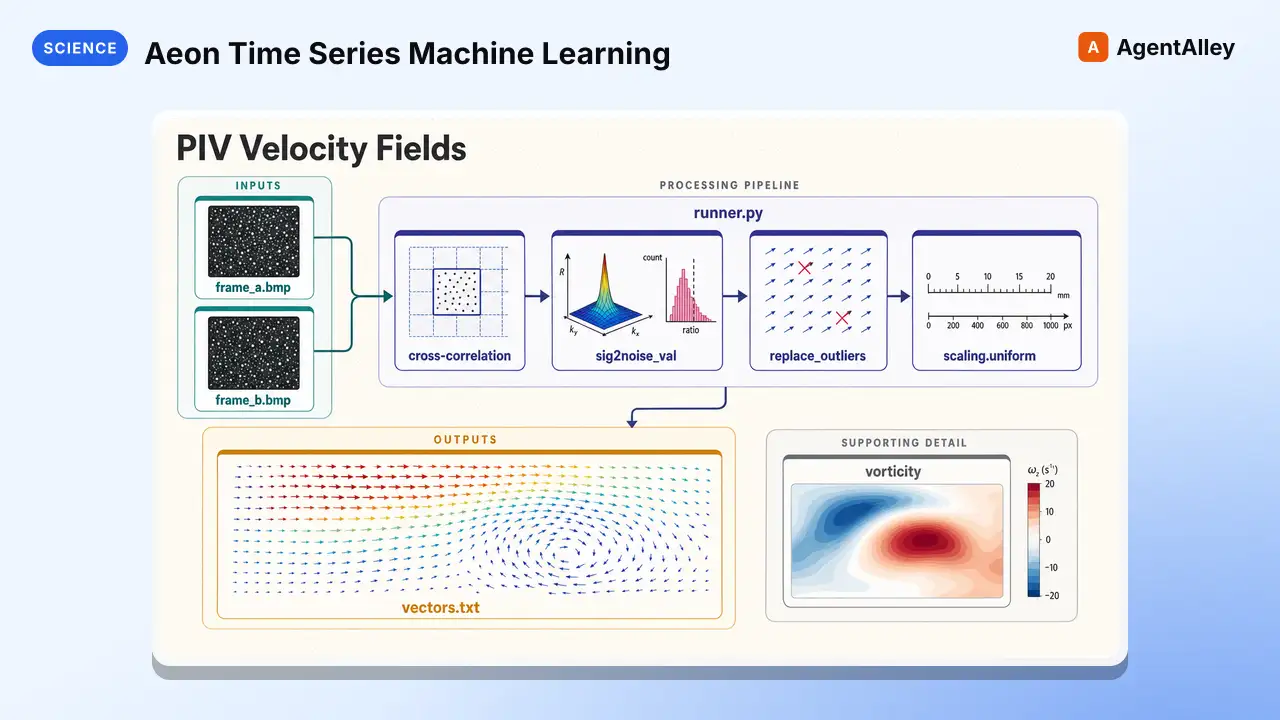 SkillAeon Time Series Machine LearningK-Dense-AI/scientific-agent-skills · by K-Dense-AIThis skill should be used for time series machine learning tasks including classification, regression, clustering, forecasting, anomaly detection, segmentation, and similarity search. Use when working with temporal data, sequential patterns, or time-indexed observations requiring specialized algorithms beyond standard ML approaches. Particularly suited for univariate and multivariate time series analysis with scikit-learn compatible APIs.★ 46k GitHub stars
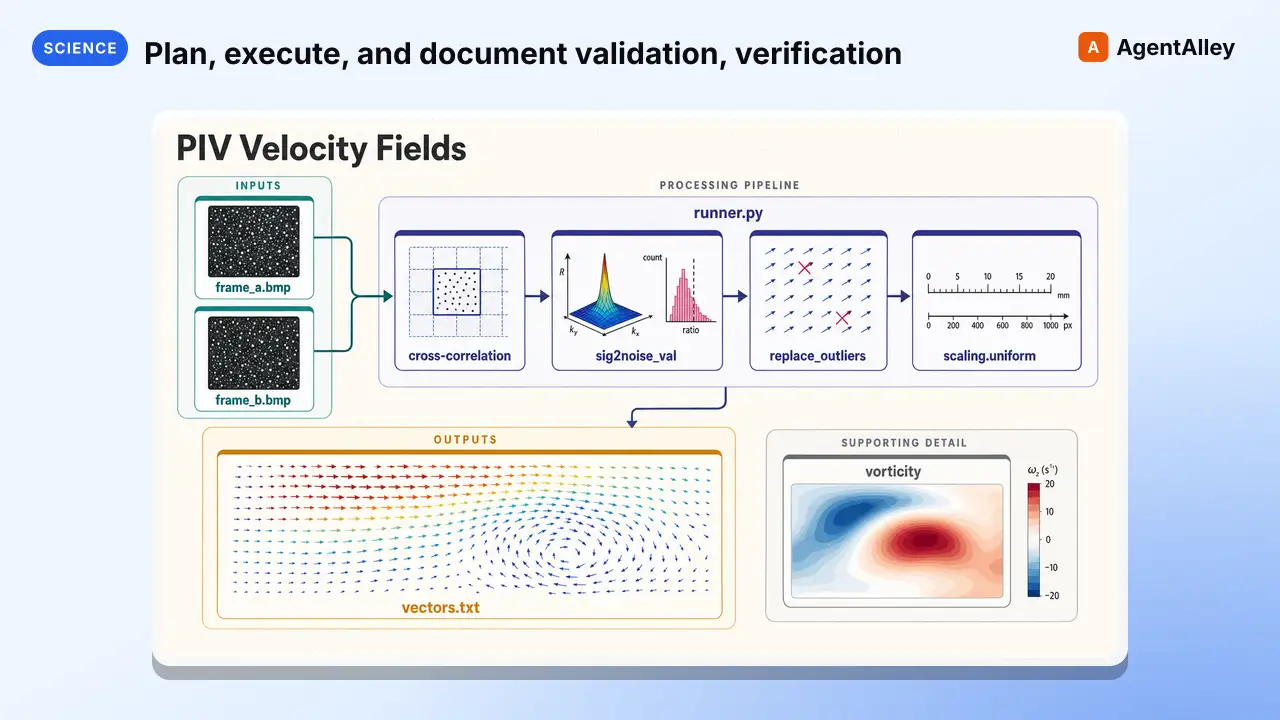 SkillPlan, execute, and document validation, verificationAnalytical method validationK-Dense-AI/scientific-agent-skills · by K-Dense-AIPlan, execute, and document validation, verification, and transfer of analytical procedures under the governing framework - ICH Q2(R2) and Q14, USP <1220>/<1225>/<1226>, ICH M10 bioanalytical, CLSI EP, or ISO/IEC 17025. Use for HPLC, LC-MS/MS, GC, CE, ICP-MS, dissolution, qNMR, qPCR, NIR, and ligand binding or cell-based assays whenever the question is whether a procedure is fit for its intended purpose. Triggers include "method validation", "analytical method validation", "AMV", "validation protocol", "acceptance criteria", "linearity", "reportable range", "accuracy and precision", "repeatability", "intermediate precision", "recovery", "LOD", "LOQ", "detection limit", "quantitation limit", "specificity", "robustness", "method transfer", "method comparison", "Deming", "Passing-Bablok", "Bland-Altman", "equivalence testing", "OOS investigation", "ICH Q2", "Q2(R2)", "Q14", "USP 1225", "ICH M10", "incurred sample reanalysis", "ISR", "CLSI EP", and any request to show that an assay works.★ 46k GitHub stars
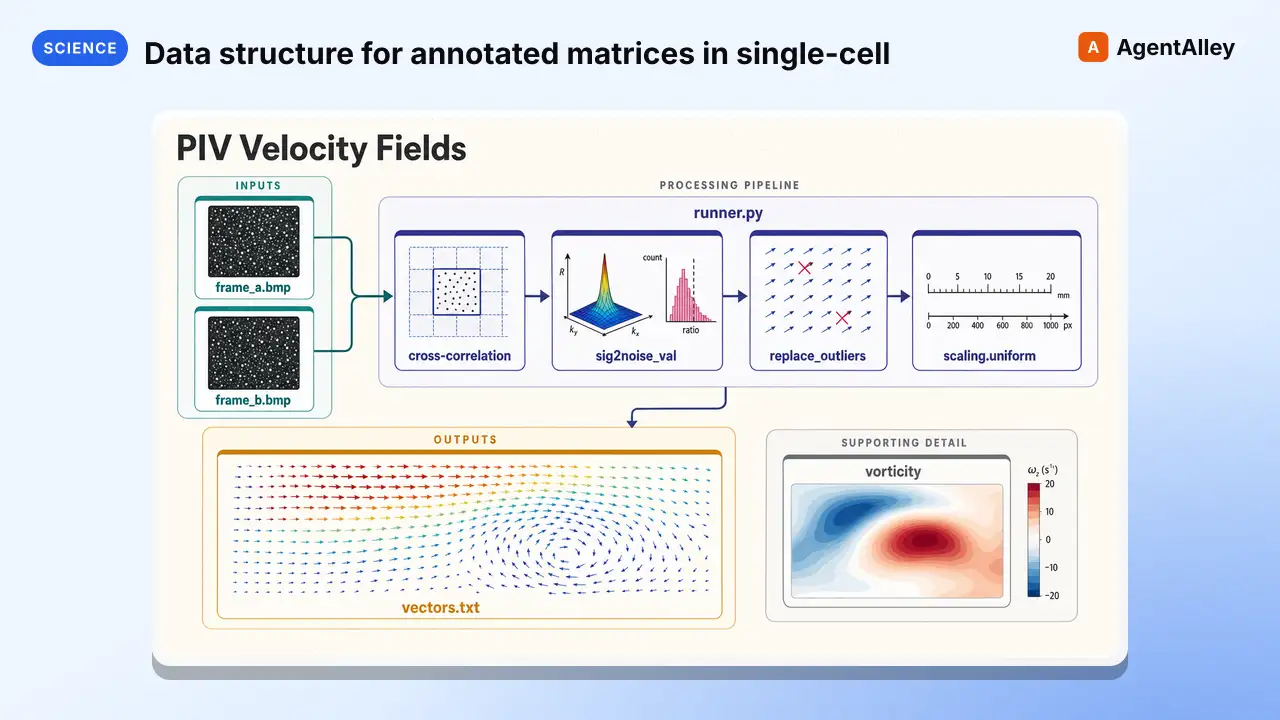 SkillData structure for annotated matrices in single-cellAnndataK-Dense-AI/scientific-agent-skills · by K-Dense-AIData structure for annotated matrices in single-cell analysis. Use when working with .h5ad files or integrating with the scverse ecosystem. This is the data format skill—for analysis workflows use scanpy; for probabilistic models use scvi-tools; for population-scale queries use cellxgene-census.★ 46k GitHub stars
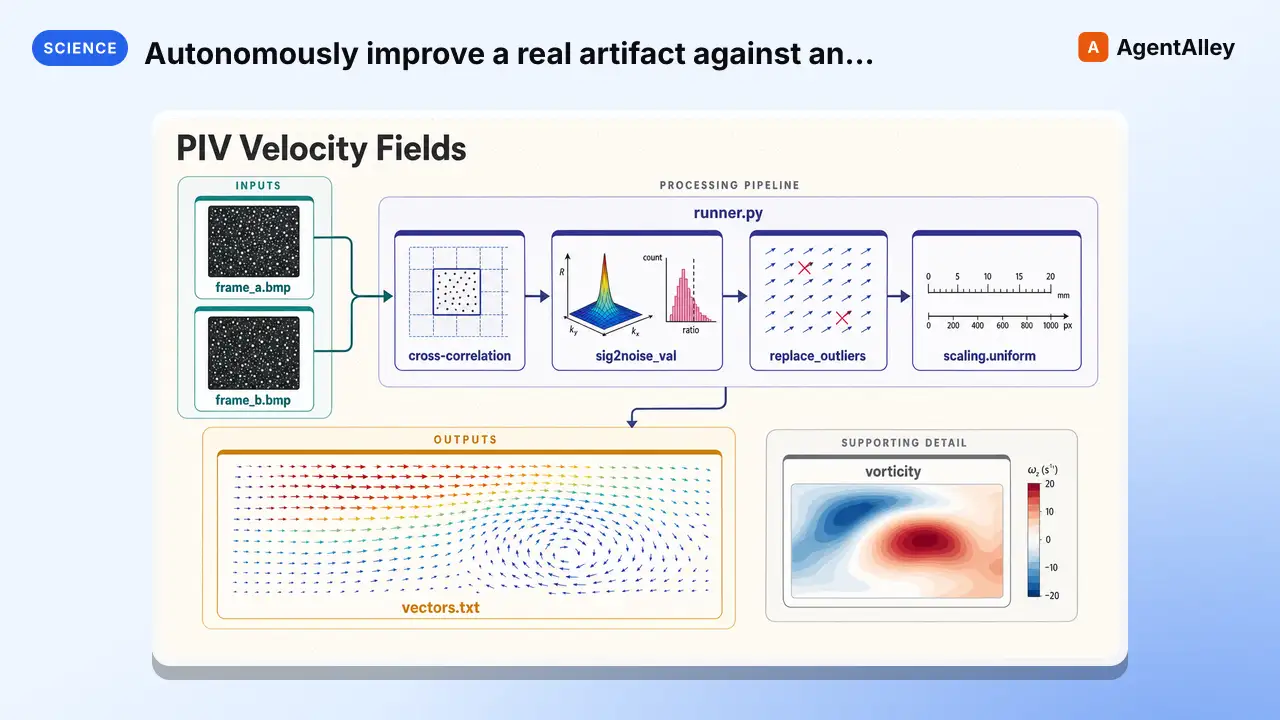 SkillAutonomously improve a real artifact against an objectiveArbor — Autonomous Optimization via Hypothesis Tree RefinementK-Dense-AI/scientific-agent-skills · by K-Dense-AIAutonomously improve a real artifact (code, training recipe, agent harness, data pipeline, prompt) against an objective and an evaluator, using Hypothesis Tree Refinement (HTR) from the Arbor paper. Use this whenever someone wants to iteratively optimize something over many experiments without overfitting — e.g. "get my model's eval score up", "improve this agent/harness", "tune this pipeline", "beat the baseline on this benchmark", "run a search over approaches and keep the best", "do an MLE-bench / Kaggle-style optimization", or any long-horizon "make this artifact better and don't just memorize the dev set" task. Trigger it even when the user doesn't say "Arbor" or "hypothesis tree" but describes repeated experiment-and-evaluate loops, branching exploration of competing ideas, or worries about a dev/test gap. Runs Claude itself as the coordinator with subagent executors in isolated git worktrees; for the standalone `arbor` CLI tool see references/arbor-upstream.md.★ 46k GitHub stars
 SkillInfer gene regulatory networks from gene expression dataArboretoK-Dense-AI/scientific-agent-skills · by K-Dense-AIInfer gene regulatory networks (GRNs) from gene expression data using scalable algorithms (GRNBoost2, GENIE3). Use when analyzing transcriptomics data (bulk RNA-seq, single-cell RNA-seq) to identify transcription factor-target gene relationships and regulatory interactions. Supports distributed computation for large-scale datasets.★ 46k GitHub stars