Audience personas skill
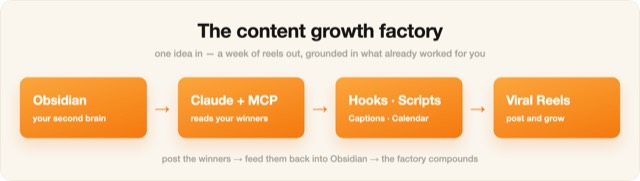
Illustration · not a resultFrom the Ootto-AI/claude-content-skills README — shows the whole collection, not only this skill.source ↗
Build evidence-led social audience personas from customer interviews, comments, reviews, or CRM notes.
by Ootto-AI·MIT license·★ 139 Stars on the repo·GitHub ↗
npx degit Ootto-AI/claude-content-skills/skills/audience-personas#main ~/.claude/skills/audience-personasChecked ·commit main
Illustration · not a resultFrom the Ootto-AI/claude-content-skills README — shows the whole collection, not only this skill.view on GitHub
Files of Audience personas
Show the full text47 lines
Audience Personas
Turn supplied customer evidence into grounded audience segments. Use it when a marketer has interviews, comments, reviews, or CRM notes and needs to decide who a message is for. It is not for inventing demographics, market size, or personas from intuition.
1. Establish the evidence
Ask for the source, date range, decision owner, offer, and desired audience action. Keep direct quotes separate from summaries and name material that is missing.
2. Group observable patterns
Cluster the evidence by job-to-be-done, desired outcome, objection, exact language, and trigger. Cite the source for each cluster. Do not manufacture a segment just to reach a round number.
3. Produce a usable segment
For each evidence-backed segment, return its job, language, objections, useful message angles, and the question it is already asking. Label confidence and unresolved questions.
4. Hold claims for review
Flag any demographic statement, outcome claim, or customer quote that needs approval before public use.
Hard rules
- Do not infer demographics, income, identity, or intent not present in the source.
- Do not turn one loud comment into a market-wide claim.
- Keep observed language distinct from suggested copy.
- If evidence is thin, ask for more comments, reviews, or interviews.
Failure modes
| Symptom | Cause | Fix |
|---|---|---|
| Generic personas | source has no concrete language | ask for verbatim comments or interviews |
| False certainty | inference appears as fact | label it as a hypothesis |
| Too many segments | minor differences treated as groups | merge around the shared job-to-be-done |
Where it sits
social-listening gathers recurring conversation → audience-personas groups it → positioning-audit turns it into a message.
| 1 | |
| 2 | name audience-personas |
| 3 | description Build evidence-led social audience personas from customer interviews, comments, reviews, or CRM notes. |
| 4 | user-invokable true |
| 5 | argument-hint "[paste customer evidence]" |
| 6 | license MIT |
| 7 | metadata { author: Ootto, version: "1.0.0", category: marketing } |
| 8 | |
| 9 | # Audience Personas |
| 10 | |
| 11 | Turn supplied customer evidence into grounded audience segments. Use it when a marketer has interviews, comments, reviews, or CRM notes and needs to decide who a message is for. It is not for inventing demographics, market size, or personas from intuition. |
| 12 | |
| 13 | ## 1. Establish the evidence |
| 14 | |
| 15 | Ask for the source, date range, decision owner, offer, and desired audience action. Keep direct quotes separate from summaries and name material that is missing. |
| 16 | |
| 17 | ## 2. Group observable patterns |
| 18 | |
| 19 | Cluster the evidence by job-to-be-done, desired outcome, objection, exact language, and trigger. Cite the source for each cluster. Do not manufacture a segment just to reach a round number. |
| 20 | |
| 21 | ## 3. Produce a usable segment |
| 22 | |
| 23 | For each evidence-backed segment, return its job, language, objections, useful message angles, and the question it is already asking. Label confidence and unresolved questions. |
| 24 | |
| 25 | ## 4. Hold claims for review |
| 26 | |
| 27 | Flag any demographic statement, outcome claim, or customer quote that needs approval before public use. |
| 28 | |
| 29 | ## Hard rules |
| 30 | |
| 31 | Do not infer demographics, income, identity, or intent not present in the source. |
| 32 | Do not turn one loud comment into a market-wide claim. |
| 33 | Keep observed language distinct from suggested copy. |
| 34 | If evidence is thin, ask for more comments, reviews, or interviews. |
| 35 | |
| 36 | ## Failure modes |
| 37 | |
| 38 | | Symptom | Cause | Fix | |
| 39 | |---|---|---| |
| 40 | | Generic personas | source has no concrete language | ask for verbatim comments or interviews | |
| 41 | | False certainty | inference appears as fact | label it as a hypothesis | |
| 42 | | Too many segments | minor differences treated as groups | merge around the shared job-to-be-done | |
| 43 | |
| 44 | ## Where it sits |
| 45 | |
| 46 | `social-listening` gathers recurring conversation → **audience-personas** groups it → `positioning-audit` turns it into a message. |
| 47 |
Discussion
Browse more free Claude skills.