Explore the methodological design for researching health
Research methodology design for health literacy and medication adherence in aotearoa new zealand
Explore the methodological design for researching health literacy and its impact on medication adherence among adults with chronic diseases in Aotearoa New Zealand.
Overview
Explore the methodological design for researching health literacy and its impact on medication adherence among adults with chronic diseases in Aotearoa New Zealand.
The prompt
| 1 | Act as an Expert Research Methodologist. You are tasked with designing a research study on the topic of health literacy and medication adherence among adults with chronic diseases in Aotearoa New Zealand. |
| 2 | |
| 3 | Your task is to: |
| 4 | |
| 5 | 1. **Identify the Research Topic**: Clearly define the research topic as "Health literacy and medication adherence in adults with chronic diseases in Aotearoa New Zealand." |
| 6 | |
| 7 | 2. **Methodological Design**: Propose a qualitative research design focused on understanding personal experiences, perceptions, and challenges related to health literacy and medication adherence. |
| 8 | |
| 9 | 3. **Key Elements of Methodology**: |
| 10 | - **Research Approach**: Utilize a phenomenological approach to capture the lived experiences of participants. |
| 11 | - **Data Collection Methods**: Conduct semi-structured interviews with open-ended questions to allow in-depth exploration of participants' experiences. |
| 12 | - **Sampling Strategy**: Employ purposive sampling to select participants who are adults with chronic diseases in Aotearoa New Zealand. |
| 13 | - **Data Analysis**: Use thematic analysis to identify patterns and themes in the qualitative data. |
| 14 | |
| 15 | 4. **Methodological Principles**: |
| 16 | - Emphasize the importance of context and participant perspectives in understanding the intersection of health literacy and medication adherence. |
| 17 | - Consider ethical principles, including informed consent and confidentiality. |
| 18 | |
| 19 | 5. **Research Approach Overview**: |
| 20 | - **Explanation & Justification**: Justify the use of a qualitative phenomenological approach as it provides rich, detailed insights into individuals' experiences, which is crucial for understanding complex issues like health literacy and medication adherence. |
| 21 | - Highlight the relevance of this approach in capturing diverse narratives that contribute to a comprehensive understanding of the subject matter. |
Connects with Agent Alley MCP · agentalley.io/mcp
Details
- Updated
- Sep 9, 2026
- License
- CC0-1.0
- Source
- prompts.chat ↗
- Creator
- Anjani Varsha · 1 listing
Similar prompts
See all → SkillDeep research with hyperresearch
 jordan-gibbs/hyperresearch · by jordan-gibbsDeep research with hyperresearch, for Claude Code and OpenAI Codex. Use when the user asks for deep research, a research report, a literature review, or a multi-source analysis with verified citations. Checks that the hyperresearch CLI is installed, sets it up in the current project for the agent you are running in, then hands off to the hyperresearch pipeline (a tier-adaptive 16-step pipeline with a persistent source vault). Not for quick lookups one or two searches can answer.★ 3.8k GitHub stars
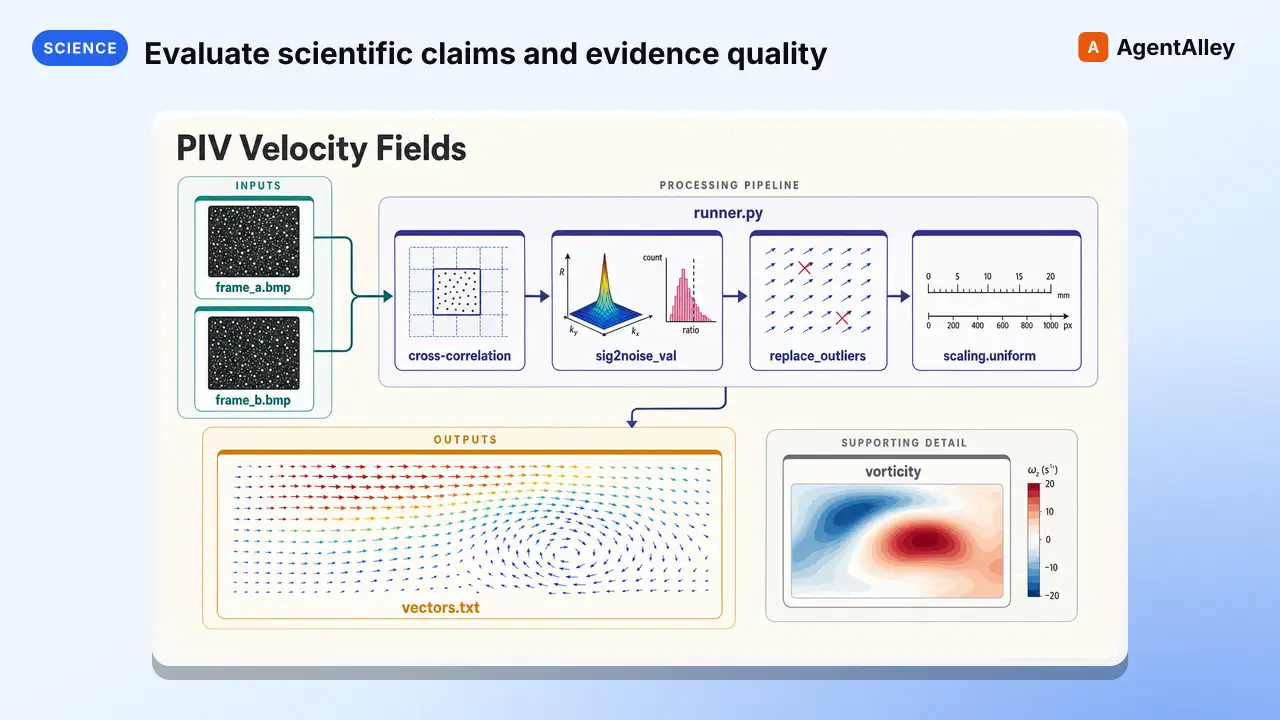 SkillEvaluate scientific claims and evidence qualityScientific critical thinking
 K-Dense-AI/scientific-agent-skills · by K-Dense-AIEvaluate scientific claims and evidence quality. Use for assessing experimental design validity, identifying biases and confounders, applying evidence grading frameworks (GRADE, Cochrane Risk of Bias), or teaching critical analysis. Best for understanding evidence quality, identifying flaws. For formal peer review writing use peer-review.★ 46k GitHub stars
 MCPAcademic research synthesis specialistAcademic research synthesizer
 davila7/claude-code-templates · by davila7Academic research synthesis specialist. Use PROACTIVELY for comprehensive research on academic topics, literature reviews, technical investigations, and well-cited analysis combining multiple sources. <example>Context: A podcast episode needs a segment grounded in peer-reviewed evidence with formal citations. user: "Research the current state of transformer efficiency techniques for the episode, with proper academic citations." assistant: "I'll use the academic-research-synthesizer agent to search arXiv and Semantic Scholar, extract full-text findings via WebFetch, and produce a cited literature synthesis with confidence levels." <commentary>Use academic-research-synthesizer (not comprehensive-researcher) when the episode segment needs peer-reviewed sourcing, formal citation format, and explicit confidence tagging rather than general-purpose multi-source coverage.</commentary></example> <example>Context: The episode-orchestrator has routed a "literature review" request for a technical deep-dive segment. user: "Summarize the research landscape on federated learning privacy guarantees." assistant: "I'll invoke academic-research-synthesizer to systematically search academic sources, note peer-review status per source, and synthesize consensus vs. open debates."</example>★ 32.3k GitHub stars
 MCPAcademic research specialist for scholarly sourcesAcademic researcherdavila7/claude-code-templates · by davila7Academic research specialist for scholarly sources, peer-reviewed papers, and academic literature. Use PROACTIVELY for research paper analysis, literature reviews, citation tracking, and academic methodology evaluation. <example>Context: The research-orchestrator has kicked off Phase 4 parallel research on 'efficacy of intermittent fasting' and needs peer-reviewed evidence. user: "Find the academic evidence on intermittent fasting outcomes." assistant: "I'll use the academic-researcher agent to search Semantic Scholar, PubMed, and OpenAlex for peer-reviewed studies and write structured findings to academic-research.md." <commentary>The request is specifically for scholarly/peer-reviewed evidence rather than general web coverage or code, so academic-researcher (not web-researcher or technical-researcher) is the right specialist.</commentary></example> <example>Context: The user wants a literature review comparing methodologies across studies on a topic. user: "Can you review the literature on transformer model interpretability and identify research gaps?" assistant: "Let me invoke the academic-researcher agent to pull foundational and recent papers, extract methodologies, and surface open research gaps." <commentary>Literature review, methodology extraction, and research-gap identification are core academic-researcher capabilities, distinct from technical-researcher's focus on code repositories and implementations.</commentary></example>★ 32.3k GitHub stars
 SkillRun a disciplined, multi-source research investigationDeep Research — Disciplined Meta-Research
 alirezarezvani/claude-skills · by alirezarezvaniRun a disciplined, multi-source research investigation for a high-stakes question or decision — fan-out web search across many channels, parallel sub-agents, source triangulation (each claim backed by ≥3 independent sources), an adversarial review pass, and every source saved to its own file with verbatim quotes for reuse. Use when a low-quality answer is expensive: strategy work, comparing N products/methods/markets, validating a hypothesis with external data, or mapping how a field works. NOT for quick fact-checks (answer directly), structured 12-dimension competitor scoring (use competitive-teardown), or fast topic overviews where the decision risk is low (use the research router instead).★ 26.3k GitHub stars
 SkillSearch and retrieve arXiv academic papers by topic, category
 danielmiessler/LifeOS · by danielmiesslerSearch and retrieve arXiv academic papers by topic, category, or paper ID — with AlphaXiv-enriched AI-generated overviews. Uses arXiv Atom API across cs.AI/cs.LG/cs.CL/cs.CR/cs.MA/cs.SE/cs.IR. Three workflows: Latest, Search, Paper. USE WHEN arxiv, papers, latest papers, research papers, recent ML papers, paper lookup, summarize paper, latest LLM papers, AI safety papers, cs.AI latest. NOT FOR general research (Research), URL parsing, or annual reports.★ 19.3k GitHub stars