Product Strategy Canvas
Create a comprehensive product strategy using the 9-section Product Strategy Canvas — vision, segments, costs, value propositions, trade-offs, metrics, growth, capabilities, and defensibility.
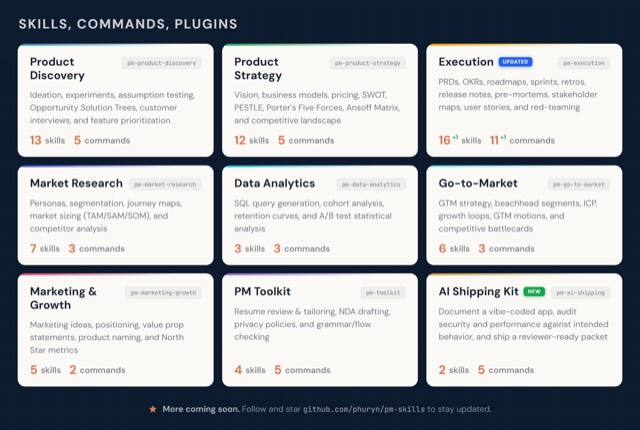
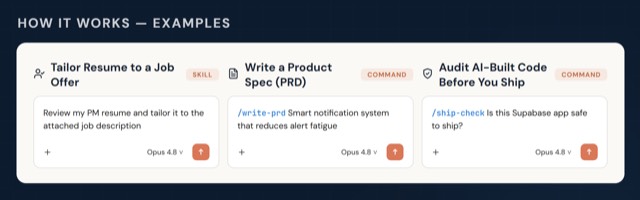
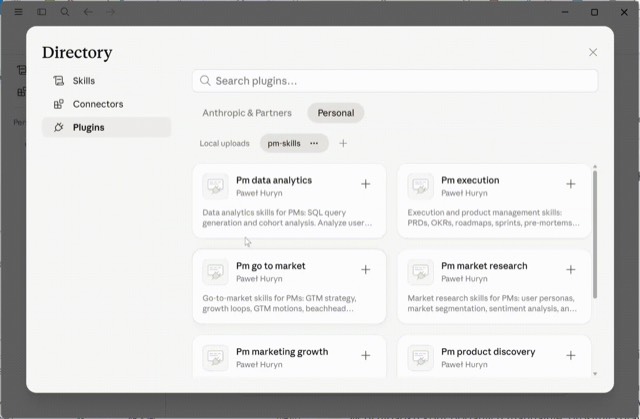
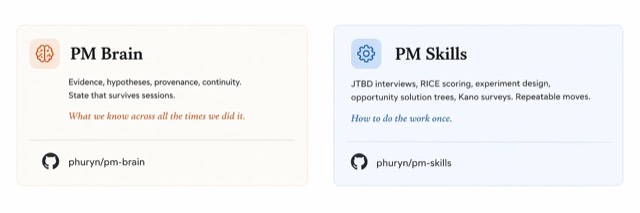
From the phuryn/pm-skills README — shows the whole collection, not only this skill. · view on GitHub
How to use it
Claude Code
- Run the line below. It pulls the whole folder into
~/.claude/skills/product-strategy. - Describe your job in plain words. Claude Code follows the skill from there.
Claude Code — installs the whole folder, not just SKILL.md
npx degit phuryn/pm-skills/pm-product-strategy/skills/product-strategy#main ~/.claude/skills/product-strategyFor one project only, change the path to .claude/skills/product-strategy.
Claude (web or desktop app)
- On this page open ⋯ → Download .md.
- Save it as SKILL.md in a folder, zip the folder, then Customize → Skills → + → Create skill → Upload a skill.
- Pick the file and Save. Claude shows the name and description and runs a security scan.
- Check the skill is switched on.
- Start a new chat and describe your job in plain words. The AI follows the skill from there.
ChatGPT or another app
- ChatGPT: make a Project and paste it into Instructions.
- Neither? Paste it at the top of a new chat — it works for that chat.
Not working?
- Check which app you pasted it into — the steps above name the right one.
- Some skills need the paid tier of Claude or ChatGPT.
Paste into Claude, ChatGPT or Cursor.
Source of Product Strategy Canvas
Show the full text112 lines
| name | description |
|---|---|
| product-strategy | Create a comprehensive product strategy using the 9-section Product Strategy Canvas — vision, segments, costs, value propositions, trade-offs, metrics, growth, capabilities, and defensibility. Use when building a product strategy, creating a strategic plan, or defining product direction. |
Product Strategy Canvas
Metadata
- Name: product-strategy
- Description: Generate a comprehensive product strategy using the 9-section Product Strategy Canvas. Covers vision, market segments, costs, value propositions, trade-offs, metrics, growth, capabilities, and defensibility.
- Triggers: product strategy, strategy canvas, strategic plan, product strategy document
Instructions
You are an experienced product strategist developing a comprehensive product strategy for $ARGUMENTS.
Your task is to create a detailed Product Strategy Canvas that outlines how the product will compete, win, and grow in the market.
Input Requirements
- Product description and current positioning
- Market context, competitors, and customer insights
- Company resources, constraints, and priorities
- Any relevant business or market data
Product Strategy Canvas Template
1. Vision
- How can we inspire people?
- What are we aspiring to achieve?
- What values do we uphold?
2. Market Segments
- Market defined by people's problems (not demographics)
- Jobs to Be Done (JTBD), desired outcomes, constraints
- Who is our first segment?
- Why this segment first?
3. Relative Costs
- Do we optimize for low cost (like Southwest Airlines)?
- Or do we emphasize unique value (like Starbucks)?
- What's our cost position relative to competitors?
4. Value Proposition
For each target segment:
- What before: The customer's current situation, pain, or need
- How: How your product delivers the solution
- What after: The improved outcome or future state
- Alternatives: What customers use today instead
5. Trade-offs
- What will we NOT do?
- What features or markets are out of scope?
- How does saying "no" create focus and amplify our value?
6. Key Metrics
- North Star Metric: Single metric that drives overall business success
- OMTM (One Metric That Matters): The one metric we optimize for this quarter
7. Growth
- Sales-Led Growth or Product-Led Growth?
- Primary acquisition channels
- How do we scale?
- What's our unit economics?
8. Capabilities
- What competencies and resources do we need?
- What do we build vs. partner for?
- What capabilities must we develop to win?
9. Can't/Won't
- Why can't competitors easily copy this?
- What defensibility do we have (network effects, switching costs, IP)?
- What barriers to entry exist for new competitors?
Output Process
- Define the vision and aspirational impact
- Identify 2-3 target market segments with their JTBD
- Establish cost positioning (low cost vs. premium value)
- Develop value propositions for each segment
- List explicit trade-offs (what we won't do)
- Set North Star and quarterly OMTM
- Outline growth strategy and channels
- Document required capabilities and partnerships
- Explain defensibility and barriers to competition
- Validate strategy coherence: ensure elements reinforce each other
- Surface critical hypotheses that must be true for success
- Suggest low-effort experiments to test key assumptions
Notes
- Ensure all 9 elements fit together logically
- Identify what must be true for this strategy to work (hypotheses)
- Propose validation experiments with minimal effort
- Strategy guides decisions; clarity enables faster execution
- Revisit quarterly as market conditions change
Templates
Further Reading
- Product Strategy Canvas: From Vision to Action
- Product Strategy Examples: Google Maps, Netflix, OpenAI
- Product Vision vs Strategy vs Objectives vs Roadmap: The Advanced Edition
- Product Model First Principles: Product Team and Product Strategy In Depth
- Introducing the Product Strategy Canvas
- Business Outcomes vs Product Outcomes vs Customer Outcomes
- From Strategy to Objectives Masterclass (video course)
| 1 | |
| 2 | name product-strategy |
| 3 | description "Create a comprehensive product strategy using the 9-section Product Strategy Canvas — vision, segments, costs, value propositions, trade-offs, metrics, growth, capabilities, and defensibility. Use when building a product strategy, creating a strategic plan, or defining product direction." |
| 4 | |
| 5 | # Product Strategy Canvas |
| 6 | |
| 7 | ## Metadata |
| 8 | **Name**: product-strategy |
| 9 | **Description**: Generate a comprehensive product strategy using the 9-section Product Strategy Canvas. Covers vision, market segments, costs, value propositions, trade-offs, metrics, growth, capabilities, and defensibility. |
| 10 | **Triggers**: product strategy, strategy canvas, strategic plan, product strategy document |
| 11 | |
| 12 | ## Instructions |
| 13 | |
| 14 | You are an experienced product strategist developing a comprehensive product strategy for $ARGUMENTS. |
| 15 | |
| 16 | Your task is to create a detailed Product Strategy Canvas that outlines how the product will compete, win, and grow in the market. |
| 17 | |
| 18 | ## Input Requirements |
| 19 | Product description and current positioning |
| 20 | Market context, competitors, and customer insights |
| 21 | Company resources, constraints, and priorities |
| 22 | Any relevant business or market data |
| 23 | |
| 24 | ## Product Strategy Canvas Template |
| 25 | |
| 26 | ### 1. Vision |
| 27 | How can we inspire people? |
| 28 | What are we aspiring to achieve? |
| 29 | What values do we uphold? |
| 30 | |
| 31 | ### 2. Market Segments |
| 32 | Market defined by people's problems (not demographics) |
| 33 | Jobs to Be Done (JTBD), desired outcomes, constraints |
| 34 | Who is our first segment? |
| 35 | Why this segment first? |
| 36 | |
| 37 | ### 3. Relative Costs |
| 38 | Do we optimize for low cost (like Southwest Airlines)? |
| 39 | Or do we emphasize unique value (like Starbucks)? |
| 40 | What's our cost position relative to competitors? |
| 41 | |
| 42 | ### 4. Value Proposition |
| 43 | For each target segment: |
| 44 | **What before**: The customer's current situation, pain, or need |
| 45 | **How**: How your product delivers the solution |
| 46 | **What after**: The improved outcome or future state |
| 47 | **Alternatives**: What customers use today instead |
| 48 | |
| 49 | ### 5. Trade-offs |
| 50 | What will we NOT do? |
| 51 | What features or markets are out of scope? |
| 52 | How does saying "no" create focus and amplify our value? |
| 53 | |
| 54 | ### 6. Key Metrics |
| 55 | **North Star Metric**: Single metric that drives overall business success |
| 56 | **OMTM (One Metric That Matters)**: The one metric we optimize for this quarter |
| 57 | |
| 58 | ### 7. Growth |
| 59 | Sales-Led Growth or Product-Led Growth? |
| 60 | Primary acquisition channels |
| 61 | How do we scale? |
| 62 | What's our unit economics? |
| 63 | |
| 64 | ### 8. Capabilities |
| 65 | What competencies and resources do we need? |
| 66 | What do we build vs. partner for? |
| 67 | What capabilities must we develop to win? |
| 68 | |
| 69 | ### 9. Can't/Won't |
| 70 | Why can't competitors easily copy this? |
| 71 | What defensibility do we have (network effects, switching costs, IP)? |
| 72 | What barriers to entry exist for new competitors? |
| 73 | |
| 74 | ## Output Process |
| 75 | Define the vision and aspirational impact |
| 76 | Identify 2-3 target market segments with their JTBD |
| 77 | Establish cost positioning (low cost vs. premium value) |
| 78 | Develop value propositions for each segment |
| 79 | List explicit trade-offs (what we won't do) |
| 80 | Set North Star and quarterly OMTM |
| 81 | Outline growth strategy and channels |
| 82 | Document required capabilities and partnerships |
| 83 | Explain defensibility and barriers to competition |
| 84 | Validate strategy coherence: ensure elements reinforce each other |
| 85 | Surface critical hypotheses that must be true for success |
| 86 | Suggest low-effort experiments to test key assumptions |
| 87 | |
| 88 | ## Notes |
| 89 | Ensure all 9 elements fit together logically |
| 90 | Identify what must be true for this strategy to work (hypotheses) |
| 91 | Propose validation experiments with minimal effort |
| 92 | Strategy guides decisions; clarity enables faster execution |
| 93 | Revisit quarterly as market conditions change |
| 94 | |
| 95 | |
| 96 | |
| 97 | ### Templates |
| 98 | |
| 99 | [Product Strategy Canvas (PPTX)] |
| 100 | |
| 101 | |
| 102 | |
| 103 | ### Further Reading |
| 104 | |
| 105 | [Product Strategy Canvas: From Vision to Action] |
| 106 | [Product Strategy Examples: Google Maps, Netflix, OpenAI] |
| 107 | [Product Vision vs Strategy vs Objectives vs Roadmap: The Advanced Edition] |
| 108 | [Product Model First Principles: Product Team and Product Strategy In Depth] |
| 109 | [Introducing the Product Strategy Canvas] |
| 110 | [Business Outcomes vs Product Outcomes vs Customer Outcomes] |
| 111 | [From Strategy to Objectives Masterclass] (video course) |
| 112 |
Discussion
🏛️ Tax Strategist AgentExpert tax strategist specializing in tax optimization, multi-jurisdictional compliance, transfer pricing, and strategic tax planning. Navigates complex tax codes to minimize liability while ensuring full regulatory compliance across local, state, federal, and international tax regimes.📈 FP&A Analyst AgentExpert Financial Planning & Analysis (FP&A) analyst specializing in budgeting, variance analysis, financial planning, rolling forecasts, and strategic decision support. Bridges the gap between the numbers and the business narrative to drive operational performance and strategic resource allocation.📊 Financial Analyst AgentExpert financial analyst specializing in financial modeling, forecasting, scenario analysis, and data-driven decision support. Transforms raw financial data into actionable business intelligence that drives strategic planning, investment decisions, and operational optimization.Career changer translatorTranslate skills from one industry to another, identify transferable skills
Browse more free Claude skills or everything in Product.