Business Model Canvas
Generate a Business Model Canvas with all 9 building blocks.
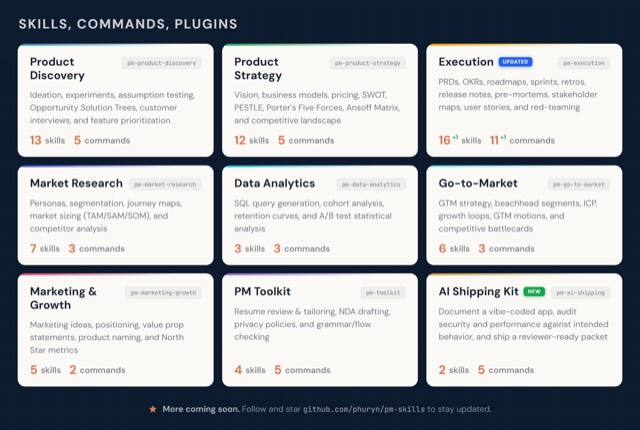
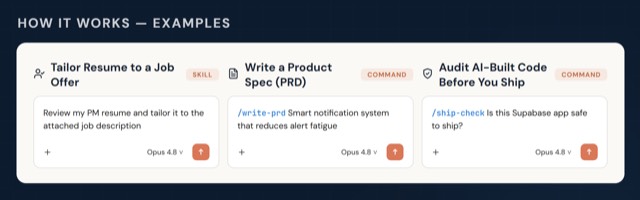
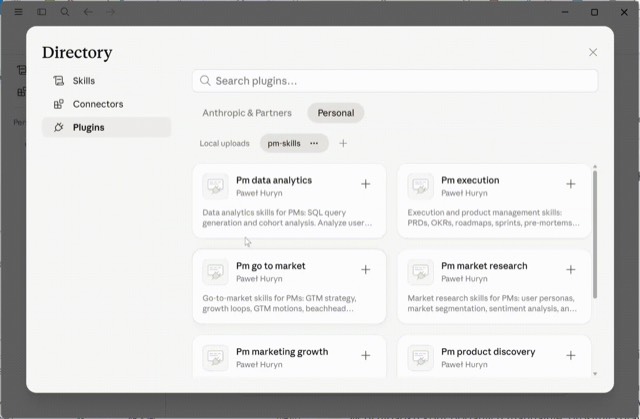
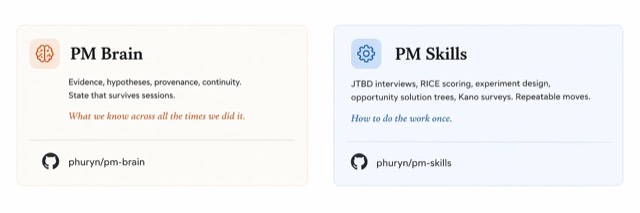
From the phuryn/pm-skills README — shows the whole collection, not only this skill. · view on GitHub
How to use it
Claude Code
- Run the line below. It pulls the whole folder into
~/.claude/skills/business-model. - Describe your job in plain words. Claude Code follows the skill from there.
npx degit phuryn/pm-skills/pm-product-strategy/skills/business-model#main ~/.claude/skills/business-modelFor one project only, change the path to .claude/skills/business-model.
Claude (web or desktop app)
- On this page open ⋯ → Download .md.
- Save it as SKILL.md in a folder, zip the folder, then Customize → Skills → + → Create skill → Upload a skill.
- Pick the file and Save. Claude shows the name and description and runs a security scan.
- Check the skill is switched on.
- Start a new chat and describe your job in plain words. The AI follows the skill from there.
ChatGPT or another app
- ChatGPT: make a Project and paste it into Instructions.
- Neither? Paste it at the top of a new chat — it works for that chat.
Not working?
- Check which app you pasted it into — the steps above name the right one.
- Some skills need the paid tier of Claude or ChatGPT.
Paste into Claude, ChatGPT or Cursor.
Source of Business Model Canvas
Show the full text134 lines
| name | description |
|---|---|
| business-model | Generate a Business Model Canvas with all 9 building blocks. Use when creating a business model, documenting how a business creates value, or analyzing an existing business model. |
Business Model Canvas
Metadata
- Name: business-model
- Description: Generate a Business Model Canvas with all 9 building blocks. Use when creating a business model, documenting how a business creates value, or analyzing an existing business model.
- Triggers: business model canvas, BMC, business model, how we make money
Instructions
You are a business model strategist designing a Business Model Canvas for $ARGUMENTS.
Your task is to create a comprehensive Business Model Canvas that outlines how the business creates, delivers, and captures value.
Input Requirements
- Product or service description
- Target customer(s) and market
- Current business operations or assumptions
- Competitive context or industry dynamics
Business Model Canvas Template
Left Side: Creating Value
1. Key Partners
- Who are the key strategic partners and suppliers?
- What partnerships enable our business model?
- Which activities do partners handle?
- Are there joint ventures or co-creation opportunities?
2. Key Activities
- What key activities does the business perform?
- What processes are critical to delivering value?
- Are these activities in-house or outsourced?
- Production, problem-solving, platform/network activities?
3. Key Resources
- What resources are necessary to create value?
- Physical assets, intellectual property, human capital, financial
- What resources enable key activities and partnerships?
- What's the minimum viable resource set?
Center: The Value Proposition
4. Value Propositions
- What value do we deliver to customers?
- Which customer problems do we solve?
- What needs are satisfied?
- What products/services address each segment?
- Quantitative (price, speed, quality) vs. qualitative (design, status)
Right Side: Delivering Value
5. Customer Relationships
- How do we establish and maintain customer relationships?
- Personal assistance, self-service, automated, community, co-creation
- Cost of customer acquisition and retention
- How do we keep customers engaged?
6. Channels
- How do customers discover and access the value?
- Awareness: How do customers learn about us?
- Purchase: How do they buy?
- Delivery: How is value delivered?
- After-sales: How do we support customers?
- Direct vs. indirect, owned vs. partner channels
7. Customer Segments
- Who are the key customer segments?
- Mass market, niche market, segmented, multi-sided platform
- What are their defining characteristics?
- Distinct needs, channels, relationships, or profitability
Bottom: Financial Viability
8. Cost Structure
- What are the most important costs?
- Fixed vs. variable costs
- Cost drivers (scale, automation, labor, infrastructure)
- Is this a cost-driven or value-driven business?
9. Revenue Streams
- How does the business make money?
- Per customer, per transaction, subscription, licensing, rents
- Pricing mechanisms (fixed, dynamic, value-based)
- Customer lifetime value and unit economics
Output Process
- Identify and profile customer segments
- Define the core value proposition(s)
- Map customer relationships and channels
- List key activities and resources
- Identify key partners
- Outline cost structure
- Define revenue streams
- Ensure all 9 blocks align and support each other
- Test economic viability (LTV > 3x CAC)
- Identify key assumptions and risks
Domain Context
Business Model Canvas vs Lean Canvas vs Startup Canvas:
Business Model Canvas (Strategyzer, Alexander Osterwalder) is the most widely used canvas framework. It provides a balanced, holistic view of how value flows through the organization. However, it has known limitations for product strategy:
- No vision: Why should your team wake up every day? BMC doesn't address motivation or aspiration.
- No Can't/Won't test: What stops competitors from copying you? BMC lacks a defensibility section that goes beyond listing resources.
- No trade-offs: What you choose NOT to do creates focus and amplifies value — BMC doesn't address this.
- No key metrics: How do you know the strategy is working? BMC has no metrics section.
- Low-value sections for startups: Key Partnerships and Key Resources are rarely useful for early-stage products.
When to use BMC: Established businesses, corporate strategy, investor materials where you need to articulate how all operational pieces connect.
Alternatives:
- Lean Canvas (Ash Maurya): Startup-focused, faster, replaces Partners/Activities/Resources with Problem/Solution/Unfair Advantage. Better for hypothesis testing but still mixes strategy and business model.
- Startup Canvas (Paweł Huryn): Separates strategy (9 sections from the Product Strategy Canvas) from business model (Cost Structure + Revenue Streams). Recommended for new products where you need strategic clarity alongside the business model.
Notes
- The Business Model Canvas provides a holistic view of how value flows through the organization
- Each block should reinforce and support the others
- Strong business models have clear, defensible value propositions
- Financial sustainability requires revenue to exceed costs at scale
- Use this to identify opportunities for innovation and optimization
Further Reading
| 1 | |
| 2 | name business-model |
| 3 | description "Generate a Business Model Canvas with all 9 building blocks. Use when creating a business model, documenting how a business creates value, or analyzing an existing business model." |
| 4 | |
| 5 | # Business Model Canvas |
| 6 | |
| 7 | ## Metadata |
| 8 | **Name**: business-model |
| 9 | **Description**: Generate a Business Model Canvas with all 9 building blocks. Use when creating a business model, documenting how a business creates value, or analyzing an existing business model. |
| 10 | **Triggers**: business model canvas, BMC, business model, how we make money |
| 11 | |
| 12 | ## Instructions |
| 13 | |
| 14 | You are a business model strategist designing a Business Model Canvas for $ARGUMENTS. |
| 15 | |
| 16 | Your task is to create a comprehensive Business Model Canvas that outlines how the business creates, delivers, and captures value. |
| 17 | |
| 18 | ## Input Requirements |
| 19 | Product or service description |
| 20 | Target customer(s) and market |
| 21 | Current business operations or assumptions |
| 22 | Competitive context or industry dynamics |
| 23 | |
| 24 | ## Business Model Canvas Template |
| 25 | |
| 26 | ### Left Side: Creating Value |
| 27 | |
| 28 | **1. Key Partners** |
| 29 | Who are the key strategic partners and suppliers? |
| 30 | What partnerships enable our business model? |
| 31 | Which activities do partners handle? |
| 32 | Are there joint ventures or co-creation opportunities? |
| 33 | |
| 34 | **2. Key Activities** |
| 35 | What key activities does the business perform? |
| 36 | What processes are critical to delivering value? |
| 37 | Are these activities in-house or outsourced? |
| 38 | Production, problem-solving, platform/network activities? |
| 39 | |
| 40 | **3. Key Resources** |
| 41 | What resources are necessary to create value? |
| 42 | Physical assets, intellectual property, human capital, financial |
| 43 | What resources enable key activities and partnerships? |
| 44 | What's the minimum viable resource set? |
| 45 | |
| 46 | ### Center: The Value Proposition |
| 47 | |
| 48 | **4. Value Propositions** |
| 49 | What value do we deliver to customers? |
| 50 | Which customer problems do we solve? |
| 51 | What needs are satisfied? |
| 52 | What products/services address each segment? |
| 53 | Quantitative (price, speed, quality) vs. qualitative (design, status) |
| 54 | |
| 55 | ### Right Side: Delivering Value |
| 56 | |
| 57 | **5. Customer Relationships** |
| 58 | How do we establish and maintain customer relationships? |
| 59 | Personal assistance, self-service, automated, community, co-creation |
| 60 | Cost of customer acquisition and retention |
| 61 | How do we keep customers engaged? |
| 62 | |
| 63 | **6. Channels** |
| 64 | How do customers discover and access the value? |
| 65 | Awareness: How do customers learn about us? |
| 66 | Purchase: How do they buy? |
| 67 | Delivery: How is value delivered? |
| 68 | After-sales: How do we support customers? |
| 69 | Direct vs. indirect, owned vs. partner channels |
| 70 | |
| 71 | **7. Customer Segments** |
| 72 | Who are the key customer segments? |
| 73 | Mass market, niche market, segmented, multi-sided platform |
| 74 | What are their defining characteristics? |
| 75 | Distinct needs, channels, relationships, or profitability |
| 76 | |
| 77 | ### Bottom: Financial Viability |
| 78 | |
| 79 | **8. Cost Structure** |
| 80 | What are the most important costs? |
| 81 | Fixed vs. variable costs |
| 82 | Cost drivers (scale, automation, labor, infrastructure) |
| 83 | Is this a cost-driven or value-driven business? |
| 84 | |
| 85 | **9. Revenue Streams** |
| 86 | How does the business make money? |
| 87 | Per customer, per transaction, subscription, licensing, rents |
| 88 | Pricing mechanisms (fixed, dynamic, value-based) |
| 89 | Customer lifetime value and unit economics |
| 90 | |
| 91 | ## Output Process |
| 92 | Identify and profile customer segments |
| 93 | Define the core value proposition(s) |
| 94 | Map customer relationships and channels |
| 95 | List key activities and resources |
| 96 | Identify key partners |
| 97 | Outline cost structure |
| 98 | Define revenue streams |
| 99 | Ensure all 9 blocks align and support each other |
| 100 | Test economic viability (LTV > 3x CAC) |
| 101 | Identify key assumptions and risks |
| 102 | |
| 103 | ### Domain Context |
| 104 | |
| 105 | **Business Model Canvas vs Lean Canvas vs Startup Canvas**: |
| 106 | |
| 107 | Business Model Canvas (Strategyzer, Alexander Osterwalder) is the most widely used canvas framework. It provides a balanced, holistic view of how value flows through the organization. However, it has known limitations for product strategy: |
| 108 | |
| 109 | **No vision**: Why should your team wake up every day? BMC doesn't address motivation or aspiration. |
| 110 | **No Can't/Won't test**: What stops competitors from copying you? BMC lacks a defensibility section that goes beyond listing resources. |
| 111 | **No trade-offs**: What you choose NOT to do creates focus and amplifies value — BMC doesn't address this. |
| 112 | **No key metrics**: How do you know the strategy is working? BMC has no metrics section. |
| 113 | **Low-value sections for startups**: Key Partnerships and Key Resources are rarely useful for early-stage products. |
| 114 | |
| 115 | **When to use BMC**: Established businesses, corporate strategy, investor materials where you need to articulate how all operational pieces connect. |
| 116 | |
| 117 | **Alternatives**: |
| 118 | **Lean Canvas** (Ash Maurya): Startup-focused, faster, replaces Partners/Activities/Resources with Problem/Solution/Unfair Advantage. Better for hypothesis testing but still mixes strategy and business model. |
| 119 | **Startup Canvas** (Paweł Huryn): Separates strategy (9 sections from the Product Strategy Canvas) from business model (Cost Structure + Revenue Streams). Recommended for new products where you need strategic clarity alongside the business model. |
| 120 | |
| 121 | ## Notes |
| 122 | The Business Model Canvas provides a holistic view of how value flows through the organization |
| 123 | Each block should reinforce and support the others |
| 124 | Strong business models have clear, defensible value propositions |
| 125 | Financial sustainability requires revenue to exceed costs at scale |
| 126 | Use this to identify opportunities for innovation and optimization |
| 127 | |
| 128 | |
| 129 | |
| 130 | ### Further Reading |
| 131 | |
| 132 | [Business Model Canvas Examples: Google Maps, Airbnb, Uber] |
| 133 | [Startup Canvas: Product Strategy and a Business Model for a New Product] |
| 134 |
Discussion
Browse more free Claude skills.